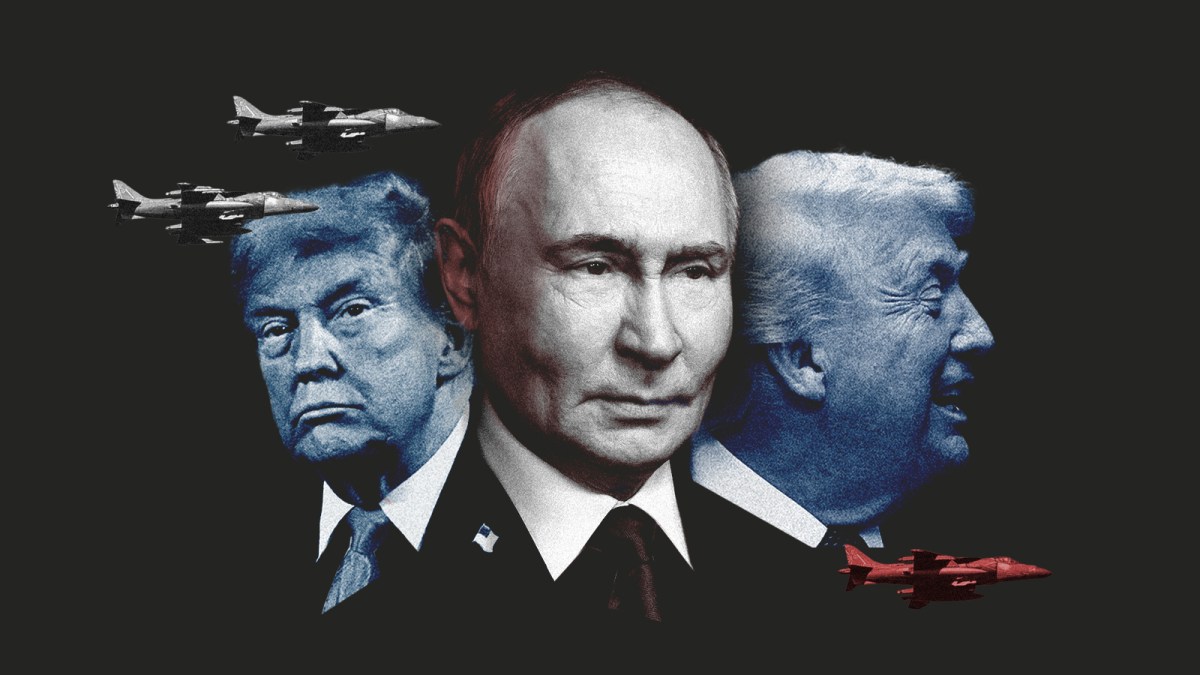
This year will be one of high-stakes jeopardy for Vladimir Putin. His New Year’s Eve address to the Russian people was unusually bland, offering little in the way of warnings or reassurances about the year ahead. He may have wanted to avoid any hostages to fortune. After all, while 2026 offers the prospect of a peace deal on terms close to his preferences over Ukraine, it is also one full of danger — and Putin is notorious for not liking to take risks.
Although Russia’s advances in Ukraine have been slow and hard-won, last year it took more territory than in previous years. Independent sources give different figures, but the consensus seems that, while in 2023 Russia took less than 600 sq km, this rose to more than 3,000 in 2024, and 4,500-5,000 in 2025. Meanwhile, although total casualties rose — the Ukrainian general staff estimates about 400,000 last year alone — Russia’s losses-to-territory ratio fell.
To a degree, this reflects Russian adaptation: catching up with Ukrainian innovations in the use of drones and then adopting them at scale, while also using glide bombs for long-range strikes, and infiltration tactics on the ground to force the defenders back.
Russia’s reports inevitably overstate its progress, but nonetheless when Putin threatens that he can walk away from peace talks because he feels he can attain his goals through continued fighting, he probably means it.
The expectation in Moscow seems to be that the current peace talks will fail but that a new round may follow in late spring. Putin may be tempted to give war a chance. His capacity to replenish his forces with volunteers depends on the economy, though, and that is in decline. Turning instead to conscripts carries huge political risks, and there will be parliamentary elections in 2026. The Kremlin will rig them, of course, but with nationalist and populist criticism quietly growing, Putin is wary of pushing his long-suffering people too far.
Negotiations could drag on and entail putting his faith in a White House that looks divided at best, duplicitous at worst. Volodymyr Zelensky and his new chief of staff, the former military intelligence chief Kyrylo Budanov, could still prevent any talks giving Putin the triumph he feels he needs. So what is a poor warmonger to do?
Trusting Trump
The Russian leader may be losing faith in the current peace process, which seems deadlocked over the issues of territorial concessions and security guarantees. From the first, Russian official sources and media, while appreciating President Trump’s desire to improve relations with Moscow, warned that he has own agenda. “Sometimes our interests coincide,” a retired Russian diplomat told me, “but we know perfectly well that in time, they will diverge.”
Putin has continued to make a show of commitment to Trump’s efforts to broker peace, not least because he doesn’t want to let President Zelensky outflatter him. However, there are people around Putin who argue that Trump is either playing a double game or else too weak or unfocused to control even his own administration.
Reports last week that the CIA played a crucial role in devising Ukraine’s recent strategy of long-range strikes against the Russian petrochemical industry has played to Putin’s narrative that this conflict is really a western proxy war against Moscow. That Trump apparently approved this is making some Russian nationalists challenge the wisdom of relying on him as mediator.
Moscow’s propagandists often harp on about alleged western hypocrisy, but two recent Ukrainian attacks have given this argument particular traction in policy circles at the start of the new year.
Contrary to Moscow’s claims last week, according to US intelligence sources, there was no attempted Ukrainian drone strike on Putin’s residence on the shores of Lake Valdai. Instead the Americans have suggested that it was an attempt on a “military facility” in the same region.
This raises the possibility that Moscow’s allegations represented a mistake rather than an outright lie: that, not knowing the intended target, they jumped to what may have seemed a logical conclusion. The West’s reaction might make matters worse. If there was an attack and the Russians believe it was an attempt on Putin’s life, then no amount of denial will change that belief. Indeed, the more the West contradicts their claim, the more they assume it tacitly supports the idea.
Meanwhile, three Ukrainian drones hit a café and hotel in Khorly in occupied southern Ukraine on New Year’s Eve, reportedly killing 27 Russian civilians. While little-covered in the western media, this is stoking public anger in Russia and demands for escalation, not negotiation.
A tricky election
It is easy to assume that Putin need never worry about public opinion, but this is wrong. The extensive censorship, the propaganda campaigns and the regular attempts to buy off key sectors of the population reflect his desire to minimise the risk of protest. As Putin discovered when so many of his security forces simply stood by during the 2023 mutiny by Yevgeny Prigozhin and his Wagner mercenaries, the president cannot necessarily assume they would support him in a crisis.
Autumn this year sees elections for the State Duma, the lower chamber of the legislature. The official opposition parties are bit part players in a cynical pantomime, really there only to give the appearance of democracy. Nonetheless, their leaders know that the greater a share of the vote their Potemkin parties can command, the more generously the Kremlin will pay them off.
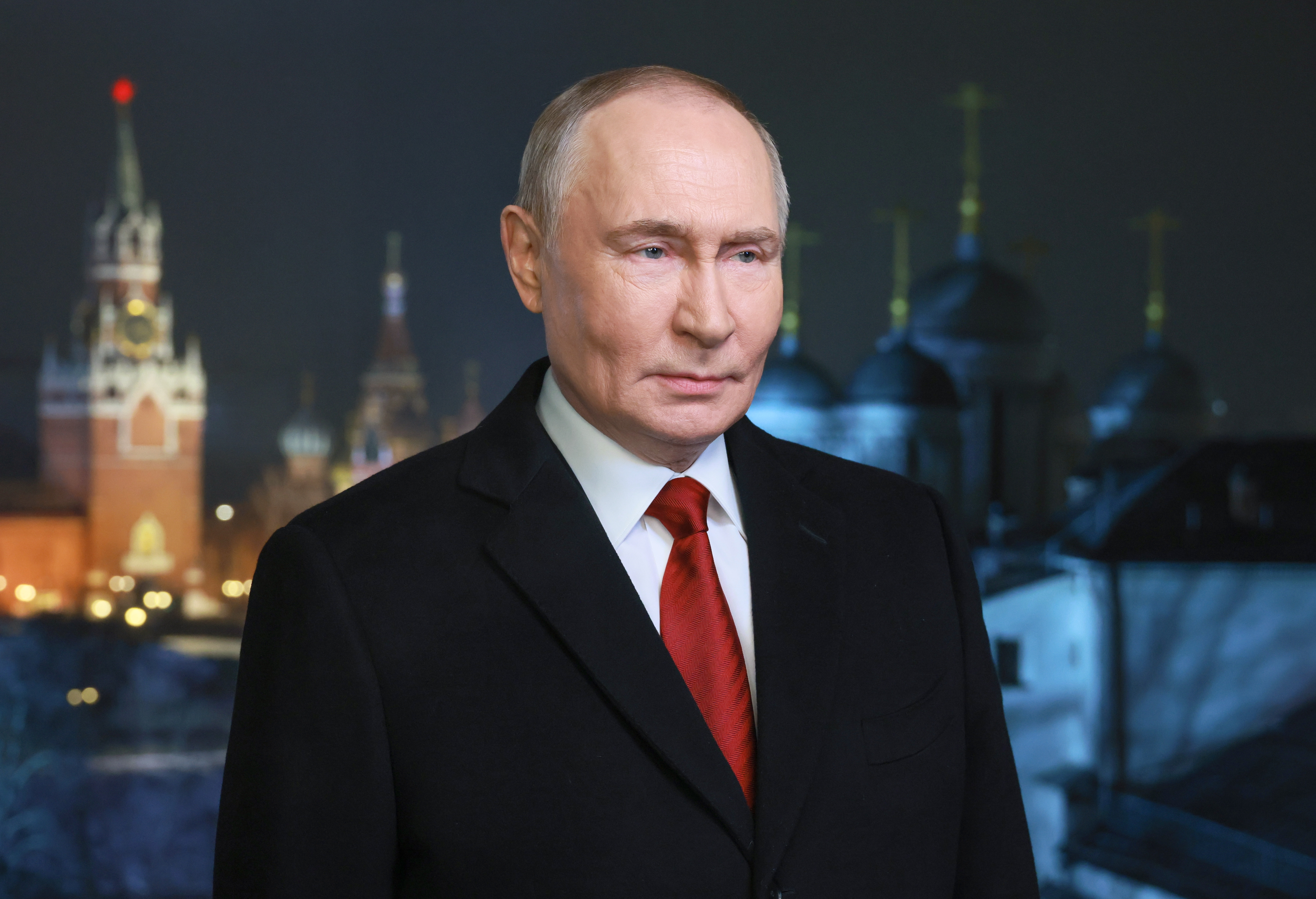
President Putin delivers his new year address
EPA
What may be alarming Putin’s political technologists is that both the Communists and ultra-nationalist Liberal Democrats have started campaigns aimed at capitalising on discontent over growing economic hardship. The minimum wage is being increased by 20.7 per cent, but the Communist leader complained this wasn’t enough and should be increased by 50 per cent, for example.
From both left and right, Putin’s United Russia party is facing a populist campaign essentially arguing (with some basis) that the fat cats are looking after themselves at the expense of the salt-of-the-earth masses. With the economy sliding into recession, VAT being raised 2 per cent, household utilities bills having grown by 12 per cent on average in the past year, and the non-military industries in crisis, this message has some appeal.
Military gamble
For now, Putin will continue to appease Trump and hope that he can get a deal that suits him. However, there seems little likelihood that Zelensky will surrender the last piece of Donetsk region, as Putin demands, and the expectation in Moscow is that these talks will founder. Then what?
Unless he gets the kind of concrete security and reconstruction guarantees Ukraine needs, Zelensky has no real option but to fight on. The perennially risk-averse Putin will find himself perversely in a still stronger position, but also facing a tougher decision.
There is some belief in Russian circles that after a few months’ continued advance, Kyiv will be willing to open negotiations again in spring with a greater willingness to compromise. However, this will probably require Putin to rely on Trump again, and risk the talks dragging on and failing close to the Duma elections. It will also empower the nationalists, who even now are claiming that Putin is insufficiently wholehearted in his pursuit of victory.

Putin and Trump at a press conference during their summit on Ukraine in August
DREW ANGERER/AFP
He could instead choose to stick to the military option. This may feel safer: he has momentum on the ground, the nationalists are appeased, and he is not relying on those treacherous Americans.
However, this is also a gamble. The worsening economy is going to affect military recruitment: he may have to deploy conscripts or mobilise reservists if Russia continues to take the current level of losses and the pool of willing volunteers begins to dry up. This will be unwelcome enough, but as people’s lives get harder, the populist political challenge will also become more appealing.
Of course, the Duma election will be rigged to produce whatever result Putin wants, but the more blatant the fix, the greater the chance of protest. He learnt this in 2011-13, when obvious electoral fraud triggered the largest protests since the fall of the Soviet Union. As a political insider observed: “Putin was hoping he could go easy on the use of ‘administrative resources’ in these elections, that United Russia could campaign on a ‘we won’ platform. That’s still possible, but no sure bet.”
This is the problem for Putin: he doesn’t like taking risks. The year ahead all depends on what he thinks is the safest path through 2026.