I recently returned to Rome from Dublin. That my visits to Ireland’s shores are few affords me clear snapshots of developments in society and culture there.
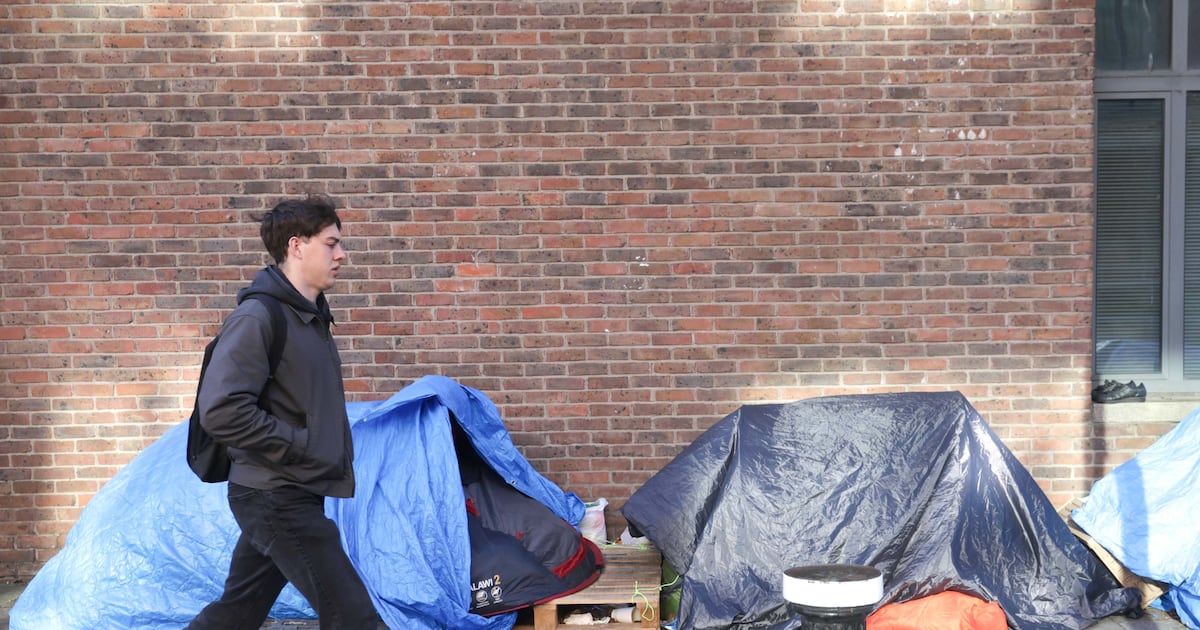
For many years before I left Ireland in 2016, the problem of homelessness in Dublin had been an absolute disgrace. I now have no words to describe it. “Disgrace” is a radical understatement of the state of affairs that seems to have become normalised.
Since homelessness has long since been an issue in Dublin, immigration and the unrest that it is currently stirring up cannot fundamentally be blamed for it. At the very least, as the following two snapshots indicate, there are other factors at play.
“Linda” – I have changed her name to conceal her identity – is 21 and is Irish. Her mother, who died when she was younger, was Indian. Her father, who died late last year, was Irish. Linda was born in Ireland.
When her father died, she could not afford the rent for the accommodation she shared with her father. So she is left to grieve on the street. She wakes in the morning with bruises, so she says, having been kicked throughout the course of the night. She has been told to “go back to Romania”.
“Grace” – again, name changed – comes from a reasonably well-off area. She comes across as a little quirky. Unfortunately, she is bipolar. She would love to get enough money to get out of Dublin, to enjoy the fresh air in the countryside.
Back in the day when I was young – in the 1970s and ′80s – there was basically no homelessness in Dublin. Those were the days of the “bad old Catholic Ireland”, which, despite my pretty good memory, I cannot for the life of me recall. I don’t think I am alone on that score.
As Fr Vincent Twomey, emeritus professor of moral theology at St Patrick’s College, Maynooth, pointed out in his book, The End of Irish Catholicism?, the kind of Catholicism that predominated in Ireland, before the collapse of recent decades, had certain weaknesses. Nevertheless, it still arguably provided a bulwark against homelessness.
Compassion towards one’s homeless neighbour is an expression of the love one has for God. St Paul writes that faith works through charity. We read in the Letter of St James: “Someone will say, ‘You have faith and I have works’. Show me your faith apart from your works and I by my works will show you my faith.”
Selfishness weakens or even kills charity, while growth in goodness is a function of growth in charity. Charity, for its part, is not only an expression of faith but also animates faith.
There is a dynamic and reciprocal relationship between faith and charity. As faith increases, so too does charity. Likewise, as charity grows, so also does faith. On the other hand, a lessening in either of these theological virtues ensures a diminution in the other.
The sex-abuse scandals, of course, were the immediate catalyst for many people turning their backs on the Catholic faith in the fullness of its sacramental expression in the Church. Without wanting to diminish the role of these scandals, other factors were also at play, one of these being greed.
The great anglophone philosopher, Alasdair MacIntyre, noted that greed/avarice, which has been regarded as a capital sin throughout the history of Christianity, has in modernity come to be seen as a virtue. Amassing wealth and property is now deemed to be a self-evidently good thing to do in the so-called developed world. Ireland is no exception to that development.
Brad S Gregory, author of The Unintended Reformation, has charted the rise of consumerism since the time of the Reformation. In the absence of shared religious beliefs or moral convictions, consumerism alone now provides the glue that keeps our society together.
The greed that fuels consumerism is deemed to be one of the greatest human character flaws because from it flows other evil attitudes and acts. Among these attitudes and acts is what Thomas Aquinas refers to as insensibility to mercy (compassion).
He writes that since covetousness (greed) exceeds in retaining possessions, it gives rise to insensibility to mercy because a person’s heart “is not softened by mercy to assist the needy” with his/her riches.
In recent times there has seemingly been a small but significant turn (back) to the Christian faith, particularly Catholicism, elsewhere. If this development reaches Ireland, it will be good news for homeless people. Faith, after all, works through charity, which is opposed to greed and its offspring.
Fr Kevin E O’Reilly is associate professor of moral theology at the Pontifical University of St Thomas Aquinas in Rome