
Strange though it may seem, the best view in Ireland of the unfolding global investments in artificial intelligence is to be had from a hiking trail looking down at the city from the Dublin mountains.
The hulking shapes that emerge below are local evidence of the international frenzy over AI, which their promoters say will drive productivity and reshape the world economy to boot.
Many billions of private investments are pouring into making AI chipsets and developing the enormous processing power capable of handling new forms of data.
But for all the talk, the AI revolution still requires physical infrastructure in the shape of new energy-hungry data centres, like those glimpsed from the Dublin mountains.


Large amounts of public money are at stake too. AI processing will require more electricity generated from renewables, but likely from fossil fuels too. And supplying that power to the data centres requires rebuilding power lines, with funding inevitably coming from the public purse.
The scene has long been set for a traditional clash between public and private interests. This is further complicated in Ireland because the big tech firms play a big part in funding government revenues.
 Meta – the owner of Facebook, Instagram and WhatsApp – says it plans to buy Singapore-based AI firm Manus (Alamy Stock Photo)
About a third of all the state’s tax revenues in 2025 was collected from corporation taxes, paid in large part by the small group of US corporate giants which are now involved in the AI investment race.
The demands of AI have, if anything, strengthened the hand of the multinationals in influencing public policy in Dublin.
On the other hand, Irish-owned small firms who still provide most of the 2.8 million jobs in the Republic, along with many citizens and climate activists north and south, will continue to wonder just who benefits from the chunky public investments involved in supporting the offshore wind farms and the new power grids and battery storage planned down the Irish Sea and into the Atlantic over the next 10 years.
Critics worry a large chunk of the island’s promised limitless new wind power will be gobbled up by foreign-owned AI data centres.
A 2024 survey showed there were already around 80 data centres operating in Ireland. Many of those had only recently been built and 40 more centres had secured planning permission by that time.
A scan of Datacenters.com, a site that tracks the explosion of data centre construction across the globe, confirms that the vast majority of the Irish data centres are based around the capital. There is a small cluster in Belfast and a handful more are shared between Cork, Galway, and Kilkenny, with planning sought for a few centres in other towns.
But building more data centres also involves a slugging match that involves the world’s biggest companies and their influential business lobby groups.
The Irish government and its regulators are charged with overseeing public investments in clean electricity and with carbon-reduction targets that appear to conflict with the demands of the new AI data centres.
Official policy here is further entangled with public obligations to sustain future economic health by way of the Government’s IDA agency encouraging foreign tech investments.
But figures from the Climate and Energy Division of the Central Statistics Office stand out. Last summer it said that data centres accounted for 22% of all the electricity consumed in the Republic in 2024, up “substantially” from 5% in 2015.
And other recent CSO figures show that in terms of population, the Republic in 2023 had the second highest emissions of greenhouse gases in the EU.
Recent business headlines from home and abroad suggest that the mega companies driving the AI investment boom have gained the upper hand.
Before Christmas, Google-owner Alphabet said it plans to buy data centre firm Intersect for $4.75bn. On the same day, official US data suggested that spending on data centres was playing an outsized role in driving US economic growth.
AI chipset producer Nvidia last Monday completed its $5bn investment in Intel – the rival US chipmaker which employs up to 4,900 people at facilities in the Republic, including at its huge plant in Leixlip.
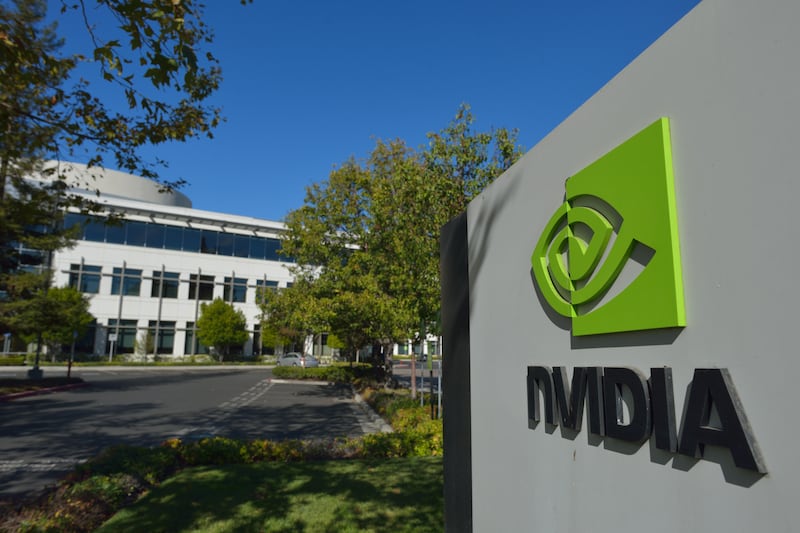 AI chipset producer Nvidia has completed its $5bn investment in Intel – the rival US chipmaker which employs up to 4,900 people at facilities in the Republic, including at its huge plant in Leixlip (Alamy Stock Photo)
Bloomberg the same day reported that AI investments drove some $70bn in data-centre dealmaking in 2025, while Reuters had news of yet another purchase, as Japan’s SoftBank offered $4bn for DigitalBridge, which is involved in the red hot data centre-building boom in Texas.
On New Year’s Eve, Meta – the owner of Facebook, Instagram and WhatsApp – said it plans to buy Singapore-based AI firm Manus.
And back home, analysts will be looking out for more news about the spring plans of Co Cavan-based Kingspan to sell shares and spin out a chunk in its data-centre outfitter Advnsys unit for a potential €6bn (£5.2bn).
The plans will test whether the €13.3bn Irish insulation products giant has got lucky in tapping the data centre investment boom.
Christmas also brought significant news from the Irish government regulator, the Commission for Regulation of Utilities, or CRU, which set rules for new data centres to connect to the power grid.
It’s hard to assess the merits of the ruling, but the business group Wind Energy Ireland that represents the owners, builders, financiers, and operators of data centres, power grid firms, and AI infrastructure was welcoming.
Members of Wind Energy Ireland include the two main Irish banks, Belfast Harbour, Port of Cork, Rosslare Europort, as well as Centrica’s Bord Gáis Energy, forestry firm Coillte and generator ESB and French state-owned EDF which owns half of the huge Wicklow offshore Codling Wind Park development.
Its members also include Germany’s RWE, Norway’s Statkraft, the British Embassy in Dublin, and Danish-owned firms Orsted and wind turbine maker Vestas.
Digital Infrastructure Ireland, Ibec’s Cloud Infrastructure Ireland, along with the American Chamber of Commerce in Ireland which represents the US corporate giants, all welcomed the CRU policy.
Friends of the Earth was critical, however, saying that the “colossal” appetite of the new wave of data centres will eat into all types of energy, whether generated from wind, solar, or from fossil fuels.
 Eamon Quinn
There was more news about data centres last week, as Amazon Web Services secured planning permission for three new centres in Dublin.
Views from the Dublin mountains are set to feature even more of those large hulking buildings in the coming years.