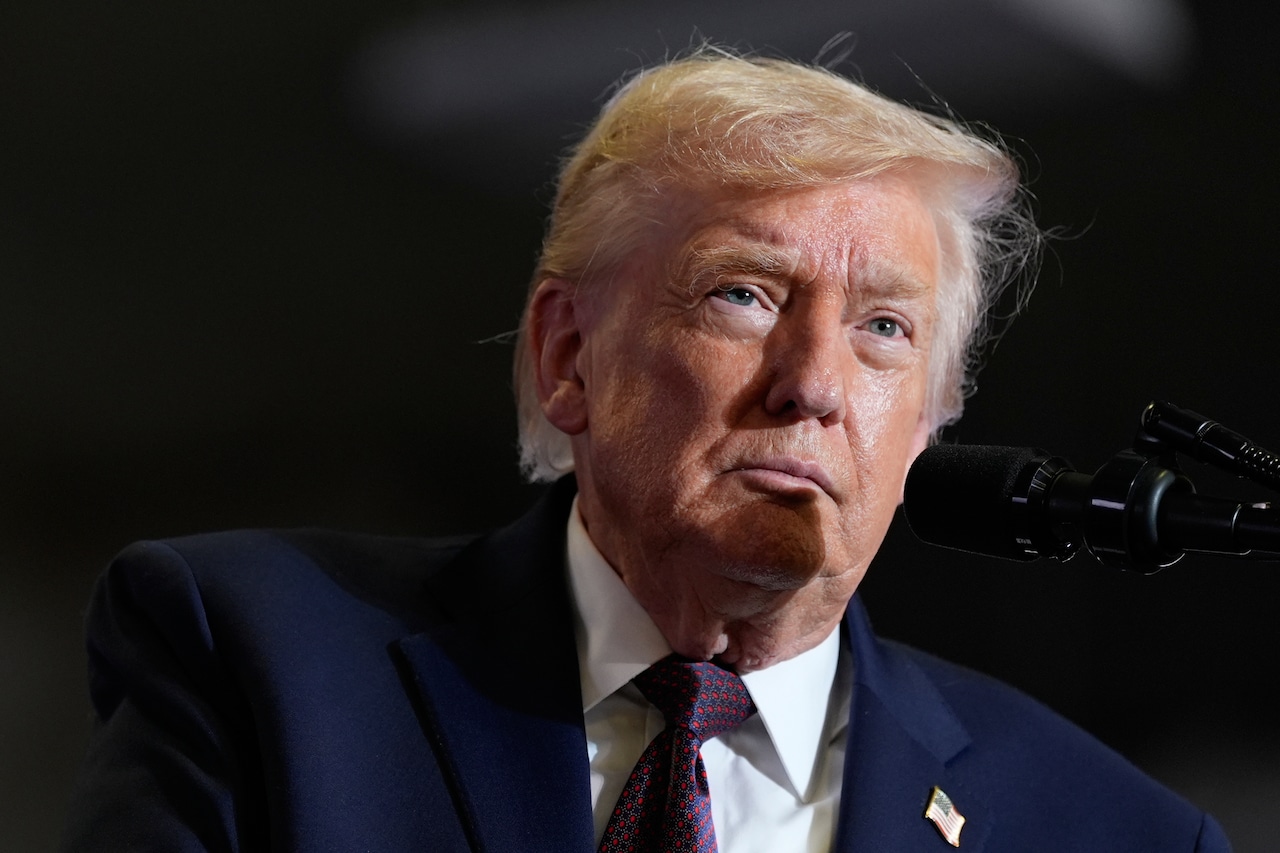
President Donald Trump on Wednesday abandoned his push to deploy the National Guard to three U.S. cities, including Portland.
In a social media post that railed against Democratic mayors and governors of left-leaning cities, Trump left the door open to future federal intervention.
“We are removing the National Guard from Chicago, Los Angeles, and Portland, despite the fact that CRIME has been greatly reduced by having these great Patriots in those cities, and ONLY by that fact,” Trump wrote on his Truth Social platform.
“We will come back, perhaps in a much different and stronger form, when crime begins to soar again – Only a question of time!” Trump continued.
Trump on Sept. 27 authorized sending federal troops to Oregon to protect what he described as “War ravaged Portland.” The president’s declaration touched off months of loud but largely nonviolent protests between demonstrators and federal officers tasked with protecting the U.S. Immigration and Customs Enforcement facility in South Portland.
Although the president said Wednesday he was “removing” the National Guard from Portland and attributed a drop in crime in the city to their presence, the only reported instance of members of the Oregon National Guard at the Portland ICE facility occurred on one day in October.
In that episode, Oregon National Guard troops were on the ground at the South Portland building on Oct. 4 hours after a federal judge had issued a temporary restraining order that barred the federal deployment of state troops to the city, as was revealed over the course of a court case to determine the legality of National Guard mobilizations to Portland.
In June, the Trump administration deployed National Guard troops to Los Angeles to quell unrest as protesters clashed with federal immigration officials. As of Dec. 15, 100 California National Guard troops remained in the Los Angeles area, according to the the U.S. Northern Command.
In Chicago, as in Portland, an immigration crackdown and the threat of a National Guard deployment prompted protests and legal action to bar the troops from mobilizing.
Trump’s Wednesday announcement comes a week after the U.S. Supreme Court barred the president from deploying National Guard troops to Chicago to support the administration’s immigration crackdown. The ruling put the legality of the administration’s National Guard deployment in other U.S. cities in question.
Prior to the Supreme Court ruling, a federal judge in November issued a permanent injunction barring the president from deploying National Guard troops from any state to Oregon, finding Trump had exceeded his authority by attempting to send troops to Portland.
In Portland, nighttime demonstrations remained mostly nonviolent. Local and federal police arrested dozens on allegations of assaulting officers and destroying government property, many of them at the outset of the protests in early summer. But the timbre of protests shifted in response to Trump’s September mobilization order, with demonstrators largely hewing to the adage “Don’t take the bait” — a byword meant to show national onlookers that Portland didn’t need federal troops to keep the peace.
Portland protesters donned inflatable animal costumes after footage went viral in early October of a federal agent deploying chemical spray into the air vent of a protester in a frog costume.
Later that month, more than a thousand cyclists protested efforts to send in the National Guard by participating in an “emergency” Naked Bike Ride — in the rain. U.S. House Speaker Mike Johnson memorably responded that the bike ride was “the most threatening thing I’ve seen yet.”
Levity outside the ICE facility belied impacts to nearby apartment residents affected by secondhand tear gas exposure, as well as the ripple effects of Trump’s immigration crackdown in the Portland area, which The Oregonian/OregonLive documented extensively.
Protests outside the ICE facility have dissipated as rainy winter weather has set in. On Wednesday evening, all was just as quiet outside the facility. A sole protester held a sign that read “Hatred only divides.” Cars drove by without honking. Another man held a phone, apparently live-streaming the stillness.
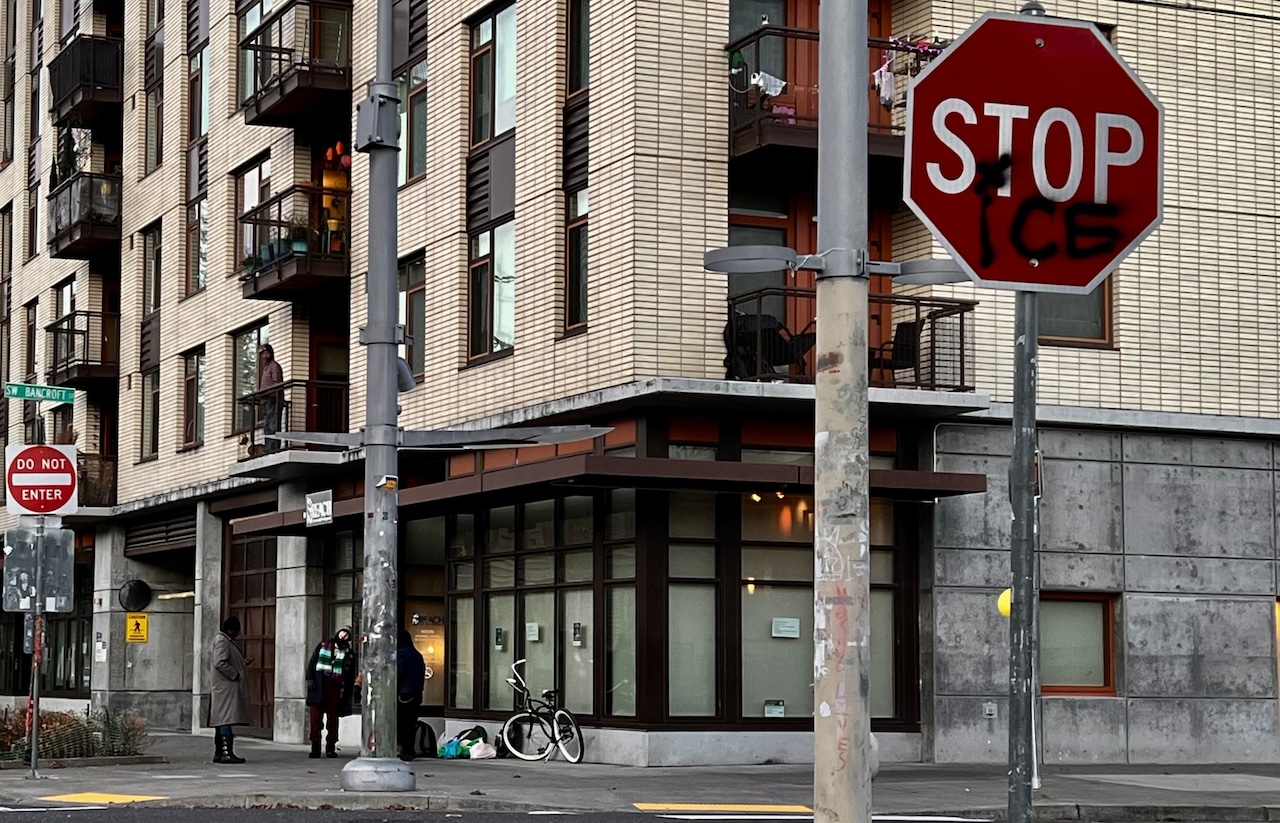 Graffiti created the message “Stop ICE” on a street pole near the U.S. Immigration and Customs Enforcement office in South Portland on Wed., Dec. 31, 2025.Zane Sparling/The Oregonian
Gov. Tina Kotek and Oregon Attorney General Dan Rayfield said state officials had yet to see formal orders to send members of the National Guard home.
“They were never lawfully deployed to Portland and there was no need for their presence,” Kotek said in a statement. “If President Trump has finally chosen to follow court orders and demobilize our troops, that’s a big win for Oregonians and for the rule of law.”
While some uncertainty remains, Rayfield sounded an optimistic tone Wednesday.
“This outcome shows that standing up for the Constitution works,” Rayfield said in a statement.
It’s unclear if the federal government’s appeal of U.S. District Judge Karin J. Immergut’s injunction blocking federal deployment of National Guard troops to Portland, which is before the 9th U.S. Circuit Court of Appeals, will be halted or not.
The Oregon attorney general’s office is treating the case as moving forward, said Jenny Hansson, Rayfield’s spokesperson.
“I’m told that as of right now — yes, our case is still a ‘go,’ ” Hansson said Wednesday.
But an outside legal expert said the federal government could dismiss its appeal, considering the recent U.S. Supreme Court ruling in the Illinois case.
“I expect (the federal) DOJ will suggest to judges that it is moot, and the judges may be happy to agree,” said Carl Tobias, a professor at the University of Richmond School of Law.
–Carlos Fuentes, Zane Sparling and Fedor Zarkhin contributed to this article