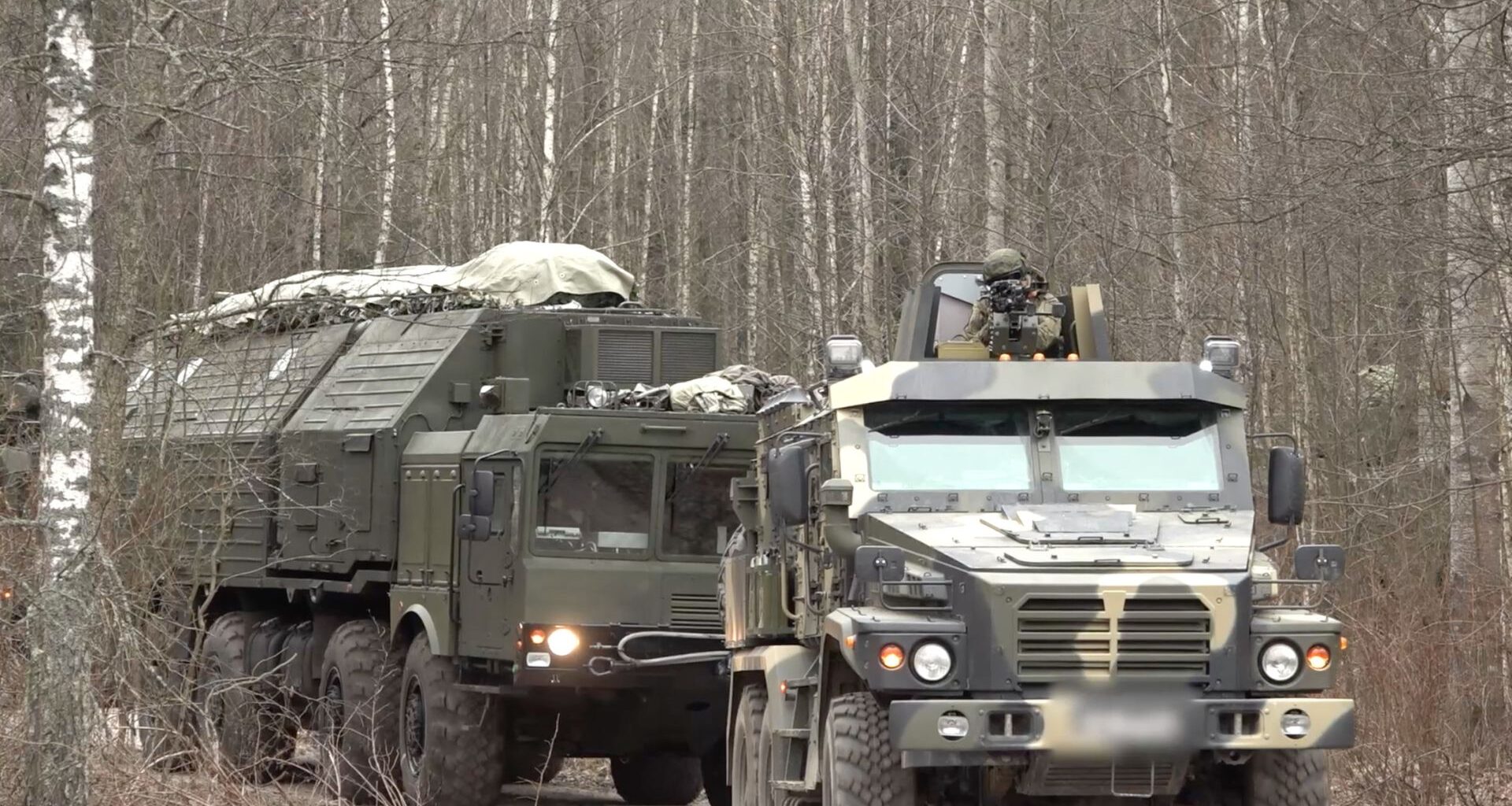
Russia has made a move to raise the stakes in its war with Ukraine by announcing the deployment of a new nuclear-capable missile system to neighboring Belarus.
The claim was made on Tuesday, one day after Moscow alleged that Ukraine carried out a large drone attack on President Vladimir Putin’s residence, an accusation Kyiv strongly denies.
The timing has fueled concerns in Europe about further escalation and shorter missile warning times for nearby capitals.
Missile deployment signals a sharper warning
Russia’s defense ministry released video footage showing the Oreshnik missile system moving through a snow-covered forest, escorted by troops. The clip also showed soldiers camouflaging vehicles with green netting and raising a flag at an airbase in eastern Belarus, close to the Russian border.
The Oreshnik system is described by Moscow as nuclear-capable, although technical details were not disclosed.
Belarusian President Alexander Lukashenko said that 10 Oreshnik systems would be stationed in his country. Putin confirmed that the missiles had entered active service during a meeting with senior military commanders on Monday.
At the same meeting, he repeated his intention to seize more Ukrainian territory, including the southern city of Zaporizhzhia.
If the deployment is accurate, analysts say it would be a symbolic move that reduces the time needed for a Russian missile to reach parts of the European Union. Belarus borders several NATO members, and the placement of such systems there carries both military and political weight.
The video release appears to be designed to send a clear message abroad while also preparing the Russian public for a possible new phase of the conflict.
Drone attack claims raise doubts
The missile announcement followed Russia’s claim that Ukraine launched a major drone attack on Putin’s residence in the Novgorod region on Sunday night. Foreign Minister Sergei Lavrov warned that “reprisals” would follow and said targets had already been selected. He claimed that 91 Ukrainian drones were involved in the operation.
However, the Kremlin has not presented evidence to support the allegation. Putin’s spokesperson, Dmitry Peskov, said on Tuesday that no proof would be released because all the drones were shot down. He declined to explain why there was no debris.
Residents in the area told independent Russian outlet Sota that they heard no explosions or air defense fire. No air raid alerts were issued, and there were no verified mobile phone videos showing smoke or damage, which are typically seen after confirmed attacks.
Kyiv rejects accusations and pushes back
Ukraine has flatly denied the claims. On Tuesday, Foreign Minister Andrii Sybiha said Russia had fabricated the story and urged other nations not to react to it. “Almost a day passed, and Russia still hasn’t provided any plausible evidence to its accusations. And they won’t. Because there’s none. No such attack happened,” he wrote on X.
Sybiha criticized India, Pakistan, and the United Arab Emirates for expressing concern over the reports. “Such reactions to Russia’s baseless manipulative claims only play into Russian propaganda and encourage Moscow for more atrocities and lies,” he said.
Ukrainian military commanders acknowledged that Russian kamikaze drones frequently pass over sensitive sites in Ukraine. One officer, the head of territorial defense unit 112, said his team shot down two drones on Saturday near the state residence in Koncha-Zaspa, south of Kyiv.
Diplomacy continues amid rising tension
Despite the rhetoric, Ukraine is trying to keep attention on diplomacy. The developments followed a two-hour meeting on Sunday in Florida between President Volodymyr Zelenskyy and US President Donald Trump. They discussed a 20-point peace plan under which Washington would offer post-war security guarantees approved by Congress.
No agreement was reached on the eastern Donbas region, which Putin insists must be handed to Russia. Zelenskyy has rejected any territorial concessions and instead proposed a demilitarized zone, to be confirmed by a referendum if Russia agrees to a ceasefire lasting at least 60 days.
Zelenskyy said Russia was spreading “fake news” in response to progress made in talks with the United States. He is scheduled to meet European leaders on January 6 in France at a conference hosted by President Emmanuel Macron to discuss Europe’s role in a potential peacekeeping mission.