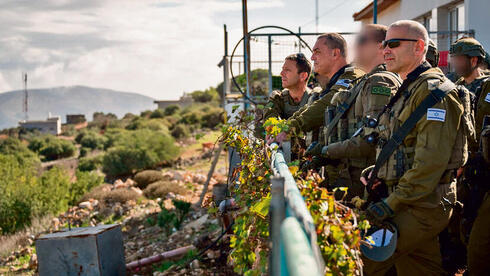
Military officials estimate that additional territorial security battalions will be required to defend the expanded settlement areas, as the 2005 disengagement is effectively reversed in the northern West Bank.
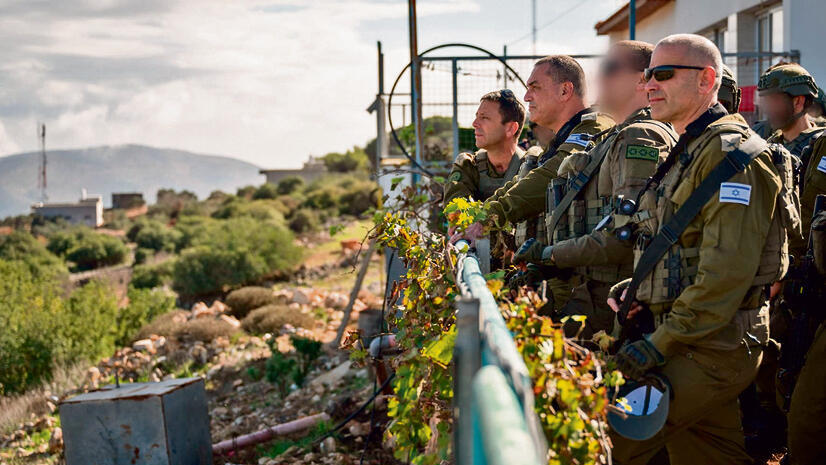
Military officials say the sustained operations carried out in the northern West Bank over the past two years, including in Qabatiya and the prolonged presence inside the Jenin refugee camp, helped create conditions that made settlement activity in the area more feasible from a security standpoint.
Ending the Mevo Dotan enclave
As settlements expand, the military is also increasing intelligence, surveillance and communications capabilities in the northern West Bank, including observation towers, radar systems and enhanced command-and-control infrastructure. The existing yeshiva and the renewed settlement at Homesh are expected to alter daily life in the northwestern West Bank by 2026.
The area north of the settlement of Kedumim had long been closed to Israeli access, leaving a small Israeli enclave in the far northwest of the West Bank that included communities such as Mevo Dotan and Reihan. These communities became geographically isolated, with Mevo Dotan accessible only via routes near Katzir and Pardes Hanna, effectively cutting it off from the rest of the West Bank.
3 View gallery

Smotrich and Yossi Dagan, head of the Samaria Regional Council, at Sa-Nur last summer
With the planned changes, the military estimates that at least one additional battalion will be required in the initial stage to protect the rebuilt settlements. The West Bank Division currently operates 23 permanent territorial defense battalions, from southern Mount Hebron to the Jenin sector near Afula. By comparison, during the Second Intifada more than two decades ago, about 80 battalions operated in the West Bank, at times under two regional defense divisions. In recent years, amid waves of terror attacks, reinforcement deployments have raised the number to nearly 30 battalions.
“Until a few years ago, entering the Balata refugee camp in Nablus meant facing heavy gunfire and explosive devices,” military officials said. “Today we can enter there in broad daylight and face at most stone throwing. Deterrence has increased due to the change in approach and sustained pressure on terrorist elements.”
Armed civilian squads and expanded firepower
The Jewish population in the West Bank, currently about 500,000, is expected to grow by tens of thousands. New settlements are to be defended primarily from the surrounding area, while internal security will rely on civilian emergency response squads. These squads consist of local residents who receive weapons and military training from the IDF and operate under regional security coordinators within the framework of the regional brigades.
In most incidents involving friction with Palestinians, these squads provide the initial response until territorial battalions arrive. Many of the regional defense soldiers are themselves local residents who were mobilized as reservists after October 7.
Over the past two years, the military has carried out a broad reform of emergency response squads, particularly in the West Bank. Members have been equipped not only with rifles and ammunition but also with machine guns, anti-armor weapons, communications gear and additional equipment. The military is also considering issuing fragmentation grenades and small anti-tank missiles.
The IDF is also planning for scenarios previously considered unlikely, including mass violence involving thousands of armed Palestinians. Officials stress there is currently no indication of such a development, and that weapons in Palestinian hands are generally limited to small arms and improvised explosive devices.
At the same time, cooperation with the Israeli Air Force has been significantly expanded, with immediate availability of armed drones and attack helicopters for brigade and battalion commanders. These capabilities are subject to strict limitations, including designated sensitive sites that require approval from senior commanders before any strike.
Military officials note that even light weapons could pose a serious threat if used simultaneously, given the lack of physical separation between Israeli and Palestinian communities and the porous seam line with central Israel. The West Bank Division is also monitoring hundreds of terrorists, including murderers released in hostage deals with Hamas in recent years. Some have been rearrested after showing signs of returning to terrorist activity, while all remain under constant surveillance and periodic Shin Bet reporting requirements.