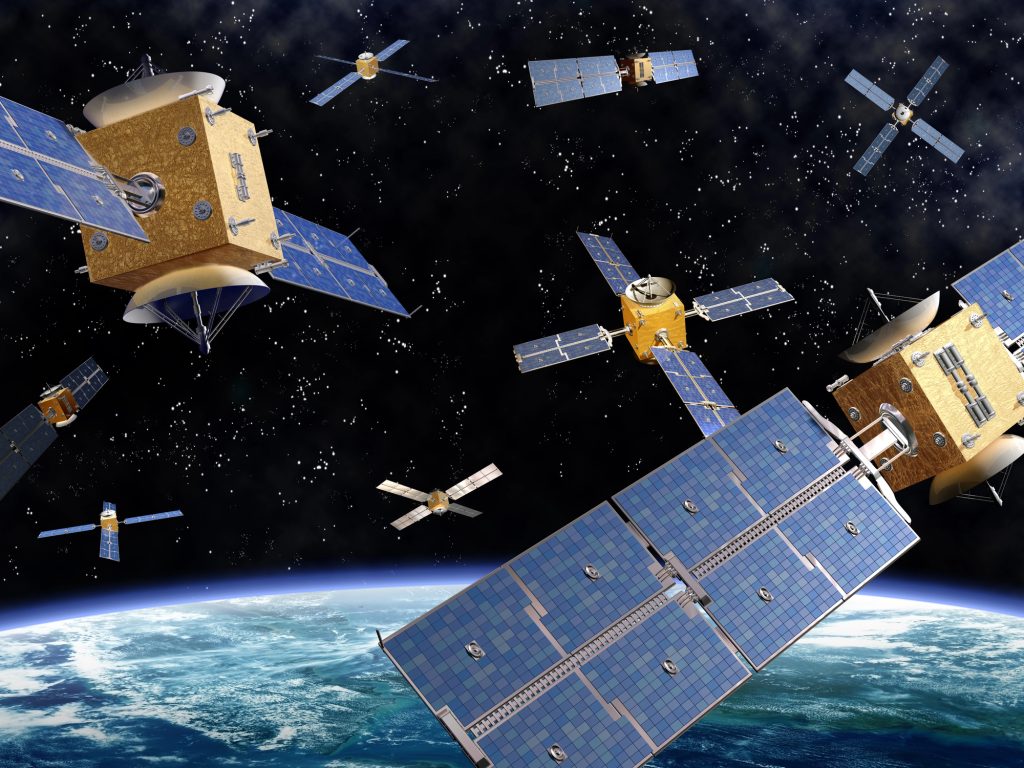
Earth’s orbit is starting to feel uncomfortably busy, and the systems meant to keep it safe are struggling to keep up.
That is the warning from a new report by the RAND Corporation, which says space traffic management is falling behind the explosive growth in satellites circling the planet. Without faster international coordination, the report argues, the risk of serious collisions and long-term damage to key orbits is rising sharply.
More than 10,000 active satellites are now operating above Earth, alongside roughly 43,000 tracked objects. Behind those figures is a much larger and more dangerous problem: millions of debris fragments, many too small to track but large enough to destroy a spacecraft on impact.
Collision Avoidance Has Become Costly And Constant
For satellite operators, avoiding collisions is no longer an occasional concern. It is a daily operational reality. Each year, tens of thousands of close-approach warnings are issued. Manoeuvring a single satellite out of danger can cost up to €25,000, and repeated course corrections shorten a satellite’s lifespan. For companies running large constellations, those costs can quickly add up to millions.
The RAND report describes the situation as a growing “game of chicken” in orbit, where operators must make fast decisions based on incomplete or conflicting data, often without knowing whether another satellite will move first.
A Patchwork System With No Global Referee
Despite broad agreement on the goal — safe and sustainable space operations — there is still no global system to manage orbital traffic.
Instead, space traffic management is split across national and regional efforts. The United States, Europe, and countries across the Indo-Pacific are all developing their own systems, each shaped by different regulatory philosophies and security concerns. These systems rarely align cleanly.
The result is fragmentation. Operators are forced to juggle multiple data sources, follow different standards, and respond to alerts that are not always consistent. In the worst cases, that lack of coordination could mean delayed responses or missed warnings during a potential collision.
Even The Definition Of Space Traffic Management Is Disputed
One of the more striking findings in the RAND study is how basic some of the disagreements still are. Researchers examined 25 different definitions of space traffic management used by governments, industry groups, and international bodies. Almost all of them agree on the end goal of safety and sustainability, but diverge sharply on how traffic should be managed and who should be responsible.
Those disagreements are not just academic. When countries define the problem differently, they build incompatible systems. Data-sharing becomes harder, technical standards drift apart, and international cooperation slows at exactly the moment it is most needed.
A Step-By-Step Path Toward Global Coordination
Rather than calling for an immediate, sweeping global treaty, RAND argues for a more realistic, staged approach.
In the short term, the report urges countries and operators to focus on practical steps: shared technical standards, clearer data-sharing protocols, and faster communication when collisions or debris events occur.
Over time, those foundations could support something more ambitious: a dedicated international space traffic management organisation. The report suggests such a body could eventually play a role similar to air traffic control on Earth, providing neutral coordination in an increasingly crowded orbital environment.
Why Inclusion Could Make Or Break The System
RAND also warns that any global solution must be genuinely inclusive. Space traffic management will not work if it is dominated by a small group of established space powers. Emerging space nations and new commercial operators need to be involved early, both to build trust and to ensure global compliance.
The report points to capacity-building programmes, shared technical frameworks, and regular international dialogue as ways to bring more countries into the system without forcing immediate political alignment.
The Clock Is Ticking On Orbital Safety
The central message from RAND is hard to ignore: space activity is accelerating faster than governance systems can adapt.
If coordination continues to lag, key orbits could become too risky or too cluttered to use safely. Once that damage is done, it may not be reversible.
Order in orbit, the report concludes, is still achievable. But only if countries start working together now, before congestion turns into long-term loss.