As the Trump administration steadily hypes the benefits it sees from its monthslong immigration enforcement surge in Illinois, federal officials have been less eager to address the other side of the ledger: the fiscal cost of Operation Midway Blitz.
Activists, Illinois Democrats in Congress and members of the public have repeatedly sought an accounting of the operation, only to see their requests repeatedly stonewalled. But a Tribune review of court filings, databases and other public records detailing the scope of the incursion and the typical costs of its components begins to paint a clearer picture.
Since Midway Blitz began in early September, the federal government has spent at least $59 million deploying and equipping federal personnel and detaining the roughly 4,500 people arrested by Immigration and Customs Enforcement and Border Patrol agents during that period, the Tribune found.
The analysis — a conservative, back-of-the-envelope estimate — offers one of the first examinations of the operation’s price tag as criticism has escalated over the lack of transparency surrounding how it was conducted and its taxpayer cost.
“For months, the Trump administration has trampled over our Constitution and failed to answer even the most basic questions about how they are conducting immigration enforcement,” U.S. Rep. Lauren Underwood of Naperville said recently, after touring several ICE facilities. “People deserve to know how federal resources are being used in their name.”
Officials from the Department of Homeland Security and its two primary immigration agencies — ICE and Border Patrol — declined to answer detailed questions about Midway Blitz’s costs, without refuting the Tribune’s findings. Instead, a top DHS official emphasized the administration’s broader immigration agenda and criticized Illinois Democratic elected officials, including Gov. JB Pritzker, for limiting cooperation with federal authorities.
“The cost of American lives saved is uncalculatable,” Homeland Security spokesperson Tricia McLaughlin said in an emailed statement. “Our law enforcement is removing thousands of convicted murderers, rapists, child abusers from the country. President Trump is committed to keeping Americans safe.”
“Sanctuary politicians like Governor Pritzker are providing a safe haven for the world’s criminal illegal aliens in Chicago on the taxpayer’s dime,” she added. “Does The Chicago Tribune intend to write a story on the billion-dollar price tag of benefits going toward illegal aliens in sanctuary cities?”
The term “sanctuary cities” refers to jurisdictions that limit when and how local law enforcement may cooperate with federal immigration agencies in specific circumstances. It has nothing to do with public benefits. Eligibility rules for most public benefit programs — such as Medicaid, food stamps and cash assistance — have federal rules that generally bar immigrants in the U.S. without legal permission from receiving them.
Pressed to share the source of the “billion-dollar” figure, explain the apparent discrepancy in the administration’s claims and provide additional details about Midway Blitz spending, Border Patrol spokesperson Steven Bansbach responded in an email: “We have nothing further to add.”
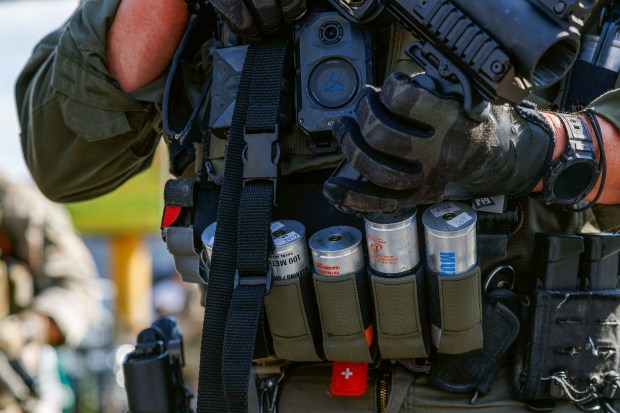 A federal agent holds a launcher and its gas canisters while people protest an immigration sweep near the 3900 block of South Kedzie Avenue in Chicago on Oct. 4, 2025. (Armando L. Sanchez/Chicago Tribune)
The Tribune’s review of government expenses reveals a costly and sprawling operation that extended well beyond immigration arrests, encompassing a surge of manpower, overtime pay, and expenditures on aircraft, crowd-control munitions, private contractors and hundreds of National Guard troops kept on standby.
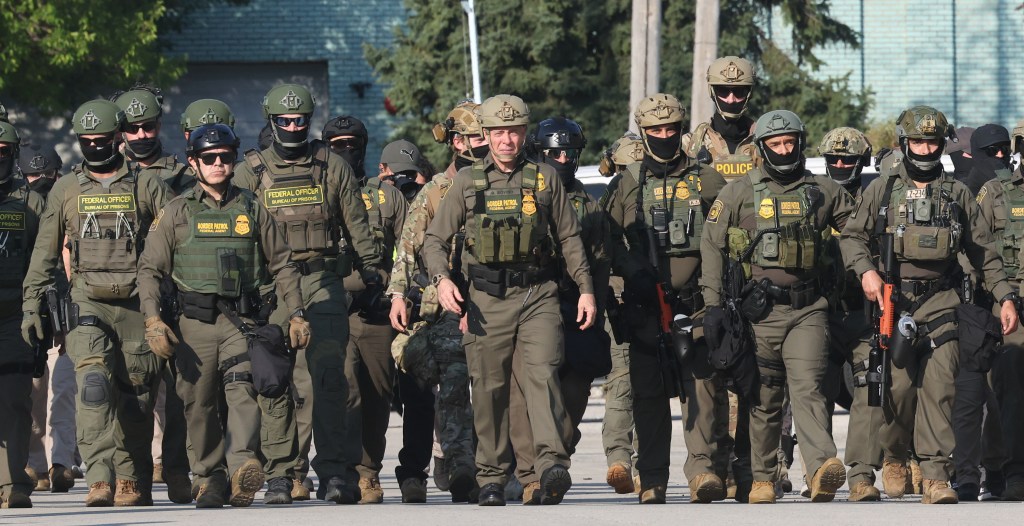
The most visible component has been the addition of about 300 government agents — mostly Border Patrol, along with some ICE officers — who traveled to Chicago from outside the region.
Agents conducted immigration sweeps in ethnic neighborhoods, at Home Depot parking lots and even at a Halloween parade. They also were involved in the build-up at ICE’s processing center in west suburban Broadview, where sometimes tense protests over detainee conditions resulted in agents pushing demonstrators, firing baton rounds and unleashing clouds of chemical irritants. In one two-week span alone, records show, ICE used $100,000 worth of less-than-lethal munitions on crowds outside the facility.
Processing the hundreds of detainees also was a significant cost, in terms of manpower and materials, records show. Meanwhile, 500 National Guard troops from Texas and Illinois slept, ate and trained on bases far from the action, costing as much as $19 million, according to one estimate from U.S. Sen Dick Durbin’s office.
The Tribune’s financial breakdown underscores Trump’s enforcement priorities. In one small but telling detail, the administration approved dozens of Black Hawk helicopter flights but provided only cheap foil blankets for detainees.
The costs in the Chicago region have implications for the rest of the country as well. While Trump failed in using Chicago or other cities as “training grounds” for military forces, the scale and tactics of Midway Blitz suggest a blueprint for similar operations elsewhere, including areas the Trump administration has targeted for enforcement actions, such as Charlotte, New Orleans and the Twin Cities.
Plus, Trump’s top domestic adviser, Stephen Miller, an ardent opponent of immigration, has previously called for ICE to arrest at a “minimum” 3,000 people per day nationwide for immigration violations. Operation Midway Blitz — which yielded about 4,500 arrests over four months, according to DHS’ own estimates — illustrates the enormous cost and resources such a goal would require.
A high-stakes exercise
Of course, money isn’t the only way to measure Midway Blitz’s costs.
There is the human toll: In September, ICE agents shot and killed Silverio Villegas González, a Mexican immigrant, during a traffic stop in Franklin Park. A longtime Chicago resident with diabetes also died, reportedly of natural causes, while in federal custody in Michigan. In another incident, a Border Patrol agent shot a woman five times before agents arrested her; a judge dismissed the charges against her in November.

A memorial for Silverio Villegas González is seen during a vigil in Franklin Park on Sept. 15, 2025. Villegas González was shot and killed Friday by an Immigration and Customs Enforcement agent during a traffic stop. (Armando L. Sanchez/Chicago Tribune)
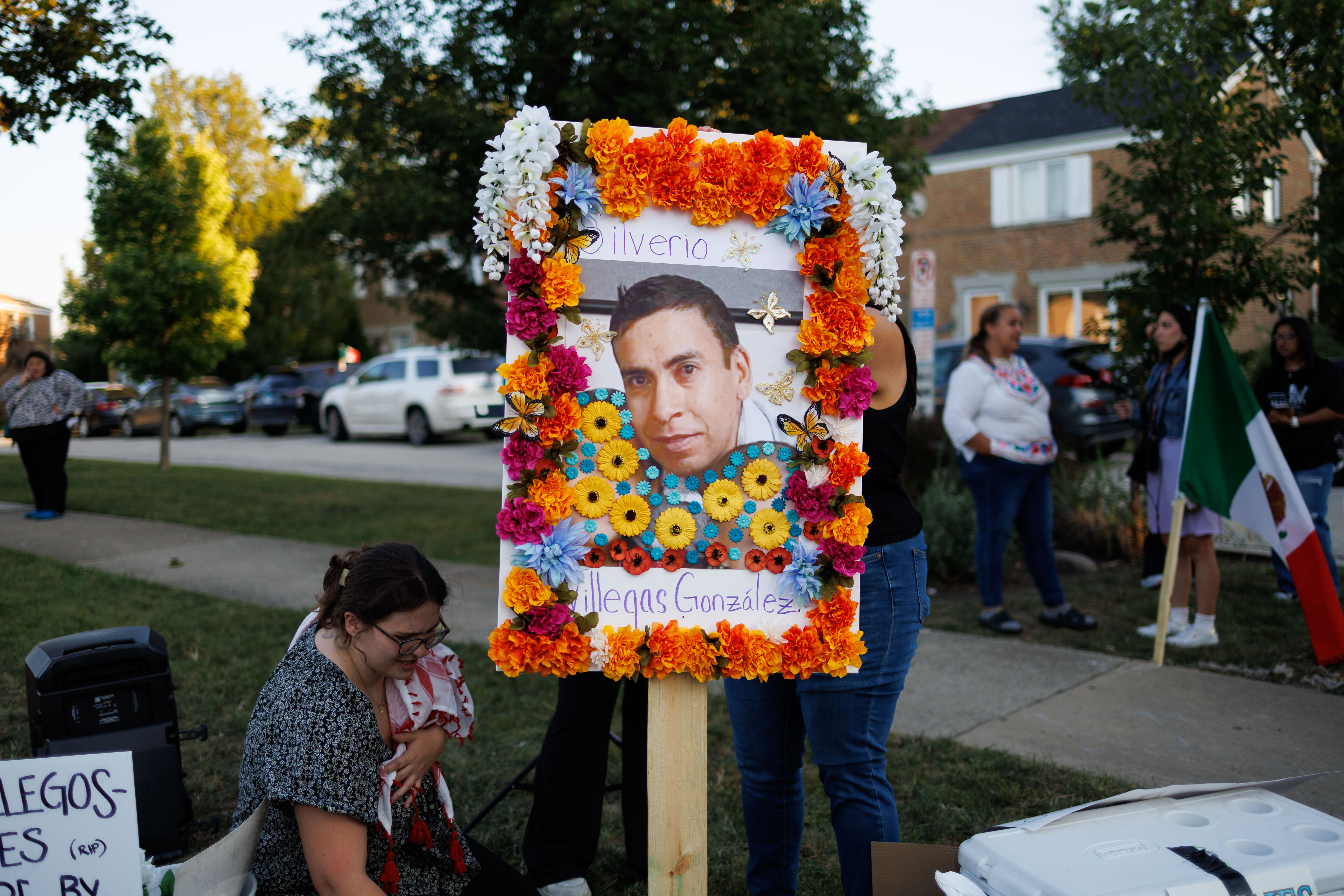
People set up a memorial on Sept. 15, 2025, for Silverio Villegas González, who was shot and killed by an Immigration and Customs Enforcement agent during a traffic stop in Franklin Park. (Armando L. Sanchez/Chicago Tribune)
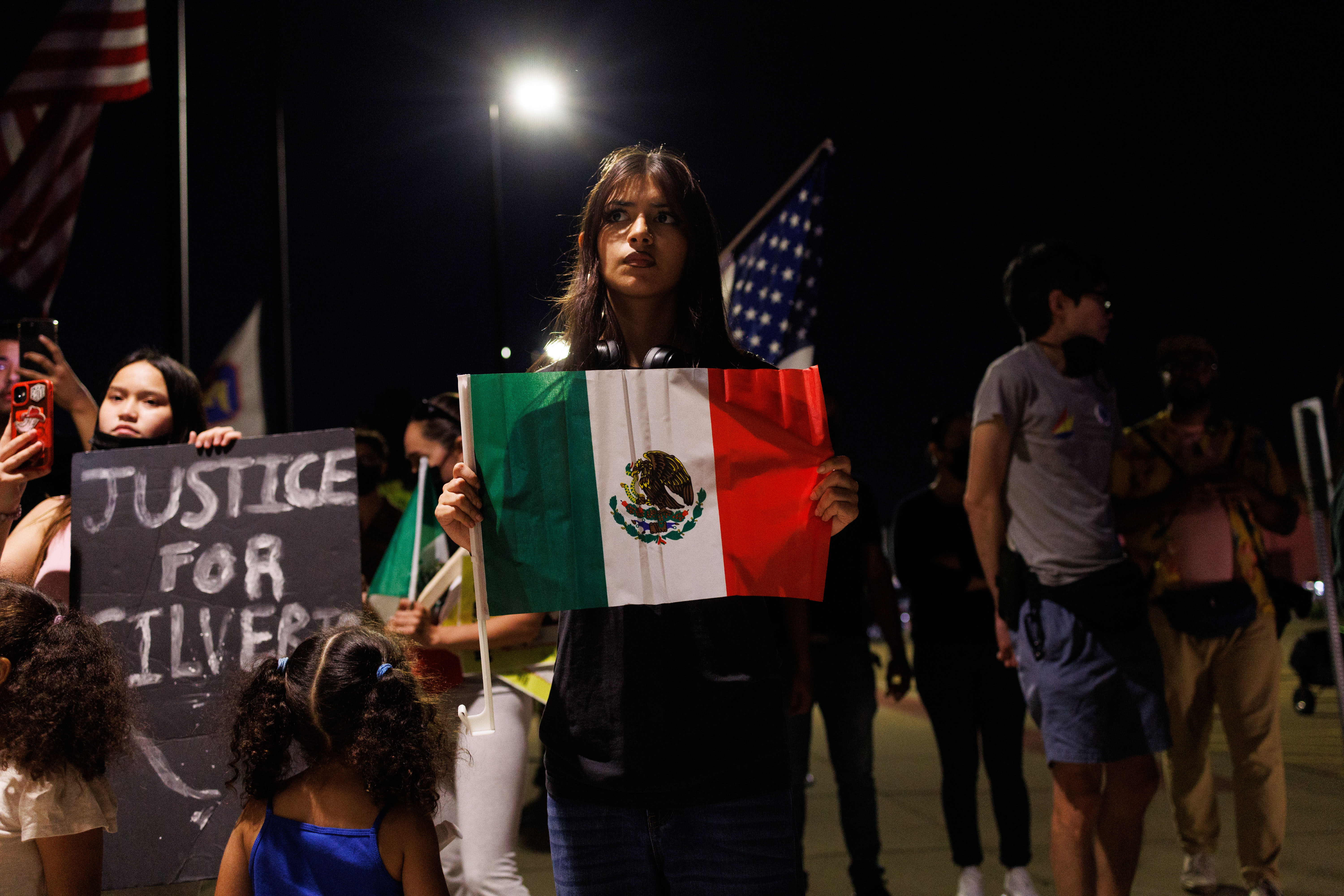
People gather outside the village of Franklin Park police station on Sept. 15, 2025, after marching from the site of a memorial for Silverio Villegas González, who was shot and killed Friday by an Immigration and Customs Enforcement agent during a traffic stop. (Armando L. Sanchez/Chicago Tribune)

Attendees placed various objects, like candles, sugar skulls and flowers on an altar in memory of Silverio Villegas González during a Day of the Dead altar-building event on Nov. 1, 2025, near where he was fatally shot in Franklin Park by an Immigration and Customs Enforcement agent on Sept. 12, 2025. (Dominic Di Palermo/Chicago Tribune)

People gather outside the village of Franklin Park police station on Sept. 15, 2025, after marching from the site of a memorial for Silverio Villegas González, who was shot and killed Friday by an Immigration and Customs Enforcement agent during a traffic stop. (Armando L. Sanchez/Chicago Tribune)
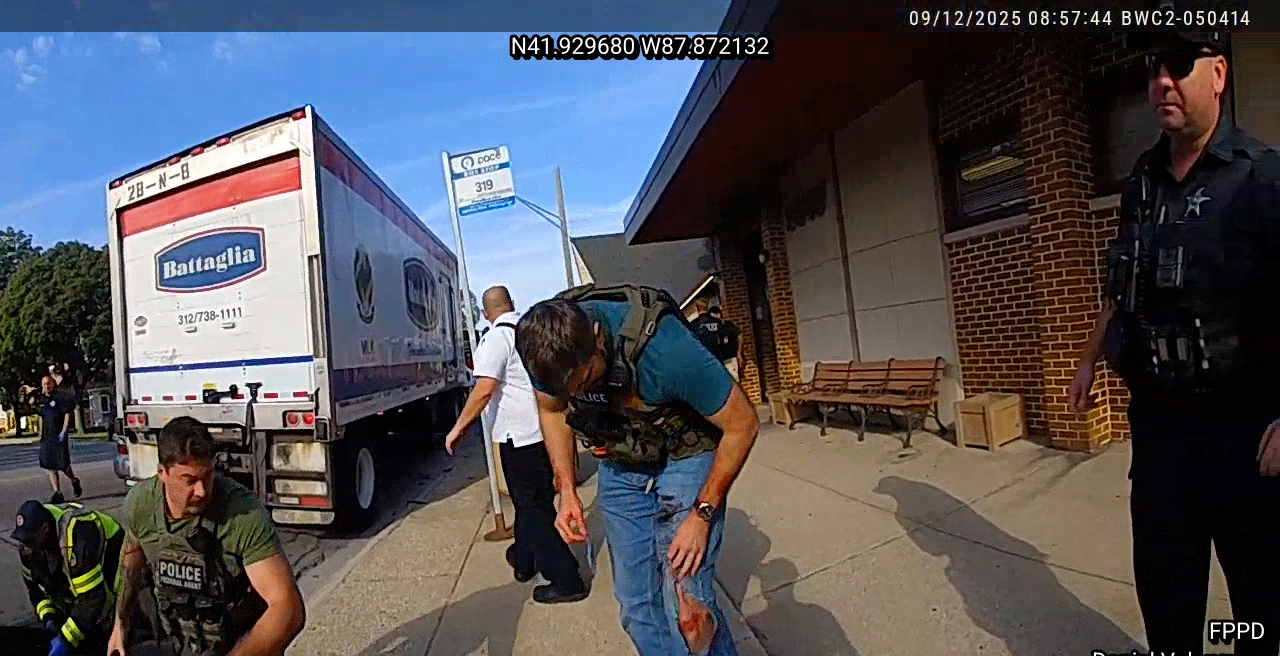
Franklin Park police body-camera footage captures the aftermath of an Immigration and Customs Enforcement agent shooting that killed Silverio Villegas González on Sept. 12, 2025. (Village of Franklin Park)
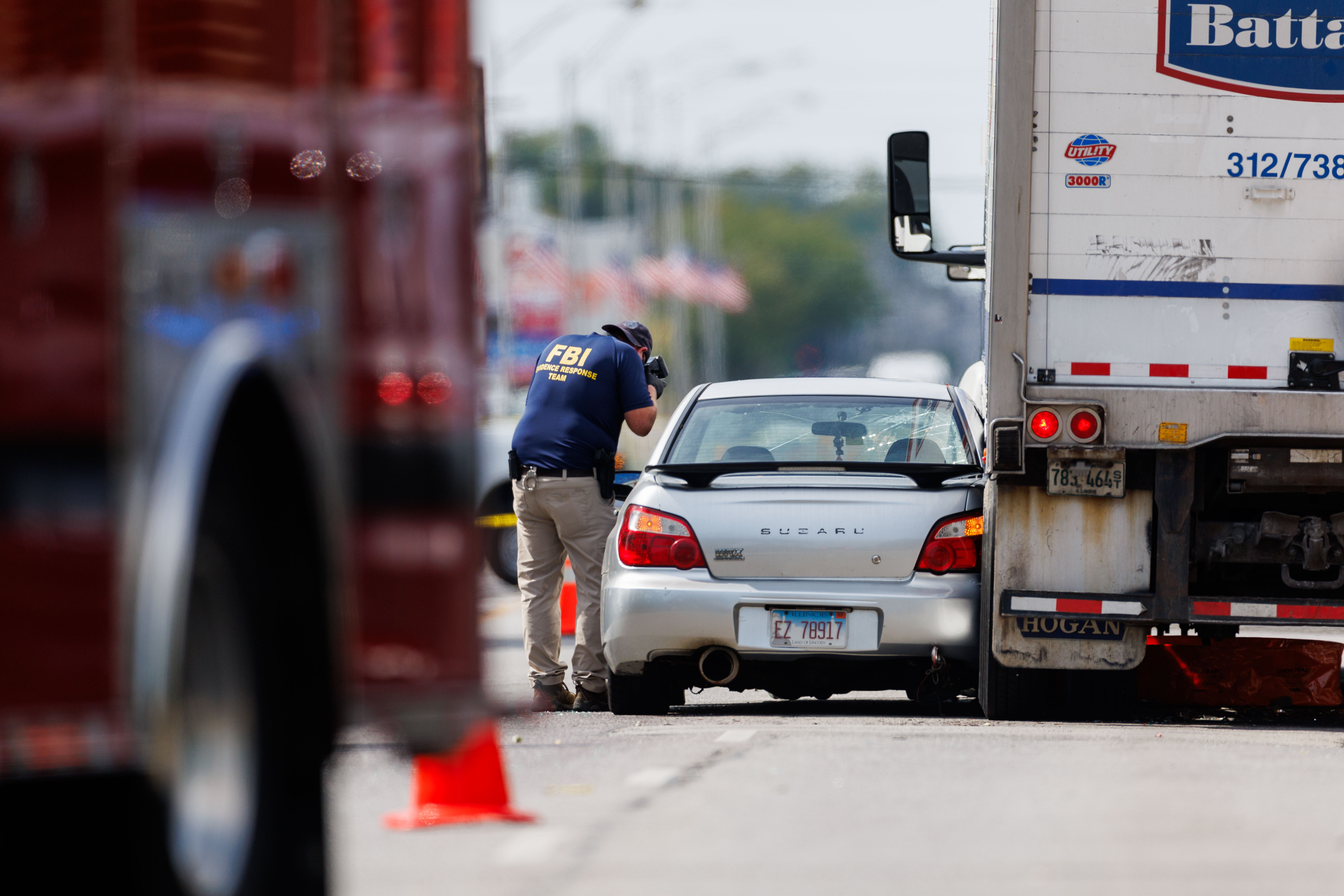
FBI agents and other law enforcement officers investigate the scene where an Immigration and Customs Enforcement agent shot and killed a man after ICE says the man tried to flee a traffic stop and struck the agent with his vehicle on Sept. 12, 2025, in Franklin Park. (Armando L. Sanchez/Chicago Tribune)
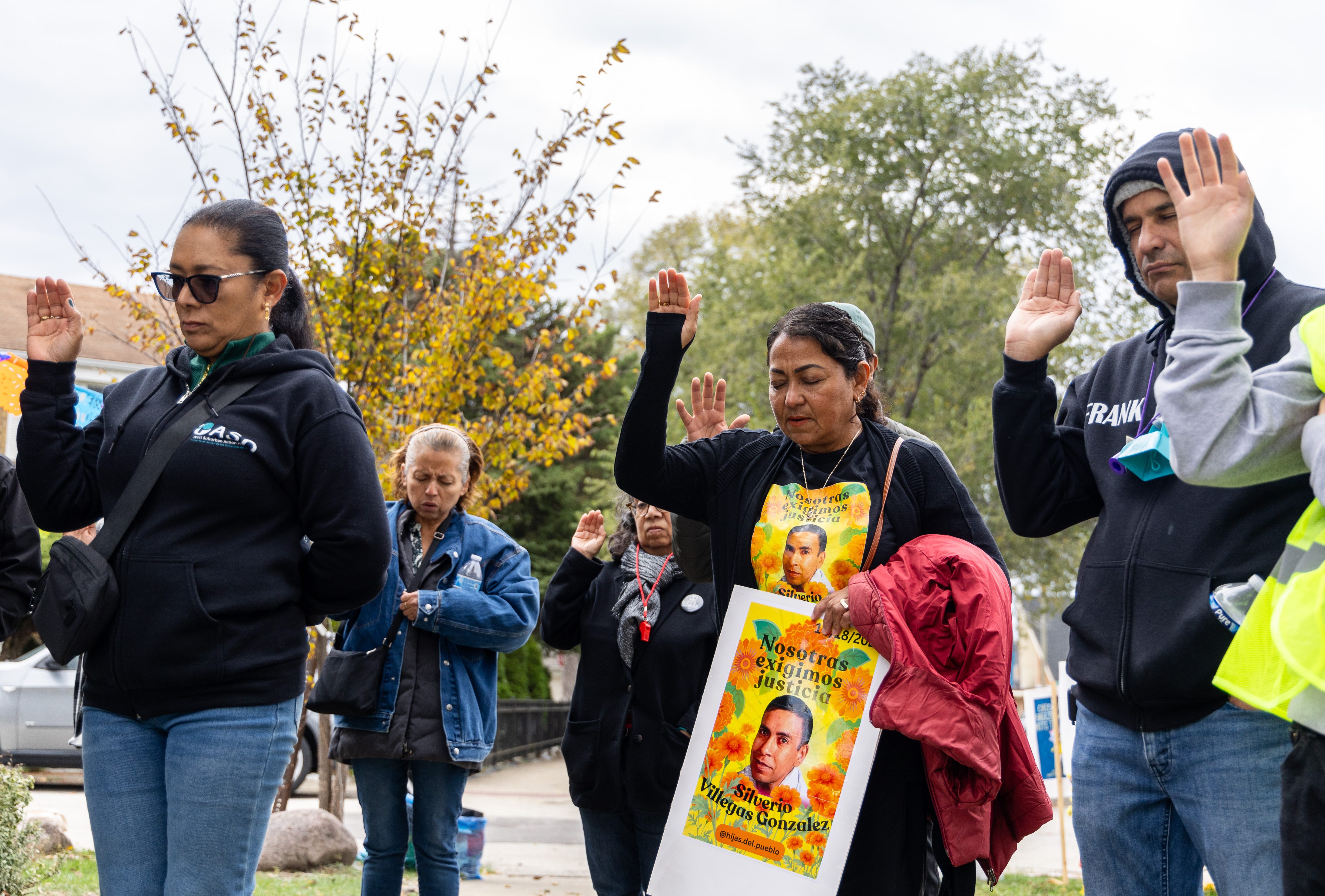
Mourners pray while the Rev. Roberto Moreno, pastor at Franklin Park United Methodist Church, leads a prayer during a Day of the Dead altar-building event for Silverio Villegas González on Nov. 1, 2025, near where Villegas González was fatally shot in Franklin Park. (Dominic Di Palermo/Chicago Tribune)
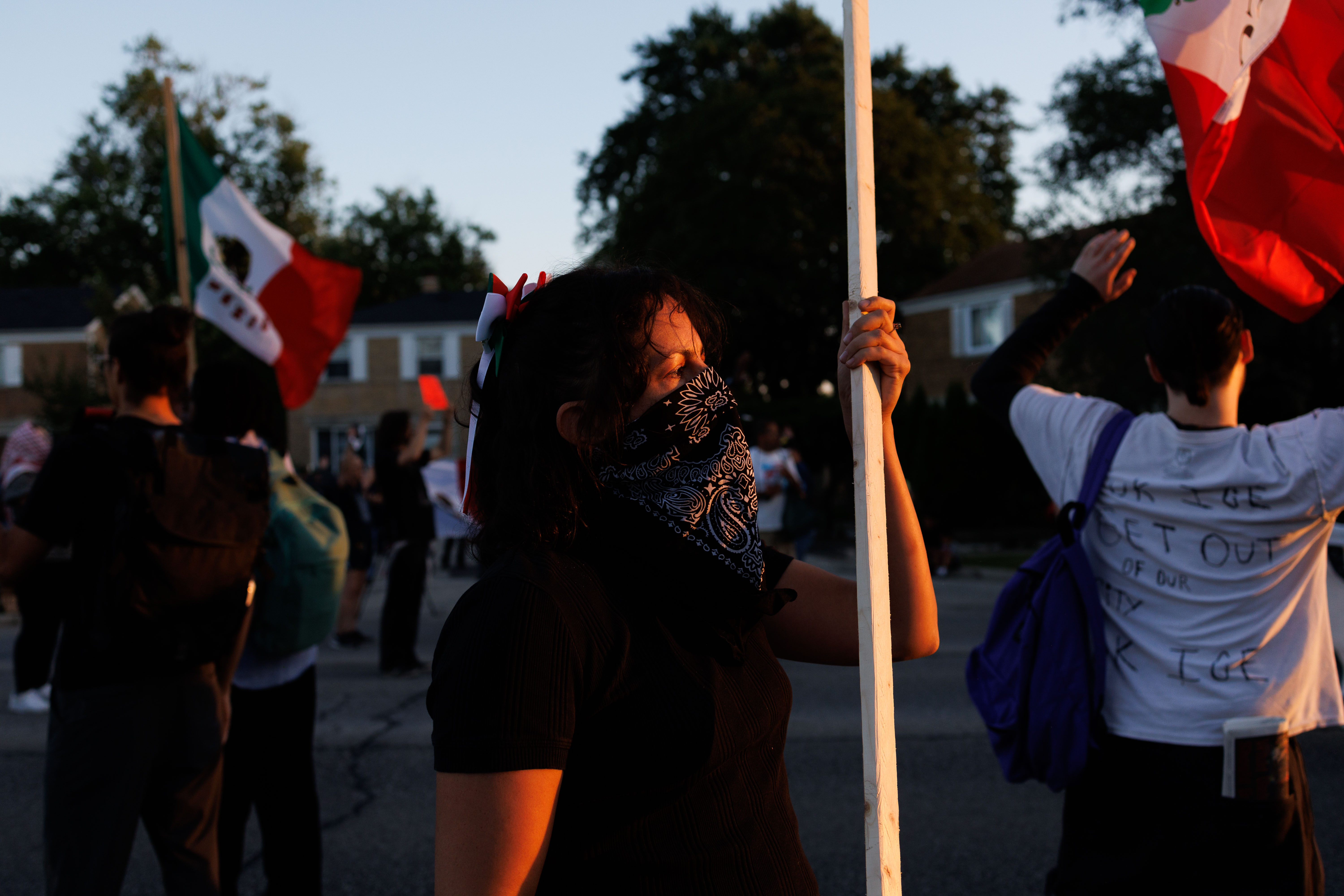
People gather along West Grand Avenue in Franklin Park, Sept. 15, 2025, during a vigil for Silverio Villegas González, who was shot and killed last Friday by an Immigration and Customs Enforcement agent. (Armando L. Sanchez/Chicago Tribune)

People gather near a memorial for Silverio Villegas González, who was shot and killed by an Immigration and Customs Enforcement agent during a traffic stop in Franklin Park, Sept. 15, 2025. (Armando L. Sanchez/Chicago Tribune)

Activists attend a news conference at the scene where an Immigration and Customs Enforcement agent shot and killed a man after ICE says the man tried to flee a traffic stop and struck the agent with his vehicle on Sept. 12, 2025, in Franklin Park. (Armando L. Sanchez/Chicago Tribune)
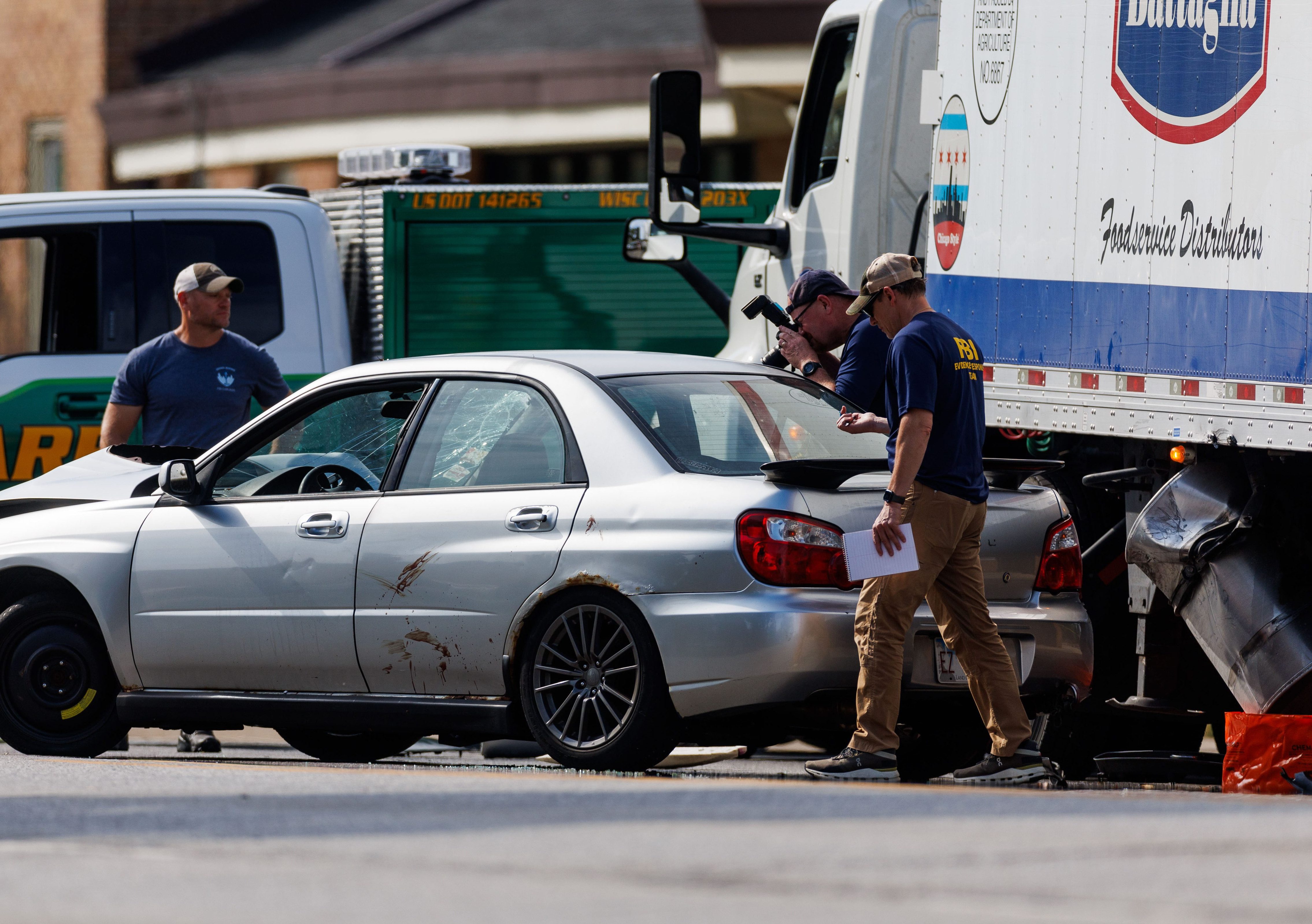
FBI employees watch as a vehicle is towed from the scene where an Immigration and Customs Enforcement agent shot and killed a man after ICE says he tried to flee a traffic stop in the car and struck an agent with his vehicle on Sept. 12, 2025, in Franklin Park. (Armando L. Sanchez/Chicago Tribune)
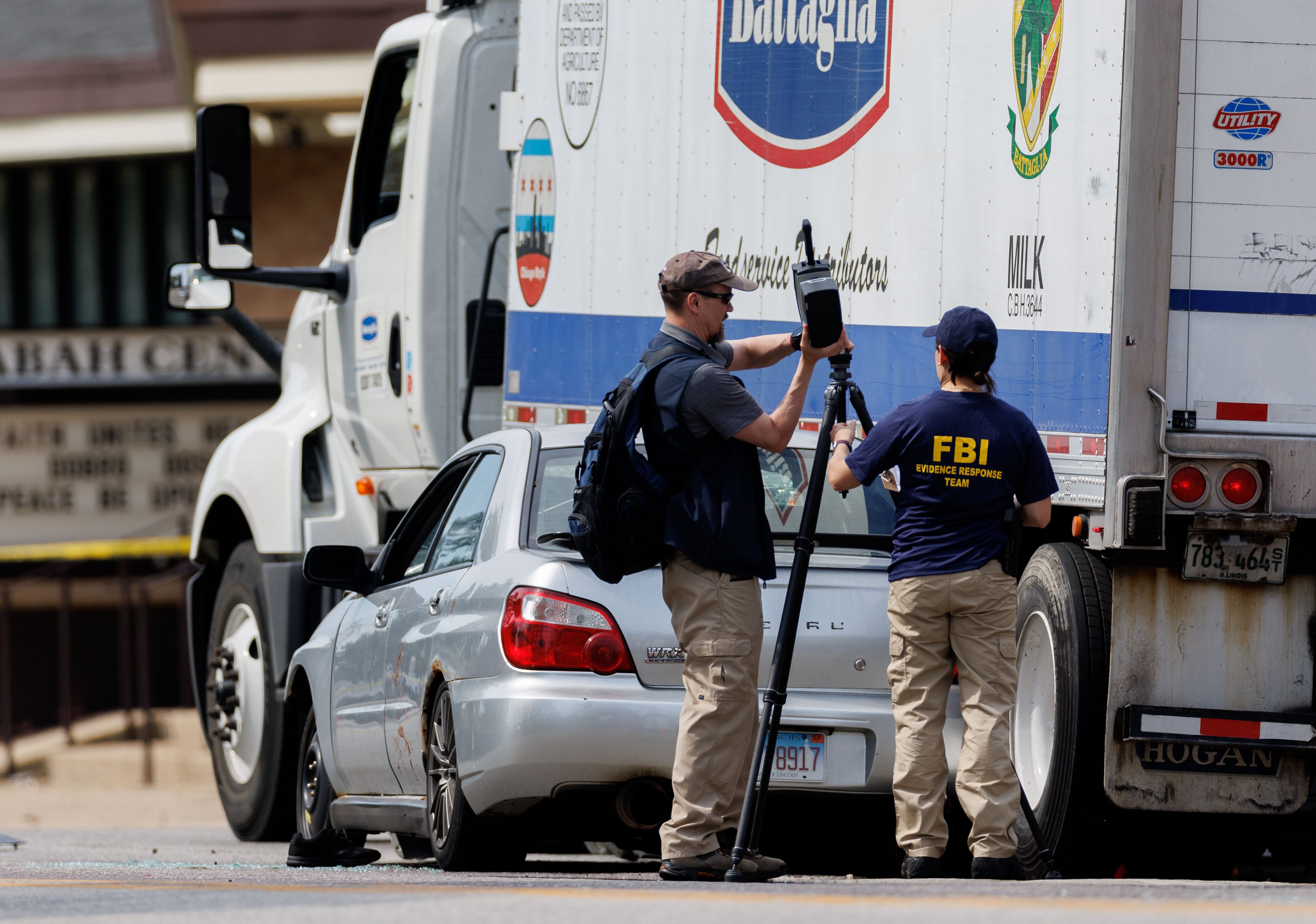
The FBI and other law enforcement officers investigate the scene where an Immigration and Customs Enforcement agent shot and killed a man after ICE says he tried to flee a traffic stop and struck the agent with his vehicle on Sept. 12, 2025, in Franklin Park. (Armando L. Sanchez/Chicago Tribune)
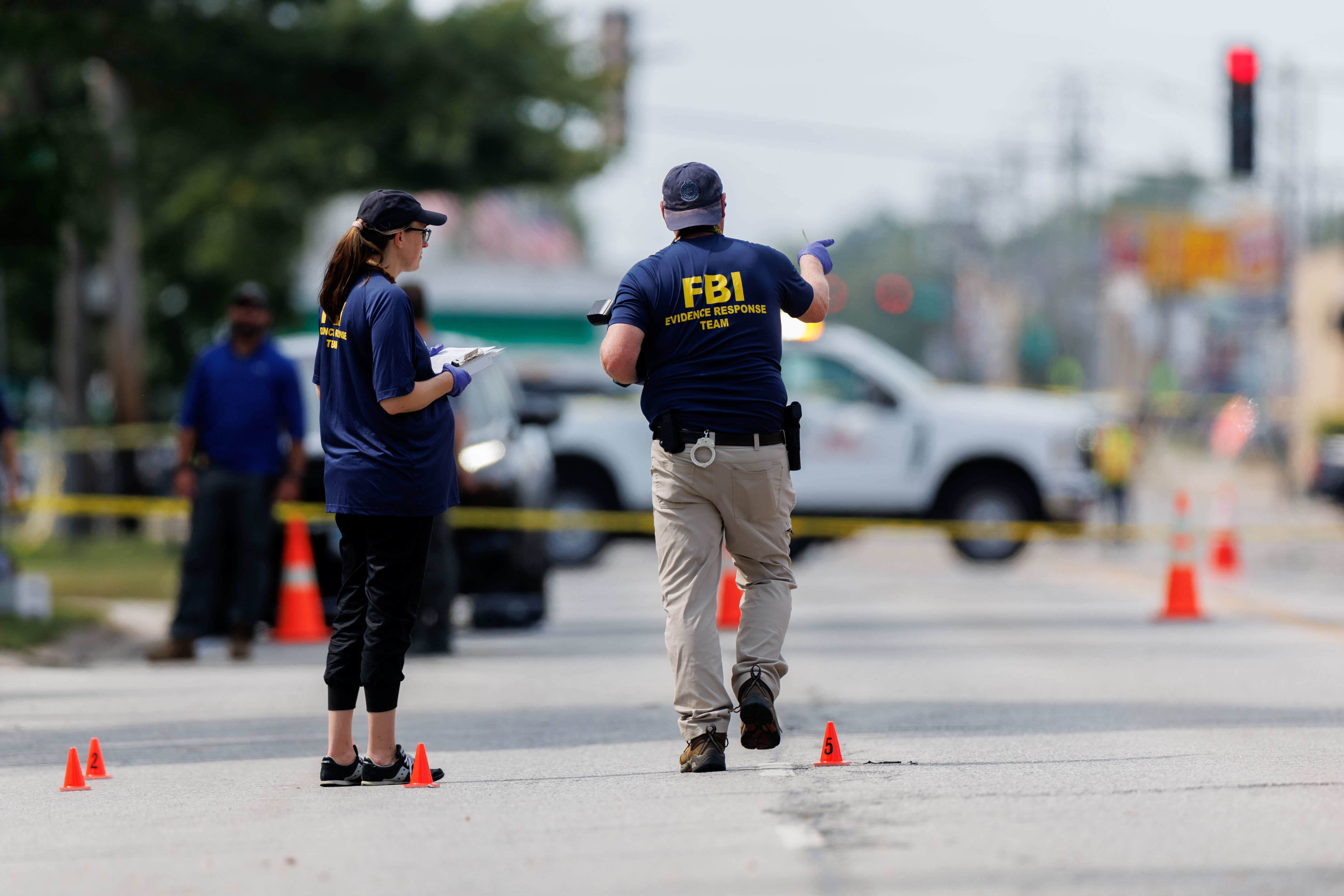
FBI and other law enforcement officers investigate at the scene where an Immigration and Customs Enforcement agent shot and killed a man after the agency says the man tried to flee a traffic stop and struck agent with his vehicle on Sept. 12, 2025, in Franklin Park. (Armando L. Sanchez/Chicago Tribune)

Ana Torres, left, an organizer with the P.A.S.O. West Suburban Action Project, translates for Blanca M., a friend of Silverio Villegas González, during a Day of the Dead altar-building event for Villegas González on Nov. 1, 2025, near where he was shot in Franklin Park. (Dominic Di Palermo/Chicago Tribune)
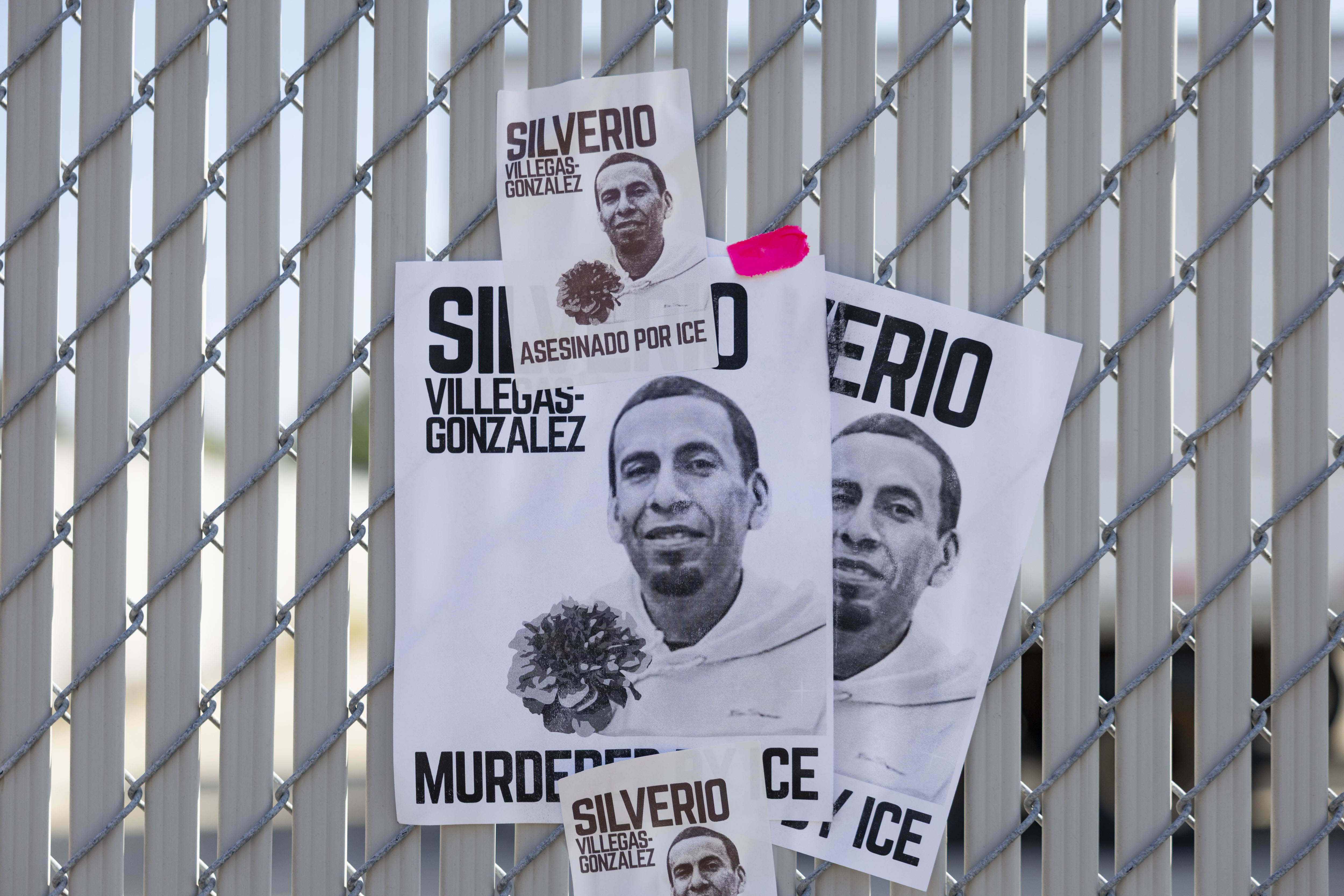
Photos of Silverio Villegas González are posted outside the U.S. Immigration and Customs Enforcement holding facility in Broadview on Oct. 6, 2025. Villegas González was shot and killed by Immigration and Customs Enforcement officers last month during a traffic stop in Franklin Park. (Brian Cassella/Chicago Tribune)
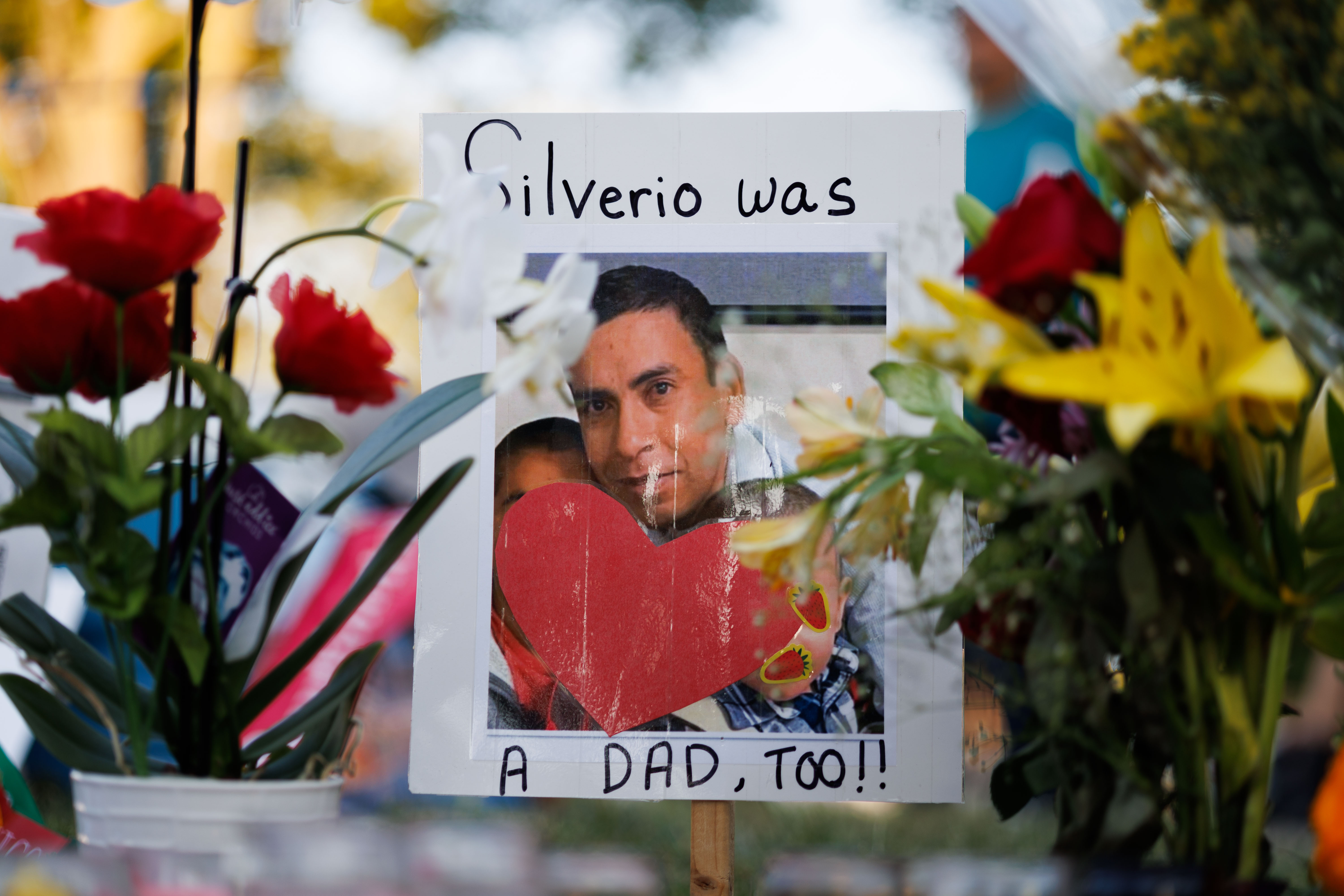
Flowers are displayed near a memorial on Sept. 15, 2025, for Silverio Villegas González, who was shot and killed Friday by an Immigration and Customs Enforcement agent during a traffic stop in Franklin Park. (Armando L. Sanchez/Chicago Tribune)

A woman lights a candle during a vigil on Sept. 15, 2025, for Silverio Villegas González, who was shot and killed last Friday by an Immigration and Customs Enforcement agent during a traffic stop in Franklin Park. (Armando L. Sanchez/Chicago Tribune)

People march down West Grand Avenue in Franklin Park, Sept. 15, 2025, during a vigil for Silverio Villegas González, who was shot and killed Friday by an Immigration and Customs Enforcement agent during a traffic stop. (Armando L. Sanchez/Chicago Tribune)
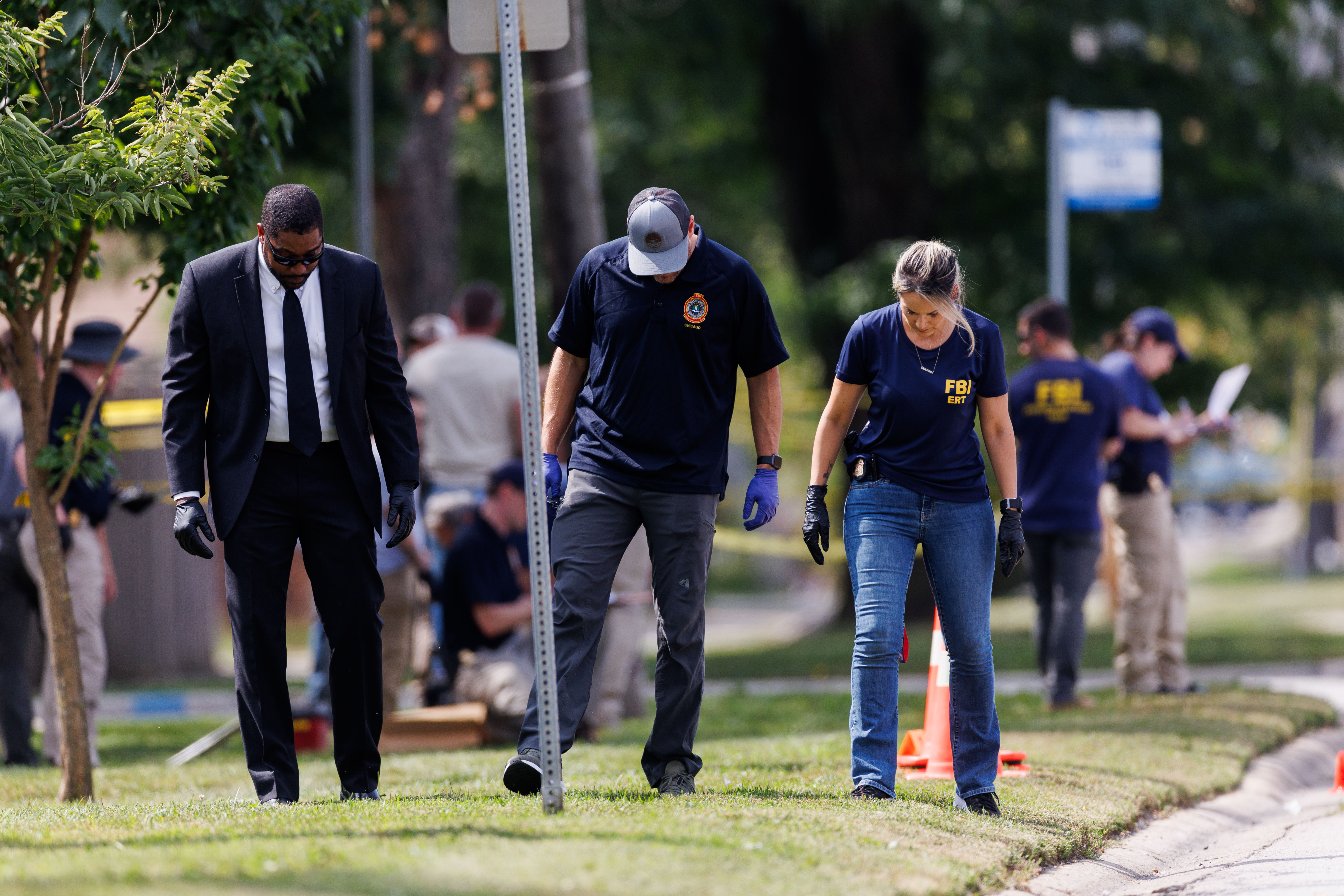
The FBI and other law enforcement officers investigate the scene where an Immigration and Customs Enforcement agent shot and killed a man after the agency says the man tried to flee a traffic stop and struck the agent with his vehicle on Sept. 12, 2025, in Franklin Park. (Armando L. Sanchez/Chicago Tribune)
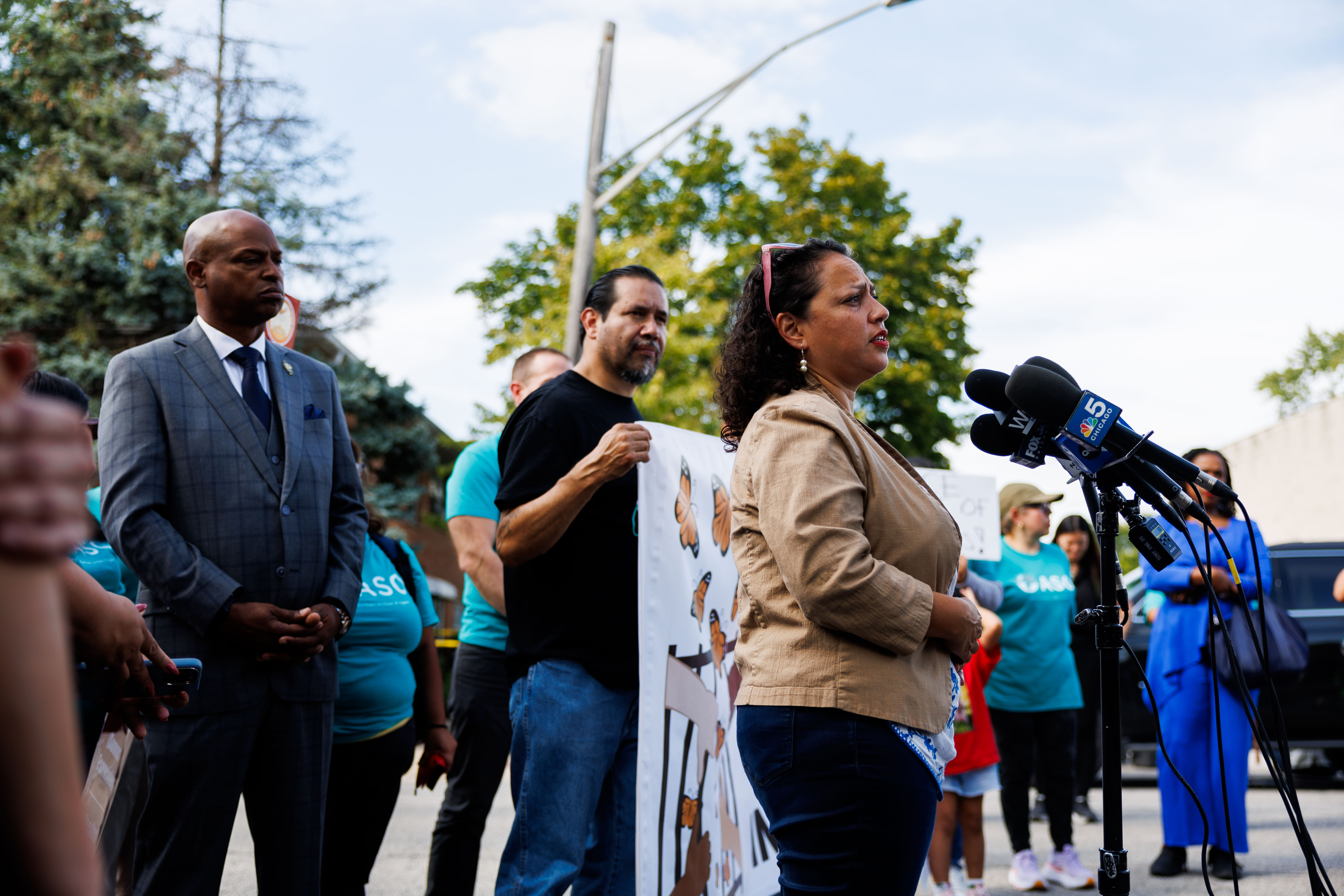
Illinois House Speaker Emanuel “Chris” Welch, left, and Rep. Lilian Jiménez, center, speak with reporters at the scene where an Immigration and Customs Enforcement agent shot and killed a man after ICE says the man tried to flee a traffic stop and struck the agent with his vehicle on Sept. 12, 2025, in Franklin Park. (Armando L. Sanchez/Chicago Tribune)

The FBI and other law enforcement officers investigate the scene where an Immigration and Customs Enforcement agent shot and killed a man after ICE says he tried to flee a traffic stop and struck the agent with his vehicle on Sept. 12, 2025, in Franklin Park. (Armando L. Sanchez/Chicago Tribune)
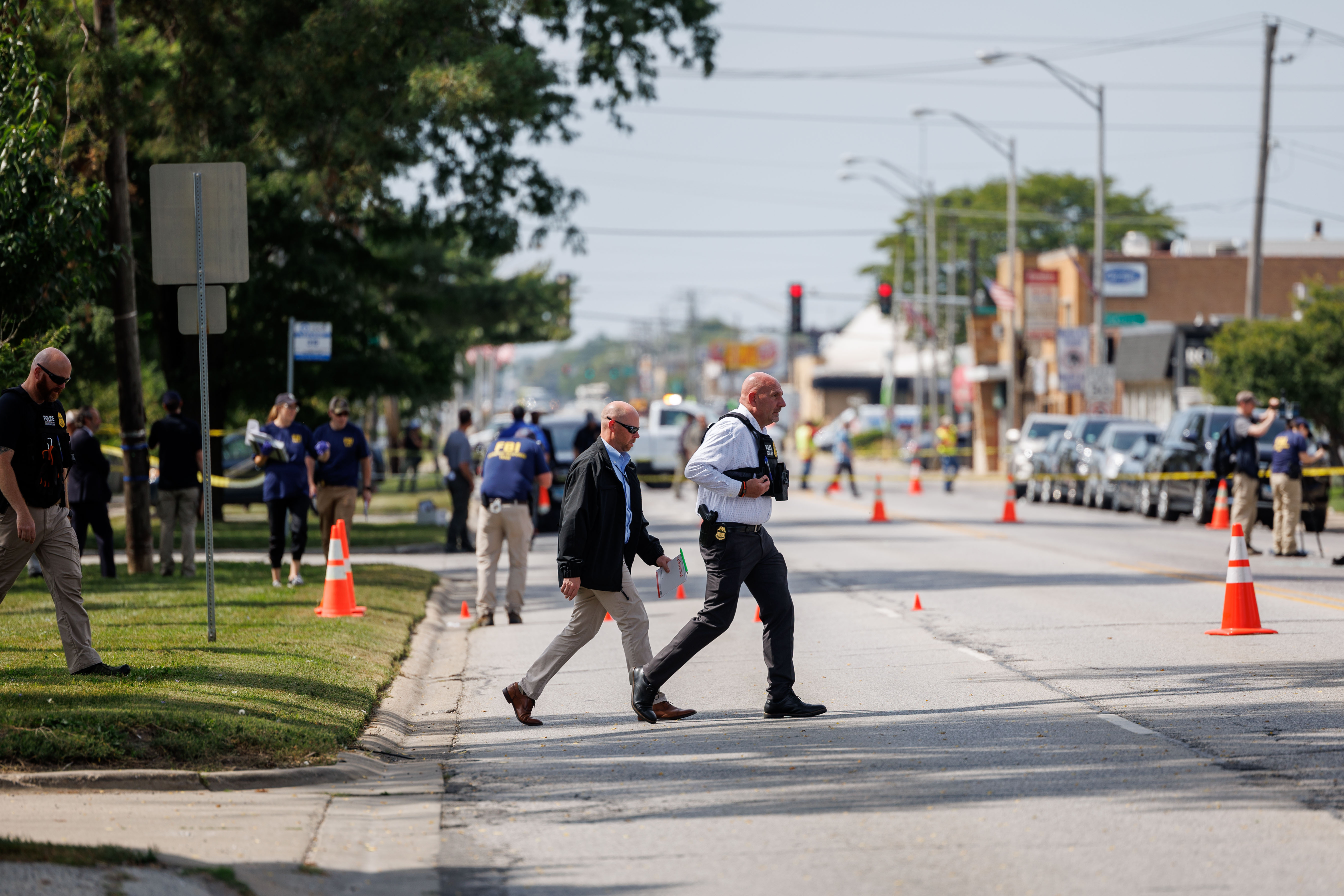
The FBI and other law enforcement officers investigate the scene where an Immigration and Customs Enforcement agent shot and killed a man after ICE says he tried to flee a traffic stop and struck the agent with his vehicle on Sept. 12, 2025, in Franklin Park. (Armando L. Sanchez/Chicago Tribune)

The FBI works the scene where an Immigration and Customs Enforcement agent shot and killed a man after ICE says he tried to flee a traffic stop and struck the agent with his vehicle on Sept. 12, 2025, in Franklin Park. (Armando L. Sanchez/Chicago Tribune)
Show Caption
1 of 24
A memorial for Silverio Villegas González is seen during a vigil in Franklin Park on Sept. 15, 2025. Villegas González was shot and killed Friday by an Immigration and Customs Enforcement agent during a traffic stop. (Armando L. Sanchez/Chicago Tribune)
The operation also disrupted daily life in Chicago and many suburbs. When federal agents rolled into neighborhoods, residents formed makeshift whistle brigades to warn neighbors and document encounters.
“Operation Midway Blitz turned ordinary life into a risk for thousands of Illinois residents,” Pritzker said in a recent statement. “This campaign of intimidation tore communities apart, hurt our economy, and violated the basic rights of people who call Illinois home.”
The Trump administration says the heavy federal presence has improved public safety, claiming the operation targeted violent, “worst of the worst,” criminals. But an earlier Tribune analysis found two-thirds of detainees had no criminal record and only 1.5% of them had been convicted of a violent felony or sex crime.
A public show of force
The mass deportation effort started, cryptically, on Sept. 6 with a Trump social media post. Sharing an image inspired by the Vietnam War film “Apocalypse Now,” the Republican president wrote, “‘I love the smell of deportations in the morning…’ Chicago about to find out why it’s called the Department of WAR.”
Two days later, DHS made it official, announcing the beginning of Operation Midway Blitz.
“This operation will target the worst of the worst criminal illegal aliens in Chicago,” McLaughlin promised at the time. “President Trump and (DHS) Secretary (Kristi) Noem have a clear message: no city is a safe haven for criminal illegal aliens. If you come to our country illegally and break our laws, we will hunt you down, arrest you, deport you, and you will never return.”
The largest contingent of new federal forces was for Border Patrol, which brought between 200 and 232 agents to the operation, according to court testimony. The agency, which typically has little presence in the Chicago area, also used helicopters, boats and other vehicles.
At an annual salary of $75,000 — which is about average for an agent with a bachelor’s degree, including overtime, premium pay for Sundays, holidays and night shifts — the cost for paying 200 agents for 10 weeks is nearly $3 million.
Border Patrol personnel costs were likely even more than $3 million. Nearly 10 weeks elapsed between September and Nov. 10, when Border Patrol Cmdr. Gregory Bovino posed for photos with at least 166 agents in Millennium Park before leaving for his home state of North Carolina. But Border Patrol officials insisted the operation did not end with Bovino’s departure and other enforcement actions continued before ramping up again last month when Bovino briefly returned to the Chicago area with at least 100 agents. Border Patrol officials have not provided details on how many agents remain in the Chicago region but other surges are anticipated in 2026.
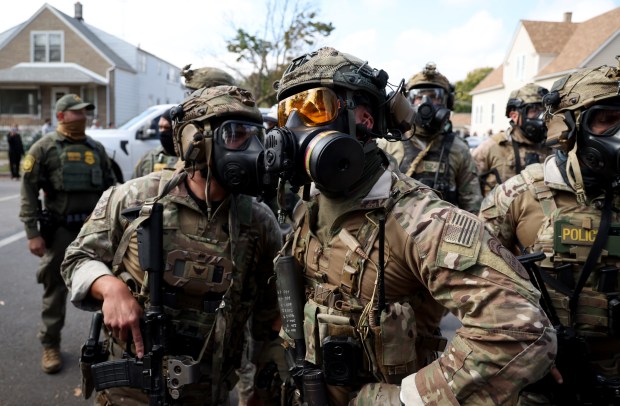 Border Patrol agents are confronted by community members in the 10500 block of South Avenue M on Oct. 14, 2025. (Terrence Antonio James/Chicago Tribune)
Many immigration agents stayed in local hotels rather than the Great Lakes Naval Station in North Chicago. At the standard government rate of $110 per night, housing 200 agents for 10 weeks would exceed $1.5 million.
Add to that the $92 daily per diem for food, an amount set by the General Services Administration, and the cost increases by another $1.2 million.
Helicopters were another major expense.
Border Patrol deployed Black Hawk helicopters to the region and increased its use of other copters.
Records obtained by Flightradar24, a popular flight-tracking service, showed DHS has primarily used five helicopters in the region since September. Most departed from DuPage Airport in West Chicago, about 30 miles west of downtown Chicago.
Two Black Hawk helicopters flew at least 33 missions totaling nearly 29 hours of flight time, according to Flightradar24. Based on the U.S. Government Accountability Office’s estimate from six years ago that the Army spent $3,116 per flight hour on Black Hawk operation and support costs, those 33 missions would have been close to $90,000 at 2019 rates.
It’s likely the figure is even higher, as Flightradar24 data may not include all flights during the surge. The systems don’t always detect low-flying helicopters. And government crews occasionally switch off the choppers’ ADS-B signal to prevent public detection, like what happened last year when an Army Black Hawk collided with a passenger jet near Washington, D.C. Flightradar24 data does not appear to reflect a flight that corresponds with the raid of a South Shore apartment building on Sept. 30.
In addition to the Black Hawks, the Department of Homeland Security has used three lighter Airbus H125 helicopters in the Chicago area for 71 flights totaling 77 hours since September. Operation and support costs are more difficult to pinpoint for the H125, but commercial sources indicate a minimum hourly rate of $2,000, which means the 71 flights cost roughly $154,000.
The Tribune’s estimate didn’t include costs for four boats used by Board Patrol or rental cars that federal agents used.
72-hour workweek
Unlike Border Patrol, ICE had a sizable presence in the Chicago area before Midway Blitz, with about 65 enforcement officers, including 31 at the Broadview processing center, court records show.
When the blitz began, Broadview staff shifted from five 8-hour days to six 12-hour days per week, effectively increasing their workweek from 40 hours to 72 hours. At time-and-a-half for overtime, that equaled 88 hours of regular pay.
For 31 employees earning about $75,000 annually, the additional cost was $54,000 per week. It’s unclear how long the heightened workload lasted but if it was for all 10 weeks, the added pay totaled about $540,000.
As protests and detainee numbers at the Broadview facility grew, ICE brought in reinforcements. Five teams — about 80 agents total — arrived from cities including El Paso, New York and Phoenix, according to court testimony, presumably taking them from their regular duties. If those 80 officers averaged $75,000 per year and worked 10 weeks for Midway Blitz, their total pay would have been about $1.2 million.
It’s unclear what ICE’s lodging arrangements are. But if the 80 agents used $110 hotel rooms for 10 weeks, that would be another $616,000, and their per diem would add $515,200.
There were also collateral costs the Tribune didn’t include in its totals.
ICE called on agents from the Border Patrol, FBI, Bureau of Prisons, the Bureau of Alcohol, Tobacco, Firearms and Explosives, the Drug Enforcement Administration and Homeland Security Investigations to help run the Broadview facility, though how many offices and how long they worked there remains unclear.
Underwood said after touring the Broadview facility that ICE has also used private contractors from Paragon Systems to support operations there. Officials from Paragon did not return calls seeking comment about their contract.
What’s more, the Broadview facility sent at least 131 unprocessed detainees to ICE’s El Paso facility for processing, which, in turn, strained El Paso’s resources.
Underwood said ICE has also been using administrative offices in downtown Chicago, as well as a Homeland Security Investigations field office, located in Lombard, to handle an overflow of detainees. The west suburban lawmaker said 50 to 60 ICE officers and support staff were working out of the downtown office in late December. Underwood was told that an additional 60 would be starting soon. ICE intends to hire 805 new officers across the six-state region that covers Chicago in the near future.
Policing protests added further expense. In just two weeks in September, ICE agents used a variety of chemicals and less-lethal projectiles on protesters that cost $100,000, records show. ICE officers continued using those munitions for nearly another two weeks, presumably doubling the total cost. And these totals don’t reflect the use of similar weapons beyond Broadview, where immigration agents often used tear gas and pepper balls on local residents. They also don’t include the cost of deploying state or local police forces to Broadview to assist ICE.
Handling detainees
Since 2022, Illinois law has banned immigration detention centers in the state. It also bars local governments from contracting with ICE to hold detainees. That has not only created a bottleneck at Broadview, which went from a processing center to a de facto detention center during Midway Blitz, but also meant that detainees from Illinois were sent to far-flung destinations across the Midwest and South.
At the same time, the Trump administration has curtailed policies allowing detainees to be released on bond. As a result, the number of people in ICE custody nationwide rose from 39,000 when Trump returned to office in January 2025 to 61,000 by late August, according to the Migration Policy Institute. That number could grow to 107,000 by January, according to its researchers.
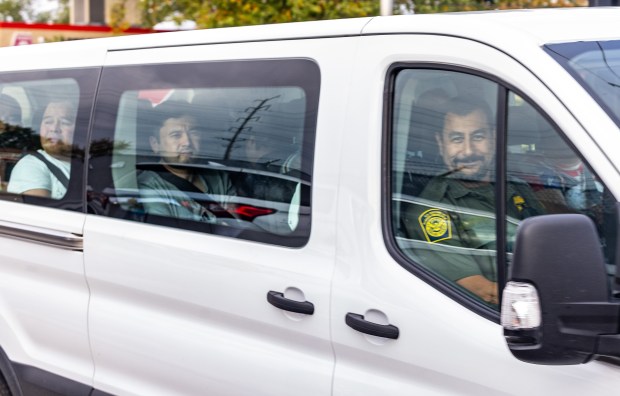 Federal agents drive detainees toward the Immigration and Customs Enforcement holding facility in Broadview, Oct. 18, 2025. (Dominic Di Palermo/Chicago Tribune)
Republicans in Congress responded in July with the One Big Beautiful Bill Act, which included $45 billion to build immigrant detention facilities over the next four years. That’s three times as much per year for detention as ICE spent last fiscal year.
Midway Blitz was an especially abrupt shift in immigration enforcement in Illinois, which saw the largest increase in arrests of any state over the five weeks after the operation began, according to the Marshall Project, with detentions rising to six times what they were before September.
While staffing expenses piled up at Broadview, ICE kept expenses for detainees’ welfare to a minimum. The facility lacks showers, beds, medical services and food preparation space. A lawsuit filed on behalf of detainees alleged agents provided only cold Subway sandwiches — regardless of whether they met an individual’s dietary needs — and bottled water.
After bringing detainees to Broadview, ICE typically moved them to facilities in other states. At least 400 people taken into custody at Broadview between September and mid-October were sent to another country.
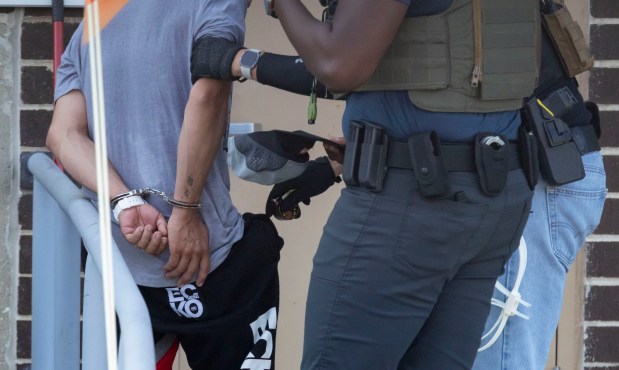 Federal agents search a detainee Sept. 28, 2025, while escorting him into the U.S. Immigration and Customs Enforcement facility in Broadview. (Brian Cassella/Chicago Tribune)
The Migration Policy Institute estimated that, as of September, detainees nationwide spent an average of 44 days in detention, with costs averaging $152 per day.
The Department of Homeland Security said it had arrested more than 4,500 people during Midway Blitz. The agency has not provided more detailed information about the detainees’ backgrounds or current status.
But if each of those 4,500 people spent 44 days in detention, and detention costs $152 per night, the cost of housing the detainees would be more than $30 million.
The population boom in ICE detention facilities has also led to a major increase in the chartered flights the agency uses to move and deport detainees. That nationwide increase is reflected in a near doubling of ICE flights out of the Gary/Chicago International Airport over the last year. At last count, there were 93 outbound flights, with 20 occurring after September, according to Human Rights First, an advocacy group that monitors ICE’s air operations.
ICE’s chartered flights cost an average of $8,577 per hour, according to the agency. The average flight duration from Gary is 2 hours and 20 minutes, according to Human Rights First. Therefore, the cost of the 20 flights since September would be approximately $400,000.
But flights operated by ICE Air Operations often include multiple stops en route to their final destination, which could substantially increase the cost of transferring detainees from Gary if they remain on the plane the entire time. The typical flights from Gary included two stops before they ended, according to Human Rights Watch.
If all legs of the journey were equal in duration, the total flight cost would be closer to $800,000.
‘Money was wasted’
Some of the highest expenses stemmed from personnel largely kept out of daily enforcement.
After courts blocked Trump from deploying the Illinois and Texas National Guard to support the mission, about 200 Texas Guard troops were sent to a training center near Chicago in October.
During their 41-day deployment, which ended in mid-November, the Texas troops spent less than 24 hours patrolling the Broadview facility.
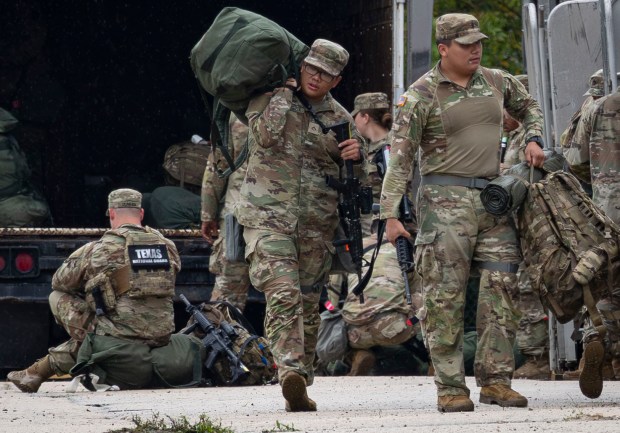 Members of the Texas National Guard arrive Oct. 7, 2025, at the Army Reserve Training Center in Elwood. (Brian Cassella/Chicago Tribune)
Meanwhile, 300 Illinois Guard members were federalized by Trump and stationed at a training site in Marseilles, a state-owned military base about 75 miles southwest of Chicago. They never deployed for the stated mission.
Durbin’s office, citing figures from the Army, said the expected operations, maintenance and personnel costs for federalizing all 500 National Guard soldiers in Illinois for a full two months was $19.4 million, which works out to $323,333 per day.
“Ninety-eight percent of that money was wasted, wasted to create a reign of fear and terror in this Chicago community,” Durbin said at a November news conference.
Shortly before Christmas, the Supreme Court ruled that Trump lacked authority to deploy the Illinois National Guard for Midway Blitz. The president said just days ago that he would end his efforts to deploy National Guard troops to Illinois and other states — for now.
But even if the Guard members return home, the operation’s ever-growing financial costs are expected to continue rising.