What Catholics think about immigration is complicated — but what we think about immigrants is simple.
2025 CHRISTMAS CAMPAIGN
Help Aleteia continue its mission by making a tax-deductible donation.
In this way, Aleteia’s future will be yours as well.
Our Catholic forbears had to fight anti-immigration forces such as the KKK for our place in the United States, and the U.S. bishops’ message on immigration says we intend to do more of the same. But the bishops acknowledge how complex the immigration issue is when they say “nations have a responsibility to regulate their borders and establish a just and orderly immigration system” and pledge “to advocate for meaningful immigration reform.”
U.S. immigration is clearly broken. Our attitude toward it should be the reformer’s righteous rage. But our attitude toward immigrants is another matter.
Here are four attitudes we should have toward them.
First, we should have an “attitude of generosity,” as Bishop Robert Barron put it.
In fact, the Catechism says prosperous nations have a duty to welcome immigrants seeking security or a livelihood, as far as we are able — and we are among the most prosperous nations on earth.
“No one has said that the United States should have open borders,” Pope Leo XIV said in November. But we have to oppose the “extreme disrespect” being shown to immigrants “who are leading good lives, as many of them have for 10, 15, 20 years.”
One serious byproduct of mass deportations, both those today and under previous administrations, is what it does to our hearts. Christ forms our hearts in Matthew 25 and the Good Samaritan parable. But as we root out people to send back home, we start to look at other human beings as problems that need to be expelled, not as brothers or sisters who need to be cared for.
Clearly, the blame for this situation starts with irresponsible border policies — but just as clearly, the solution starts with Christians.
Second, since we aren’t having children, we should be grateful to immigrants.
The U.S. birth rate is at a record low. The number of births per woman dropped precipitously after the 2008 recession and never bounced back. It takes 2.1 births per woman to keep a population stable — and we are now at less than 1.6 births per woman. This puts us on the list of countries whose populations are disappearing. We already see the repercussions in our economy.
We have two options to stabilize the population. The first is to have more children. But cultural factors, as Tim Carney points out, make that unlikely to happen.
The second option is immigration.
“When there is an empty space, people try to fill it,” Pope Francis said during the Syrian refugee crisis. “If a country has no children, immigrants come in and take their place. I think of the birth rate in Italy, Portugal, and Spain. I believe it is close to zero percent. So, if there are no children, there are empty spaces.”
Third: We should have an attitude of fear of the Lord in our treatment of immigrants.
As I’ve pointed out before, the Catechism of the Catholic Church makes a point to warn us about “four sins that cry to heaven” — including “the cry of the foreigner, the widow, and the orphan.”
These serious sins figure in some of the darkest passages in the Old Testament — the mark of Cain, the destruction of Sodom, and the penalties for violators of the Ten Commandments. In the New Testament James uses the Old Testament phrase “Lord of armies” to warn:
“Behold, the wages of the laborers who mowed your fields, which you kept back by fraud, cry out; and the cries of the harvesters have reached the ears of the Lord of hosts.”
God is kind and merciful, but mistreating immigrants is one of the sins that draws his wrath.
Fourth: Last is an attitude of evangelization toward immigrants.
One fear Americans have had from the start about immigrants is that they won’t assimilate — they won’t embrace our culture, although “our culture” means different things to different people. Regardless, history suggests that this fear is unfounded. The Europeans who settled American regions first set our culture so firmly that you can predict voting patterns on them many generations later.
In fact, the real problem is that immigrants are too quick to assimilate to consumerist America — as in the story Father Mike Schmitz tells of a Chinese faith hero who lapsed.
One thing the Catholic Church has always done for immigrants is to help them assimilate in a good way. A study of Italian immigrants, for instance, found that the presence of the Church slowed down the typical kinds of assimilation — but sped up such things as learning to speak and read English.
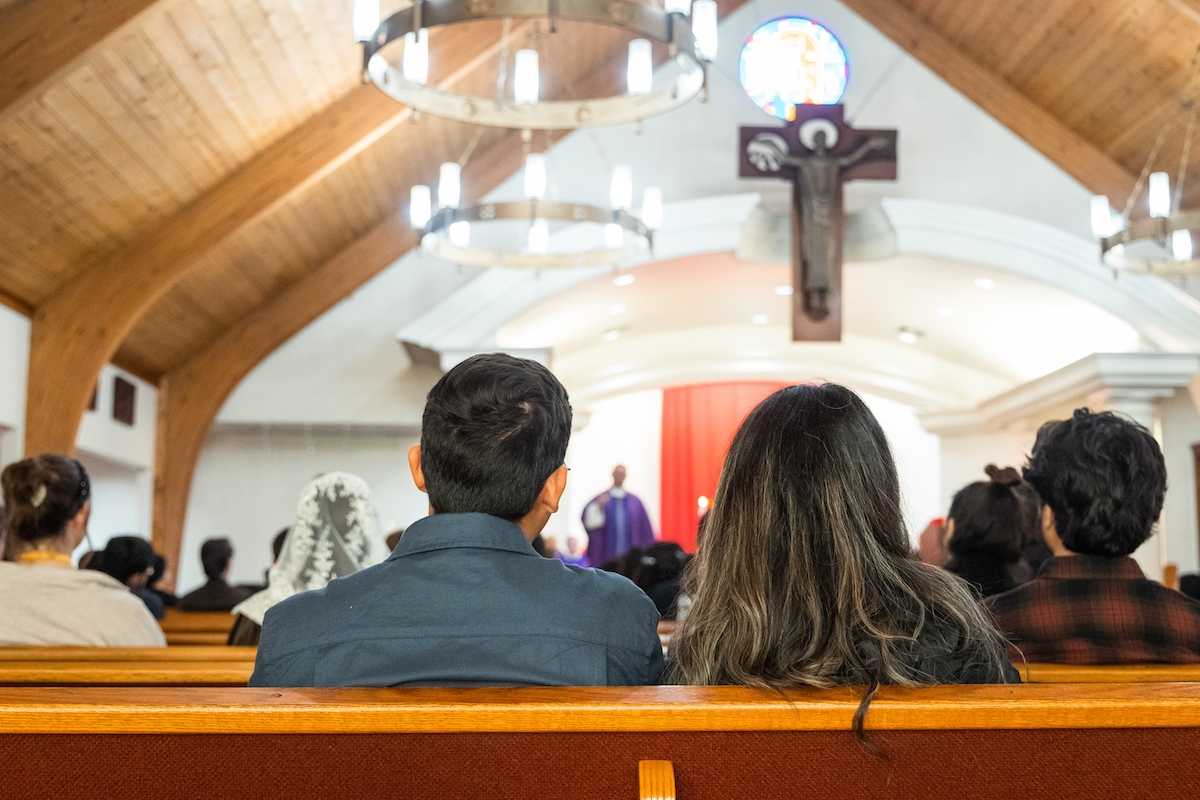
Catholics should see immigrants as “our people,” and parishes should unroll the welcome mat for them.
Support Aleteia’s mission with your donation