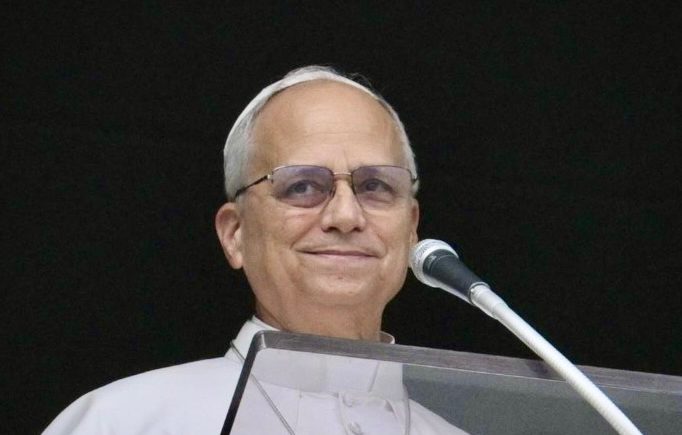
Vatican City, January 4, 2026 – In a St. Peter’s Square bathed in winter sunshine, Pope Leo XIV led the Angelus prayer this Sunday, the Second Sunday of Christmas Time. Before thousands of faithful and pilgrims, the Pontiff reflected on the Mystery of the Incarnation, emphasizing that Christian hope is not based on human optimism, but on the divine decision to become flesh and dwell among us.
“And the Word became flesh and dwelt among us” (Jn 1:14), the Holy Father quoted, recalling that with the imminent closing of the Holy Door of St. Peter’s Basilica—scheduled for January 6—the Jubilee of Hope concludes. This Holy Year, he emphasized, has reminded us that the true foundation of our hope is precisely the Incarnation: God choosing to share our fragility so that we are never alone.
Leo XIV explored the twofold commitment that arises from this mystery: one to God and the other to our neighbor. Toward God, he invites us to an “incarnate” spirituality, one that thinks, prays, and proclaims a God who is near, present in the faces of our brothers and sisters and in everyday situations, not in distant abstractions. “We must always examine our spirituality to ensure that it is capable of thinking about God from the perspective of the flesh of Jesus,” he affirmed.
Regarding humanity, the Incarnation demands recognizing the inviolable dignity of each person as a reflection of God, promoting fraternity, justice, peace, and care for the most vulnerable. “There is no authentic worship of God without care for human flesh,” the Pope emphasized, calling for concrete solidarity that defends the weak.
Following the Angelus prayer, Leo XIV expressed his closeness to the victims of recent tragedies. He reiterated his prayers for the young people who died and were injured in the tragic fire in Crans-Montana, Switzerland, and for their families. With concern, he addressed the situation in Venezuela, asking that the good of the people prevail above all other interests, overcoming violence through paths of justice, peace, respect for the rule of law, and special attention to the poorest. He invited everyone to join in prayer, trusting in the intercession of Our Lady of Coromoto and the Venezuelan Blesseds José Gregorio Hernández and Sister Carmen Rendiles.
The Pope warmly greeted the pilgrims present, mentioning groups from Slovakia, Zagreb, Malta, France and Italy, and concluded by urging them to maintain faith in the “God of peace,” praying and acting in solidarity with populations affected by wars.
With this Angelus, Leo XIV invites the universal Church to prolong the joy of Christmas in a path of availability to the service of God and neighbor, while preparing for the definitive closing of the Jubilee.
Full text of the Angelus:
POPE LEO XIV
ANGELUS
St Peter’s Square
2nd Sunday in the Season of Christmas, 4 January 2026
___________________________________
Dear brothers and sisters, happy Sunday!
On this Second Sunday after the Nativity of the Lord, I wish first to renew my good wishes to all of you. The day after tomorrow, with the closing of the Holy Door of Saint Peter’s Basilica, we will conclude the Jubilee of Hope. The very mystery of Christmas, in which we are still immersed, reminds us that the foundation of our hope is God’s Incarnation. The Prologue of John, which the Liturgy sets before us today, recalls this clearly: “The Word became flesh and lived among us” (Jn 1:14). Indeed, Christian hope is not based on optimistic forecasts or human calculations, but on God’s decision to share our journey, so that we may never be alone as we travel through life. This is God’s work: in Jesus, he became one of us, chose to remain with us, and willed to be forever God-with-us.
The coming of Jesus in the weakness of human flesh rekindles our hope. At the same time, it entrusts us with a twofold commitment: one to God and the other to our fellow human beings.
We are committed to God, for since he has become flesh, choosing our human frailty as his dwelling place, we are called to reconsider how we think about him, beginning with the flesh of Jesus, and not from an abstract doctrine. We must, therefore, constantly examine our spirituality and the ways in which we express our faith, in order to ensure that they are truly incarnate. In other words, we must be capable of contemplating, proclaiming and praying to the God who meets us in Jesus. He is not a distant deity in a perfect heaven above us, but a God who is nearby and inhabits our fragile earth, who becomes present in the faces of our brothers and sisters, and reveals himself in the circumstances of daily life.
Our commitment to all men and women must also be consistent. Since God has become one of us, every human creature is a reflection of him, bearing his image and containing a spark of his light. This calls us to recognize the inviolable dignity of every person and to offer ourselves in mutual love for one another. Moreover, the Incarnation demands a concrete commitment to the promotion of fraternity and communion. Through this commitment, solidarity becomes the criterion of all human relationships, calling us to strive for justice and peace, to care for the most fragile, and to defend the weak. God has become flesh; therefore, there is no authentic worship of God without care for humanity.
Brothers and sisters, may the joy of Christmas encourage us to continue on our journey. Let us ask the Virgin Mary to make us ever more ready to serve both God and our neighbor.
_________________
After the Angelus
Dear brothers and sisters,
I wish to express once again my closeness to those suffering as a result of the tragedy in Crans-Montana, Switzerland, and to assure them of my prayers for the young people who died, for the injured, and for their families.
It is with deep concern that I am following the developments in Venezuela. The good of the beloved Venezuelan people must prevail over every other consideration. his must lead to the overcoming of violence, and to the pursuit of paths of justice and peace, guaranteeing the sovereignty of the country, ensuring the rule of law enshrined in its Constitution, respecting the human and civil rights of each and every person, and working together to build a peaceful future of cooperation, stability and harmony, with special attention to the poorest who are suffering because of the difficult economic situation. I pray for all this, and I invite you to pray too, entrusting our prayer to the intercession of Our Lady of Coromoto, and to Saints José Gregorio Hernández and Carmen Rendiles.
I greet all of you with affection, Romans and pilgrims from various countries, especially those from Slovakia and Zagreb, the altar servers from the Cathedral of Gozo, Malta, and the community of the Diocesan Seminary of Fréjus-Toulon, France.
I greet the group from the Oratory of Pugliano in Ercolano, the families and pastoral workers from Postojna and Porcellengo, the faithful from Sant’Antonio Abate, Torano Nuovo, and Collepasso; as well as the teachers from the Rocco-Cinquegrana Institute of Sant’Arpino, the scouts of the province of Modena and Roccella Jonica, and the confirmandi from Ula Tirso, Neoneli and Trescore Balneario.
Dear friends, let us continue to have faith in the God of peace: let us pray, and show solidarity with the peoples who suffer because of wars. I wish you all a happy Sunday!