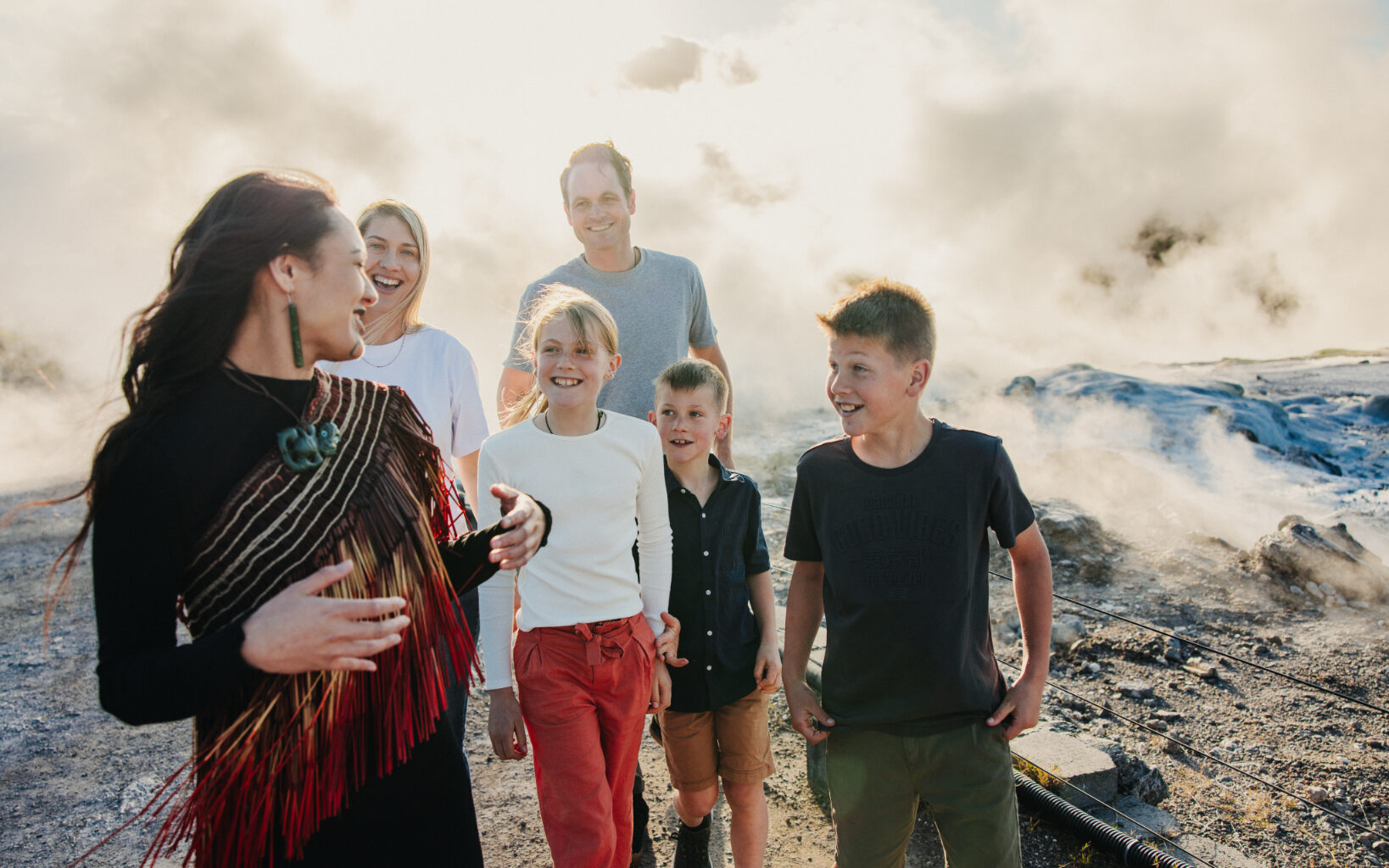
Māori tourism operators are reporting a shift in their visitor books: a surge in demand from domestic tourists, particularly family units and Pākehā women over the age of 30.
The subsector of the industry is growing fast, with latest research showing Māori tourism grew nearly 25 percent over the five years between 2018 and 2023 – from $975 million to $1.2 billion.
Businesses providing cultural experiences such as tours of historically significant places and activities like harakeke weaving are enjoying greater interest and an uplift in bookings from New Zealand residents. Some say the pandemic was a catalyst for change, leading to a rise in domestic tourism more broadly.
This rings true for Sean Marsh of Te Puia, a geothermal park and Māori cultural hub, where the demographic of visitors shifted. International tourists previously made up around 95 percent of visitation; that has now rebalanced to 75 percent with domestic travellers claiming the remaining quarter.
“Prior to the pandemic, we were very international and we had a lot of eggs in that basket. It was nearly all of our eggs.
“Now when we design new experiences, we have Kiwis at the forefront of our minds. Because we know if the Kiwis love it, our international manuhiri will love it as well.”
Striking the right tone
Te Puia’s core offering includes guided tours of the geothermal valley, the opportunity to watch skilled carvers and weavers at work in the New Zealand Māori Arts and Crafts Institute and visiting the Kiwi conservation centre.
Becoming more relevant and attractive to a domestic audience was a deliberate move following the pandemic, Marsh says, when there was a surge in local tourism and foreigners weren’t able to enter the country.
“For a long time, Māori cultural tourism businesses felt that with Kiwis it was an awkward interaction.
“We realised over the pandemic … it’s about the tone of the invitation. If you get the tone right, as if you’re inviting Kiwis to come and experience the culture like you would invite a neighbour over for a barbecue or something, then people arrive curious with an open mind and an open heart.”
Marsh says visitation trends the team have noticed include grandparents visiting with their mokopuna and “strong growth” in groups of Pākehā women over the age of 30.
“Five or six of them might be having a weekend away and then incorporating a bit of spa and maybe mountain biking.”
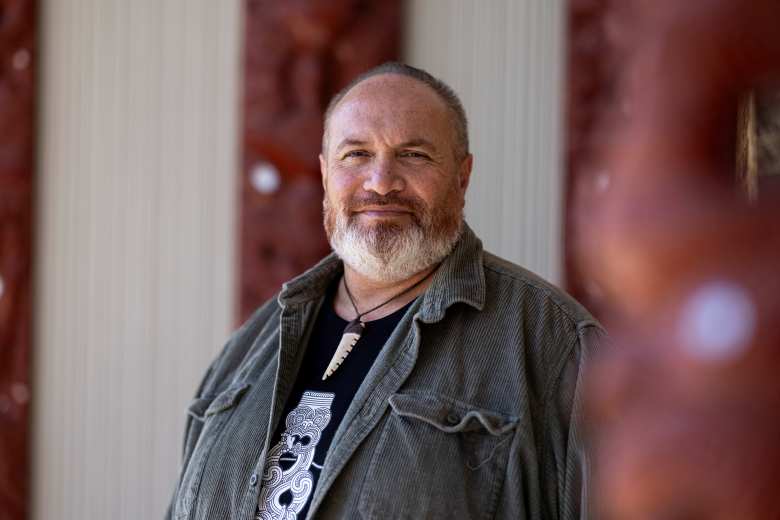 Sean Marsh, of Te Puia, says prior to the pandemic the business had nearly all of its eggs in the international visitor basket. Photo: Supplied
This particular demographic was targeted in RotoruaNZ’s “clever” campaign marketing ‘robe trips’, marketing the region as a place to unwind in its famous and pungent thermal pools.
Not far from Rotorua, overlooking Lake Aniwhenua, is family-run tourism venture Kohutapu Lodge and Tribal Tours.
The business, which has in recent months has been named by Lonely Planet as one of the top cultural experiences in the North Island for 2026, facilitates everything from weaving lessons for guests to half-day tribal land tours.
Co-founder Nadine ToeToe says tours are based “on real life and not performance” with the aim of sharing with visitors Māori culture, ways of life, food and hope for the future.
“A lot of the sites are wāhi tapu, so they’re not signposted, no one’s selling a ticket. They are cultural sites of significance, such as the oldest Māori rock carvings in New Zealand, which are carbon dated 400 years before the great migration.
“We also do marae visits with our traditional pōwhiri on to a marae, where our kaumātua, our elders from our iwi, our tribe, are the ones who karanga, who do the tour through our ancestral meeting house who sit and have morning tea or afternoon tea with our visitors.
“In the lodge we do interactive cultural workshops, from weaving to haka lessons, mau rākau, to our hangi feast.”
ToeToe says a large majority of guests hail from overseas but visits from domestic tourists are becoming more frequent, most often funneled through MoaTrek: a business operating small group tours.
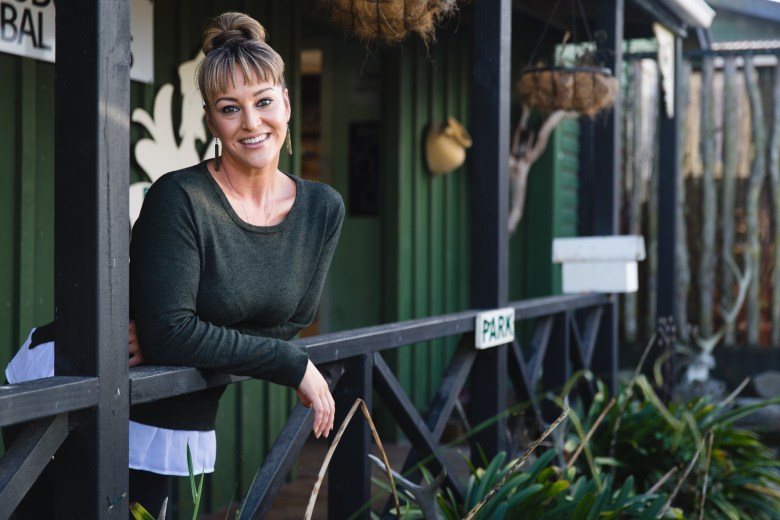 Nadine ToeToe’s business Kohutapu Lodge and Tribal Tours been named by Lonely Planet as one of the top cultural experiences in the North Island for 2026. Photo: Supplied
While she acknowledges she can’t speak for others, ToeToe recognises the awkwardness spoken of by Marsh may very well be alive for Pākehā New Zealanders – whether that’s due to shame over not knowing more about Māori culture or something else.
“In order to not embarrass themselves or admit that they don’t know, maybe they would just avoid it, whereas what I’m saying is tourism is the perfect gentle vehicle where you can safely come and engage and we wrap around you … Māori, we’re a very inclusive culture.
“We love seeing our own domestic market coming through; that pride, that connection and giving our own people from New Zealand the ability to either walk down memory lane or immerse themselves deeper into our culture.”
Success on a global stage
Catering for a domestic audience may well help operators better position themselves for an international tourism rebound. International tourist numbers are still not back at pro-Covid levels but are recovering, with arrivals for the year to September increasing almost 200,000 on the year prior.
Tourism New Zealand’s Pou Ārahi Karl Burrows says Māori culture helps set us apart on the world stage, with a majority of international visitors seeking our experiences in this sector during their time in the country.
“We know that people considering New Zealand for a holiday are very keen on experiencing Māori culture for themselves too – 77 percent of potential visitors to New Zealand want to participate in Māori tourism products.
“Wherever possible we work in partnership with Māori tourism businesses and iwi to ensure our unique culture is shared with our global audiences with care and in a way that uplifts their mana.
“Some recent examples of this include the work we did with our new brand ambassador in China, celebrity and film star Li Xian. In Christchurch, he experienced hongi and waka paddling with Kō Tane Waka on Avon. This content has reached a huge audience in China.”
Burrows says Māori culture also features significantly in the entity’s work to attract visitors via the travel trade.
Intrepid Travel is an Australian-headquartered adventure travel company that operates trips in 114 countries. New Zealand is a growing market for the company, with trips to Aotearoa up 25 percent compared to the 15 percent global average.
New Zealand general manager Simon McKearney says more than three-quarters of Intrepid’s NZ trips now include Māori cultural experiences, with activities such as pounamu carving on the West Coast woven into itineraries.
“They’re not add-ons, they’re more hands-on experiences, like traditional cooking or learning a haka, rather than just seeing a haka.”
This inclusion has grown over time and McKearney says what the cultural experience looks like is driven by the tourism operators themselves.
“We don’t say: ‘Oh, can you do that? Can you do this?’ We actually leave it to them to decide what would be the best for their exchange. It’s important that we have iwi or Māori guides in that space for the experiences.
“So that’s quite a big thing … it ensures the stories that are told are authentic, but also coming from the right place.”