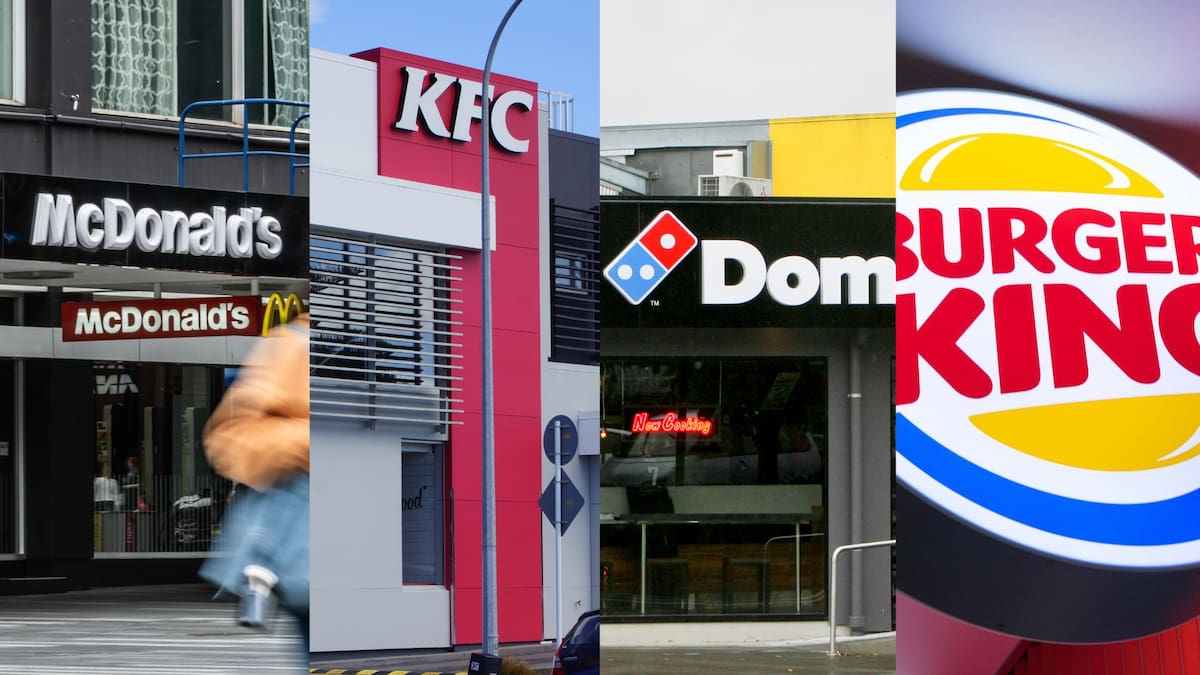
Two new McDonald’s restaurants have been approved for Auckland this year, another is under consideration in Wānaka, a second KFC in Hastings is seeking consent, and in October, a Burger King and Starbucks drive-through development received the go-ahead in the small Waikato town of Tīrau.
To understand fast food’s relationship with New Zealand’s primary sector and within the wider food economy, the Herald spoke to the big four – McDonald’s, Restaurant Brands, Domino’s Pizza and Tahua Group – to try to crunch the facts.
McDonald’s
McDonald’s releases an “annual shopping list” detailing the amount of New Zealand produce it uses and where it’s sourced, and head of impact and communications Simon Kenny said “it’s always our starting point to buy New Zealand-made when we can”.
In its 2024 snapshot, the fast-food giant reported spending $235 million on local produce for the domestic market and exporting $287m of it to its restaurants worldwide, bringing its entire shop to $522m.
McDonald’s used 6,491 tonnes of beef and 506 tonnes of Angus beef over the year for its locally sold burgers. Anzco Foods, in the Taranaki town of Waitara, is charged with turning this meat into hundreds of thousands of burger patties each day.
It’s a seemingly insignificant sum when compared with the 29,580 tonnes McDonald’s sent overseas in 2024.
New Zealand’s cheap lean beef trimmings are a key component in US mince. McDonald’s actively participates in this trade, with about one-tenth of the country’s annual beef exports going to its overseas stores.
McDonald’s used 4715 tonnes of chicken in 2024, mainly sourced from Waikato farms, while exporting 124 tonnes. Kenny expects those numbers would have increased in 2025 with new chicken products on the menu.
“In many cases, the relationships with our suppliers go back many decades. We are fortunate that we can source high-quality produce locally,” he said.
“Food quality and sourcing is one of McDonald’s’ four global impact pillars – areas of focus where we think we can make the most positive difference.
“We approach responsible sourcing holistically, understanding that our work can impact the livelihoods of people, the health of the planet and the wellbeing of animals.”
Kenny referenced McDonald’s’ contributions to the beef value chain, its unprecedented move to free-range eggs, knowledge sharing and awarding best practice suppliers as tangible examples of this ethos.
Restaurant Brands
Restaurant Brands – the master franchise operator for KFC, Taco Bell, Pizza Hut and Carl’s Jr – told the Herald its policy is “to purchase locally where possible, thereby supporting our community, farmers and manufacturers”.
The company didn’t disclose how much New Zealand meat it bought or used, but said 100% of chicken is sourced from local suppliers across its four brands, compared with 42% of beef.
“As RBD is a publicly listed company, the structure of our contracts requires us to adhere to commercial confidentiality obligations,” a spokesperson said.
Taco Bell, Pizza Hut and Carl’s Jr source their chicken from Ingham’s, with KFC also partnered with Tegel to meet demand.
According to the brand’s website,76% of KFC’s total produce suppliers are from New Zealand, and Taco Bell International managing director Ankush Tuli told Stuff when launching the brand that it was sourcing 70% of ingredients locally.
BusinessDesk also reported in 2014 that Carl’s Jr had switched to sourcing local beef patties two years into its launch to improve margins.
Domino’s Pizza
Domino’s Pizza Enterprises declined to disclose how much New Zealand meat it uses for its pizzas, citing it as against company policy.
However, the company has previously confirmed where most cuts are sourced from.
Domino’s publicly stated as recently as 2020 that it takes pride in buying its chicken from Tegel, championing its product on Facebook as “100% local and raised in New Zealand, with no added hormones or GMO’s”.
It also became the first fast-food chain on both sides of the Tasman to sign the Better Chicken Commitment, pledging in 2021 to help dramatically improve the conditions in which chickens are grown and slaughtered for meat.
Regarding processed meats, the pizza empire said its sausages, bacon, ham and other deli meats were sourced from Hellers.
Domino’s has not shared information on where its beef is sourced from, but has used California-based Impossible Foods as its plant-based beef supplier since 2022.
Tahua Group
Tahua Group, the New Zealand-owned retail and hospitality company in charge of Burger King, Popeyes and Starbucks, also declined to comment for this story.
A representative said Tahua didsn’t have any public disclosures as a closely held company, and cited its suppliers and volume figures as commercially sensitive.
Burger King’s website states it sources “succulent Kiwi-raised chicken” for its menu, but doesn’t specify whether all the “100% beef” is locally procured.
It uses “the best ingredients from local and imported sources”, with lettuce, buns and tomato sauce named as locally sourced.
Popeyes, a relative newcomer to the market, also states all its chicken comes from New Zealand suppliers.
“We try to source our products locally, where possible,” reads its website.
Tom Rose is an Auckland-based journalist who covers breaking news, specialising in lifestyle, entertainment and travel. He joined the Herald in 2023.
Sign up to The Daily H, a free newsletter curated by our editors and delivered straight to your inbox every weekday.