Published on
January 5, 2026
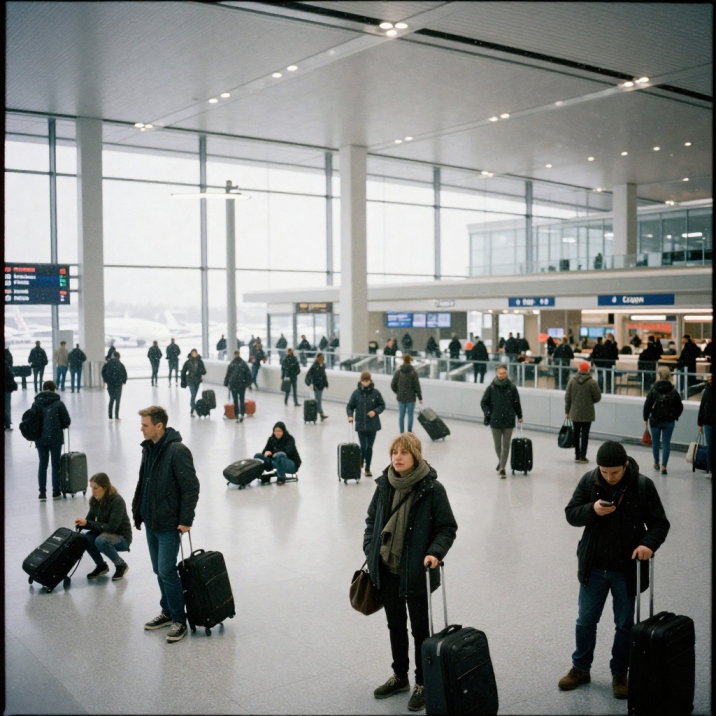
Severe winter weather is currently paralyzing the aviation network across Germany. Heavy snowfall and restricted visibility have forced a massive wave of disruptions at major hubs. Travelers face a grim reality today as schedules collapse under the weight of 69 cancellations and over 1,200 delays. From the northern terminals in Hamburg to the southern gates of Munich, the impact is felt nationwide. Ground crews are working tirelessly in Frankfurt and Düsseldorf to clear runways, yet the backlog continues to grow. Airlines such as Lufthansa and Air Dolomiti are struggling to maintain their hubs in the face of these relentless conditions. Meanwhile, KLM and German Airways have reported significant cancellations that leave passengers stranded across Berlin, Stuttgart and Nuremberg. Passengers should expect extended wait times as the industry grapples with this logistical nightmare. This report examines the data behind the chaos and details how these carriers are navigating the storm.
The scale of the disruption is best understood by examining the specific statistics provided by the major aviation gateways across Germany. Each hub has reported significant deviations from scheduled operations:
Frankfurt: As one of Europe’s most critical transit points, Frankfurt has been hit with 14 cancellations and a staggering 337 delays. The sheer volume of traffic through this hub means that these delays are likely to have a cascading effect on global flight schedules.Munich: In the south, Munich has reported 13 cancellations and 240 delays. As a primary base for many European routes, the grounding of flights here has caused substantial bottlenecks for travelers.Berlin-Brandenburg: The capital’s airport, Berlin-Brandenburg, has recorded the highest number of cancellations for a single site today, with 16 flights removed from the schedule and 250 delays reported.Dusseldorf: Operations in Düsseldorf have been tempered by 8 cancellations and 180 delays, reflecting the difficult conditions in the North Rhine-Westphalia region.Hamburg: The northern port city of Hamburg has seen 6 cancellations and 120 delays, as maritime weather conditions often exacerbate visibility issues for incoming aircraft.Stuttgart Echterdingen: In the southwest, Stuttgart has reported 6 cancellations and 66 delays, primarily affecting regional connectivity.Nuremberg: Even smaller hubs like Nuremberg have not been spared, with 6 cancellations and 29 delays noted in the most recent reports.
The disruption has been distributed across a variety of carriers, ranging from national flag carriers to regional operators and low-cost airlines. The data highlights how specific fleets are being managed during this period of instability:
KLM: This carrier appears to be the most broadly affected across almost all locations, notably recording 10 cancellations in Berlin, 6 in Stuttgart and multiple disruptions in Frankfurt, Munich, Düsseldorf, Hamburg and Nuremberg.Lufthansa: As the primary German carrier, Lufthansa has faced a massive operational challenge, particularly in Frankfurt where 136 delays were recorded and in Munich where 71 delays and 3 cancellations were noted.Lufthansa Cityline: The regional branch has also been impacted, with significant delays reported in Munich (27) and Frankfurt (9).German Airways: Significant cancellations were noted for this airline, particularly in Nuremberg (4), Frankfurt (3), Düsseldorf (2) and Hamburg (2).easyJet: Primarily affecting the capital, easyJet recorded 3 cancellations and 48 delays in Berlin.Air Dolomiti: A notable volume of delays was observed for Air Dolomiti, specifically in Frankfurt, where 35 flights were held back.Aegean Airlines: This carrier faced disruptions across the board, with 4 cancellations in Munich, 2 in Berlin, 2 in Frankfurt and 1 in Düsseldorf.Finnair & Scandinavian Airlines Ireland: Minor but notable disruptions were recorded for these carriers in Düsseldorf and Berlin, respectively.
The concentration of flight disruptions across Germany is expected to have a tangible influence on local tourism sectors. In cities such as Munich and Frankfurt, which serve as major gateways for international tourists, the delay of over 500 flights combined may lead to a decrease in immediate foot traffic for local businesses, hotels and cultural landmarks.
In Berlin, the high cancellation rate at Brandenburg Airport means that many travelers may be unable to reach the city for scheduled tours or events, potentially leading to a temporary decline in hospitality revenue. Similarly, in Hamburg and Düsseldorf, the reduction in flight reliability during this period of low visibility and snow may discourage last-minute weekend travelers who frequent these cities for shopping and maritime tourism.
Even in Stuttgart and Nuremberg, where the total number of flights is lower compared to the mega-hubs, the disruption of regional arrivals can stall the flow of business tourism. When thousands of passengers are diverted or delayed, the secondary spending usually seen in city centers—ranging from dining to local transport—is inevitably postponed or lost, creating a quietness in the tourism districts of these usually bustling German urban centers.
For those currently navigating the travel turmoil across Germany, several professional recommendations are offered to mitigate the inconvenience.
Firstly, passengers at hubs like Frankfurt, Munich and Berlin are advised to monitor the live flight status boards and official airline mobile applications constantly. Because visibility and snow conditions can change rapidly, departure slots may be reassigned on short notice. It is highly recommended that travelers remain within the terminal area if their flight is listed as delayed rather than cancelled.
For those flying with KLM, Lufthansa, or easyJet whose flights have been officially cancelled in cities like Düsseldorf or Hamburg, contact should be established with the airline’s ground staff or digital customer service portals to arrange for rebooking. Under European passenger rights regulations, airlines are typically required to provide assistance, which may include food vouchers or overnight accommodation if the delay extends significantly.
Travelers in Stuttgart and Nuremberg should also verify if alternative rail transport is a viable option, though it should be noted that heavy snow and strong winds often affect ground infrastructure as well. Above all, patience is requested by airport authorities as de-icing procedures and safety protocols are prioritized to ensure that when flights do depart from Germany, they do so under the highest possible safety standards.
-The information provided is sourced from FlightAware.
