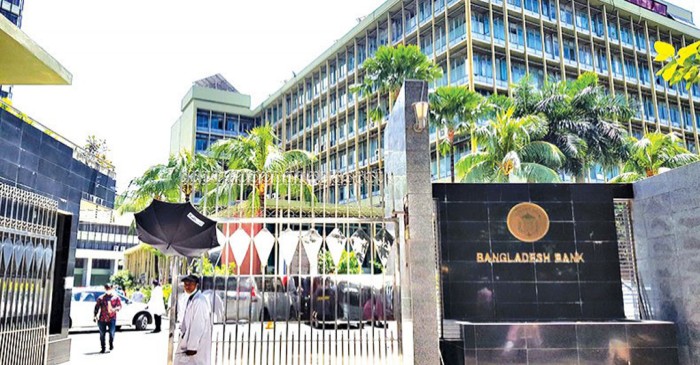

| New Age file photo
The Bangladesh Bank has launched a new Risk-Based Supervision framework, marking a major shift in how the country’s banking and financial institutions are monitored as authorities seek to restore confidence among depositors after years of sectoral stress.
The central bank on Sunday formally moved away from a traditional, compliance-driven oversight model to a system that prioritises supervision based on the specific risk profiles of individual institutions.
Officials said that the new approach would allow regulators to identify financial vulnerabilities earlier and respond more decisively.
Under the RBS regime, the Bangladesh Bank will abandon a ‘one-size-fits-all’ model of supervision. Instead, banks and financial institutions will be assessed and monitored according to the level and nature of risks embedded in their operations, including governance, asset quality and liquidity exposures.
To support the transition, the central bank has completed a major internal restructuring. Thirteen existing departments have been reorganised into 17 specialised units, including 12 bank supervision departments that will provide targeted oversight based on real-time data.
Five additional specialised units have been created to focus on digital banking, data analytics, payment systems and policy formulation.
A separate department has also been set up to monitor Anti-Money Laundering and Terrorist Financing activities, modelled on the Bangladesh Financial Intelligence Unit (BFIU), signalling a stronger regulatory focus on financial integrity.
The launch of the framework had initially been scheduled for January 1 but was postponed following the declaration of state mourning over the death of former prime minister Begum Khaleda Zia.
Arif Hossain Khan, executive director and spokesperson of the Bangladesh Bank, said that the reorganisation process had been completed and the full implementation of RBS officially began on Sunday.
‘This will be a far more rigorous supervisory regime,’ he said, adding that oversight would be driven by data accuracy and proactive risk assessment rather than routine compliance checks.
Central bank officials said that the results of risk assessments under the new framework could trigger tough enforcement actions against weak institutions.
These may include the removal of managing directors, dissolution of boards of directors and, where necessary, the application of the Bank Resolution Ordinance to deal with failing banks.
The reform is seen as a cornerstone of the interim government’s broader effort to clean up the banking sector, curb mismanagement and rebuild public trust in the financial system after a period marked by loan defaults and governance failures.