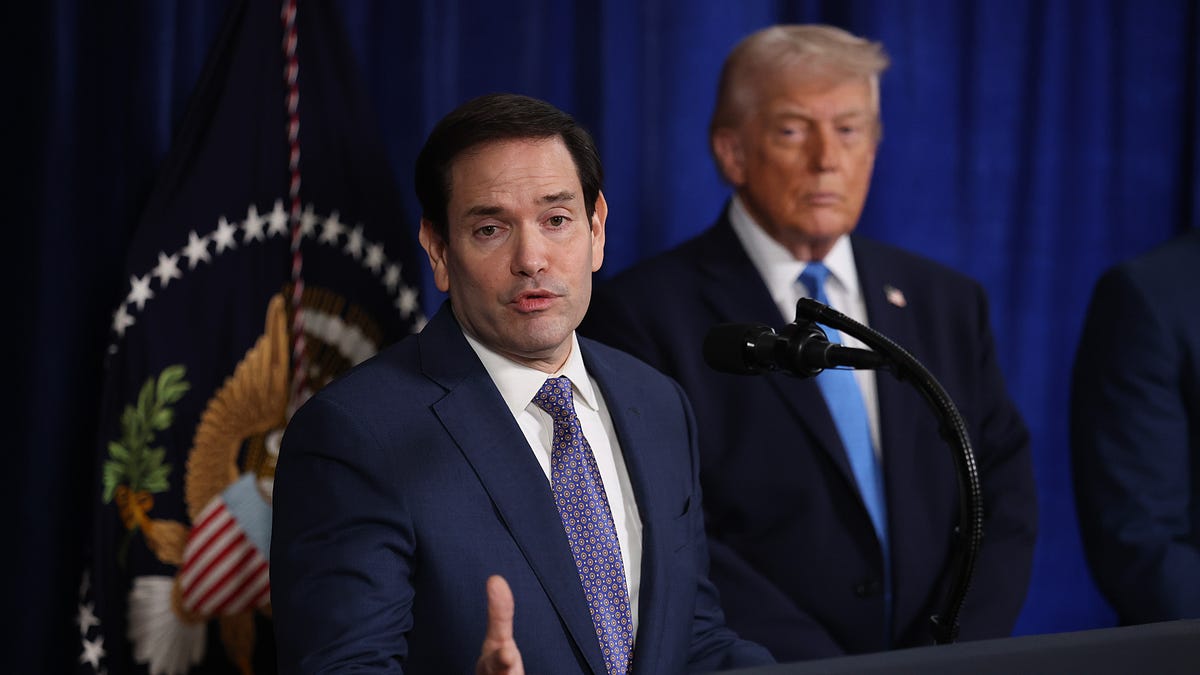
Rubio persuaded Trump to abandon his administration efforts to negotiate with Maduro, leading to the military raid on his compound in Caracas and his capture.
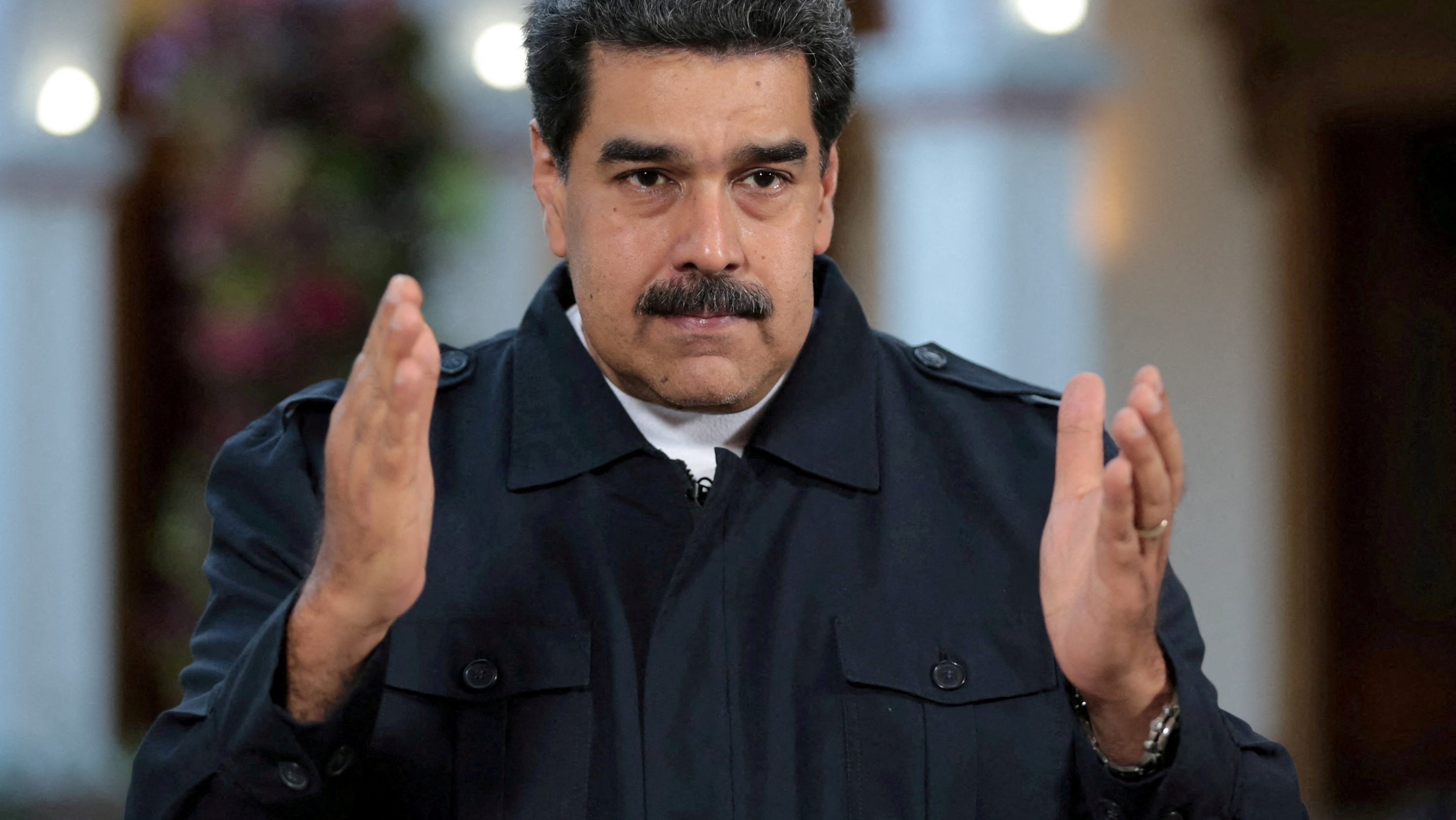

What comes next for Venezuela after the capture of President Maduro
USA TODAY White House correspondent Francesca Chambers takes a closer look at that comes next for Venezuela after the U.S. capture of Nicolas Maduro.
Rubio, a key architect of the Trump administration’s Venezuela policy, has long advocated for Maduro’s removal.The U.S. will oversee Venezuela’s transition, with Rubio and Defense Secretary Pete Hegseth in charge alongside the newly sworn-in president from Maduro’s inner circle.Rubio’s hawkish stance on Latin America is heavily influenced by his Cuban immigrant heritage and political upbringing in Miami.
WASHINGTON – The capture of Venezuelan President Nicolás Maduro and his wife during a daring nighttime raid by U.S. troops on his compound in Caracas marked the realization of a longtime political goal for President Donald Trump.
But it was a personal victory for a key member of Trump’s administration: Secretary of State Marco Rubio.
“Nicolás Maduro had multiple opportunities to avoid this,” Rubio said, standing alongside Trump at a post-raid news conference at Trump’s Mar-a-Lago estate in Florida. “He was provided multiple, very, very, very generous offers, and chose instead to act like a wild man, chose to play around. And the result is what we saw tonight.”
Rubio, the son of Cuban immigrants, has been one of the primary architects of the Trump administration’s Venezuela policy, which shifted the United States away from decades-long diplomatic negotiations on human rights and other issues to the use of military force to remove a de facto leader from office.
After all, Rubio cut his political teeth thanks to powerful Cuban exiles who became top players in the GOP at the height of President Ronald Reagan’s Cold War. The political godson of hardline mentors from a local king-making county commissioner to then U.S. Reps. Ileana Ros-Lehtinen and the late Lincoln Diaz-Balart, Rubio inherited a worldview ensconced in hawkish stances when it came to Cuba and Venezuela, or any country that dared to embrace the table scraps of a socialist agenda in Latin America.
Rubio has been advocating for the removal of Maduro (and his predecessor, President Hugo Chávez) for years, arguing he is not the legitimate president of the Caribbean nation of more than 28 million people.
Rubio’s personal history and his close ties to the Cuban and Venezuelan diasporas in the United States not only provided him with invaluable clout on the issue inside the Trump administration, but they also have landed him a direct role in shaping Venezuela’s future.
With Maduro gone, Trump said the United States would run Venezuela until there can be “a safe, proper and judicious transition.” He signaled Rubio and Defense Secretary Pete Hegseth would be in charge, alongside Venezuelan Vice President Delcy Rodríguez, who was sworn in as president on Jan. 4.
Impeccable timing – some call it Miami street smarts – has always been Rubio’s chief political skill. Even as a breakout first-time candidate for U.S. Senate in 2010, he latched onto the burgeoning Tea Party to ride into victory and beat the establishment favorite, former Gov. Charlie Crist.
Rubio is now under immense internal and external pressure (and pressure in his hometown) to deliver on his vision for a free and prosperous Western Hemisphere. For the native Miami son, the transition is both a personal and existential one that those who know Rubio say he is uniquely positioned to manage, whether or not regime change happens and democracy returns to Venezuela.
“This is really Marco Rubio‘s moment to shine,” said Jason Marczak, vice president and senior director at the Atlantic Council’s Adrienne Arsht Latin America Center. “What we saw occur in the early morning hours in Venezuela would not have happened if Marco Rubio was not at the top tiers of the Trump administration.”
Jose Mallea, who has known Rubio for 30 years, said all of Rubio’s experiences have led him to this moment.
“It’s almost,” he said, “like the guy was born for the role.”
Miami politics ‘from the ground up’
One of the defining moments of Rubio’s life happened more than a decade before he was born.
His parents, Mario and Oriales Rubio, immigrated to the United States in 1956, three years before the rise of Fidel Castro and the establishment of a communist government in the island nation. Though their decision to leave their homeland was driven by their desire for better economic opportunities, they had hoped to someday return to Cuba, a move that became impossible under Castro.
Their son, born in 1971, grew up hearing stories from them and other Cuban exiles about the pain of being separated from their homeland.
The family’s history and his parents’ pursuit of the American dream – his father worked as a bartender, his mother as a hotel maid – would become an important part of Marco Rubio’s narrative as he pursued a political career, first in the Florida House of Representatives and later in the U.S. Senate.
At first, Rubio did not embrace Republicanism. By 1980, when he was 9, Rubio was already passionate about politics and supported Massachusetts Sen. Edward Kennedy, who was challenging President Jimmy Carter for the Democratic nomination for president. Rubio was crushed when Carter won enough delegates to secure the nomination, but Kennedy’s concession speech was an inspiration, he later said.
Reagan’s defeat of Carter later that year and his grandfather’s allegiance to the new Republican president made Rubio a Republican for life. In his 2012 memoir, American Son, Rubio recalled writing a paper when he was in the fifth grade, praising Reagan for restoring the U.S. military “after it had been demoralized and allowed to decay” before his presidency.
Rubio got a bit of hands-on involvement in politics and government in the 1990s when, while he was a law student, he worked as a summer intern in the congressional offices of Ros-Lehtinen, a Miami Republican who was born in Cuba and immigrated to the United States with her family when she was 7.
Two years later, when he was 21, Rubio volunteered for the first congressional campaign of Diaz-Balart, a state senator and the scion of a politically prominent Cuban family. “I spent the entire summer,” Rubio wrote, “learning Miami politics from the ground up.”
Miami politics “from the ground up” is code for the playbook written by Jorge Más Canosa, a CIA-trained exile who founded the Cuban American National Foundation, one of the most effective lobbying groups in Washington. Más Canosa understood power came in two forms: cash and intelligence – and it was the wisdom he imparted to generations of aspiring politicos born 90 miles from Cuban straits.
Mallea met Rubio when the two of them worked on Republican Bob Dole’s presidential campaign in 1995. He later ran Rubio’s first campaign for Senate in 2010.
On the campaign trail, he recalled, Rubio would often talk about his family’s journey to America, their sacrifice and the sacrifice of the exile community. As he spoke about communism in Cuba and socialism in Venezuela, Mallea recalled, Rubio would tell his audience:
“Look, I didn’t learn this because I read about it in a book…I learned about it because I’ve grown up in a community of exiles and in a home where this was talked about at the dinner table and with neighbors who were political prisoners and friends, and even family who suffered great loss, not just financial and material, but personal family members who have died.”
Rubio would later face charges that he had embellished his family story – he’d often claimed his parents fled Cuba to escape Castro and communism, when in fact, they left before the Cuban Revolution. But the family’s journey has remained a key part of his appeal, especially for the Cuban and Venezuelan migrants he represented in Florida.
“All those things, I think, have shaped who Marco became and his desire to want to serve,” Mallea said. “So I think it’s at the core of who he is as a leader, the experience that he had growing up.”
A military operation topples Maduro
Eventually, Rubio’s journey would lead to the Senate and to his current role as secretary of state, working for a president he had mocked for having “small hands” during their bitter campaign for the GOP nomination for president in 2016.
For Rubio, the close ties between Cuba and Venezuela remained a concern.
Maduro, the hand-picked successor of Venezuela’s former leader, was narrowly elected president after Chávez’s death in 2013. A former bus driver and union leader, Maduro received his early political training in Cuba and, as president, formed a critical alliance with Havana, which gave him the security, intelligence and ideological support needed to hang onto power and withstand U.S. pressure.
Rubio believed that, if Maduro fell, the communist regime in Cuba would be severely weakened and could topple as well. So he kept applying pressure.
In the Senate, he was a frequent, outspoken critic of the Maduro government and sponsored legislation to provide millions of dollars in humanitarian assistance to Venezuelan migrants and to force a transition to a democratic form of government.
As a senior member of the Senate Foreign Relations Committee and vice chair of the Senate Intelligence Committee, he fought two Democratic presidents – Barack Obama and Joe Biden – over their push to normalize relations with Cuba and Venezuela even as, at the time, swaths of Cuban- and Venezuelan-Americans supported a détente.
Rubio has always defended the U.S. right to intervene militarily in Venezuela, calling at one point for support for a coup in the South American nation.
“This is not the U.S.,” he said in 2019. “This is Honduras. This is Guatemala. This is Canada, Brazil, Colombia, Argentina, et cetera, et cetera. This is not a U.S.-sponsored anything. This is the U.S. supporting the people of Venezuela, who want their constitution and democracy followed. That’s a fact.”
Rubio continued his campaign against Maduro in his dual roles as secretary of state and Trump’s national security adviser.
“I don’t think Marco made it personal,” Mallea said, “but whatever the outcome is of Cuba, Venezuela, the region, it’s personal to him because he’s from this community of exiles and of people who’ve suffered greatly.”
Rubio has long seen Maduro remaining in power as a threat to U.S. interests as well as a threat to the livelihoods of Venezuelans, Marczak said.
“Rubio identifies with the plight of the Venezuelan people and has long sought to get Maduro out of power,” he said. “I think that there’s been a greater appetite to do this in this administration – because President Trump also was committed to a transition in Venezuela in his first administration.”
Rubio was able to gain Trump’s trust and then use his influence to help persuade Trump to abandon his administration efforts to negotiate with Maduro, leading to the military raid on the presidential compound in Caracas and Maduro’s capture in the early morning hours of Jan. 3.
Maduro and his wife, Cilia Flores, were whisked away to the USS Iwo Jima, an amphibious assault ship waiting off the South American coast, and then taken to New York, where they are under indictment on drug-trafficking charges.
“The Rubio way turned out to be the winning solution,” said Carlos Trujillo, a former member of the Florida House of Representatives who has known Rubio for more than 20 years and served as an ambassador in the first Trump administration. “You’re not going to negotiate diplomacy with someone who’s a narco-terrorist. The roads are very, very far between what they’re trying to achieve and what we’re trying to achieve.”
Still, Trujillo said, Trump’s decision to use military force to remove Maduro from office was a leap of faith.
“For the success the operation was, it could have also gotten terribly wrong,” he said. “And you’re putting a significant amount of American service members’ lives at risk. So the fact that the president has that much faith and confidence in (Rubio’s) assessment and his judgment and his ability to deliver great information to make informed decisions on, it really speaks to the value that he has within the administration and really the value that the president places in him.”
In statement, White House Press Secretary Karoline Leavitt said, “Anyone who listened to President Trump on the campaign trail heard him promise to demolish the drug cartels and take on Venezuela for sending deadly drugs and criminals.”
“When President Trump makes a promise, he keeps it, and Secretary Rubio has done a tremendous job helping President Trump execute on all foreign policy decisions, including with respect to Venezuela.”
What’s next for Venezuela?
For now, the question that remains is what is Trump’s personal longer-term commitment to Venezuela and what are going to be the conditions that are going to be seen as necessary to have the safe, proper and judicious transition his administration promised.
“This is uncharted waters,” Marczak said. “What’s unclear is the degree to which there will actually be U.S. presence on the ground in Venezuela. A proper, judicious transition means bringing in a democratically elected government.”
Elections were held in Venezuela in 2024, with Edmundo González widely seen as the legitimate winner after Maria Corina Machado, the opposition leader from the same party, was barred from running. Maduro declared himself the winner anyway and was sworn in for a third term.
For much of the past year, Venezuelans and Machado called on the United States – and her longtime friend and ally Rubio – to rescue them from another crushing Maduro term.
“Maria Corina, Venezuela’s Iron Lady,” as Rubio penned in his introduction to her inclusion on Time’s 100 most influential list, “has never backed down from her mission of fighting for a free, fair, and democratic Venezuela…her resolve has faced unprecedented challenges as she bravely confronted the Maduro’s regime’s efforts to undermine the will of the Venezuelan people.”
It was long believed that if the Trump administration succeeded in ousting Maduro, restoring democracy would include the opposition taking office. Rubio himself supported Machado’s nomination for the Nobel Peace Prize, an honor she was awarded last year over Trump.
Instead, Rubio’s counterpart will be Rodríguez, the former vice president, and the remaining members of Maduro’s inner circle, according to Trump himself.
Asked on Jan. 4 on CBS News’ Face the Nation how he envisions working with Rodriguez, Rubio said it’s too early to tell.
“We’re going to make an assessment on the basis of what they do, not what they say publicly in the interim,” Rubio told the reporter.
While the administration has been careful not to reveal details about how it envisions Venezuela’s future, “that also means that there are a number of questions that continue to mount insofar as how to actually ensure that this operation accomplishes Rubio’s goal of bringing in a democratically-elected government that respects the livelihoods, the freedom of the Venezuelan people,” Marczak said.
Brett Bruen, who served as White House director of global engagement during the Obama administration, said there is no doubt that the U.S. operation that removed Maduro from office was Rubio’s creation.
“On the one hand,” he said, “it’s reassuring that Rubio has a firm grasp on the both political, as well as some of the military and security dynamics in the region.” But, “I worry that us going down the path of taking over a country is going to be fraught with problems that we are not fully accounting for and that we will quickly get into another quagmire.”
Complicating matters for Rubio is that, in addition to secretary of state, Trump has given him multiple other roles in the administration, including national security adviser.
“This would be a Herculean task for someone who was simply charged with this one problem,” Bruen said. “He cannot manage the National Security Council, the State Department, the National Archives and a whole other country and do all of those effectively. I think we may be reaching a breaking point for Rubio in what he’s able to accomplish.”
Rubio has been adept at managing expectations before.
He has said from the start of the administration that his role as secretary of state is to implement the president’s policies. He has routinely used that rationale as a way to explain differences between his long-held views and his execution of Trump’s foreign policy prerogatives. He could use it again to deflect blame if things in Venezuela don’t go as planned.
In his memoir, Rubio recalled boasting to his Reagan-loving grandfather that someday he would lead an army of exiles that would overthrow Castro and become president of a free Cuba. When he did, “[Papá] narrated the life of José Marti and the heroics of the Mambises, who had won Cuba’s independence,” Rubio wrote.
For now, the road to achieving that dream appears to run through Venezuela.
Just as he predicted, Rubio is leading the way.
Francesca Chambers is a White House Correspondent for USA TODAY covering foreign policy. Follow her on X: @fran_chambers
Michael Collins writes about the intersection of politics and culture. A veteran reporter, he has covered the White House and Congress. Follow him on X: @mcollinsNEWS.