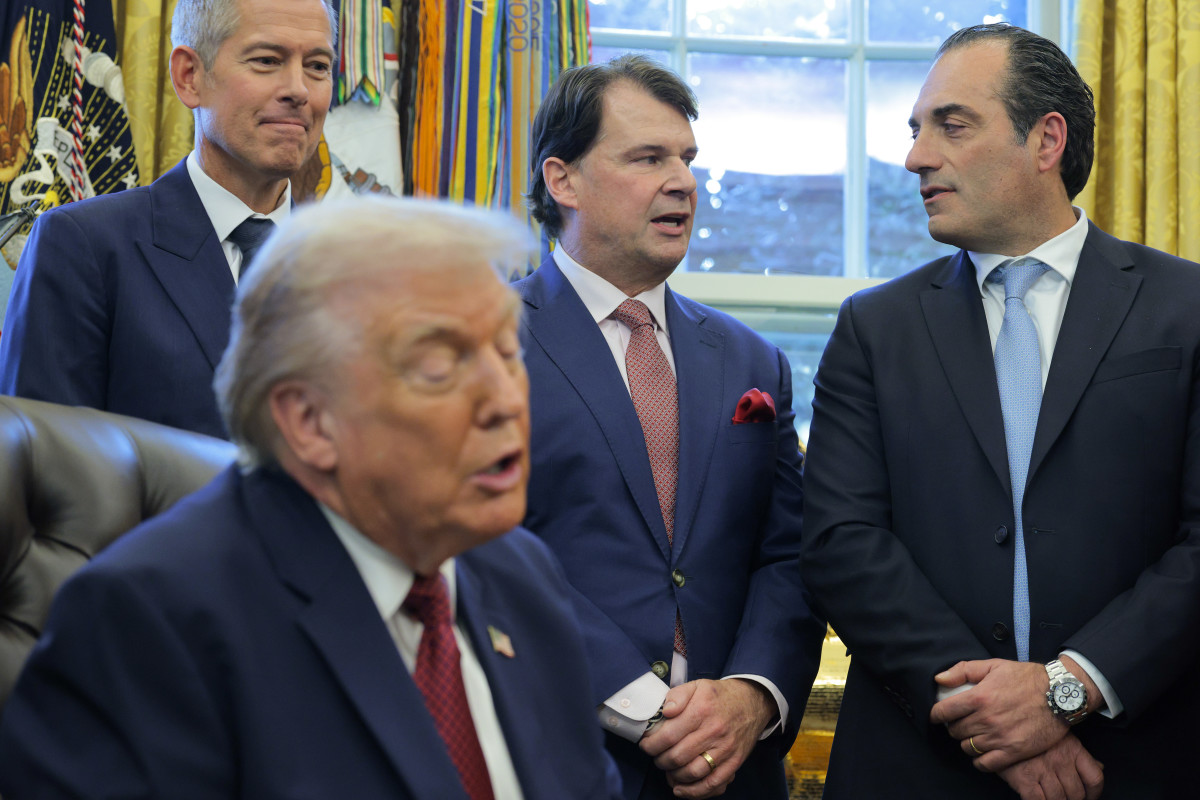

Photo by Chip Somodevilla/Getty ImagesChip Somodevilla/Getty Images
Donald Trump spent much of the past decade warning he was ready to set off a global trade war, insisting it would, among other things, help rebuild American manufacturing. When he finally pulled the trigger, the auto industry found itself at ground zero.
How things will shake out remains uncertain, trade talks with key trade partners moving far more slowly than the president promised. But, for now, tariffs are adding at least 15% to the wholesale price of most foreign-made vehicles. It’s not just imports that are affected. Tariffs on imported aluminum and steel, as well as foreign-made parts and components, have driven up production costs for virtually all vehicles assembled in the U.S., as well.
Related: Why Ford Says Trump’s Trade War Actually Helps Japan
Trump has impacted the auto industry in a variety of other ways. He’s signed a flurry of executive orders that, among other things, have restricted California’s ability to set unique emissions standards effectively mandating EVs. He’s pulled back federal support for a nationwide charging network and pushed Congress to eliminate EV tax credits.
EVs Short Circuit – But Battery Power Isn’t Dead
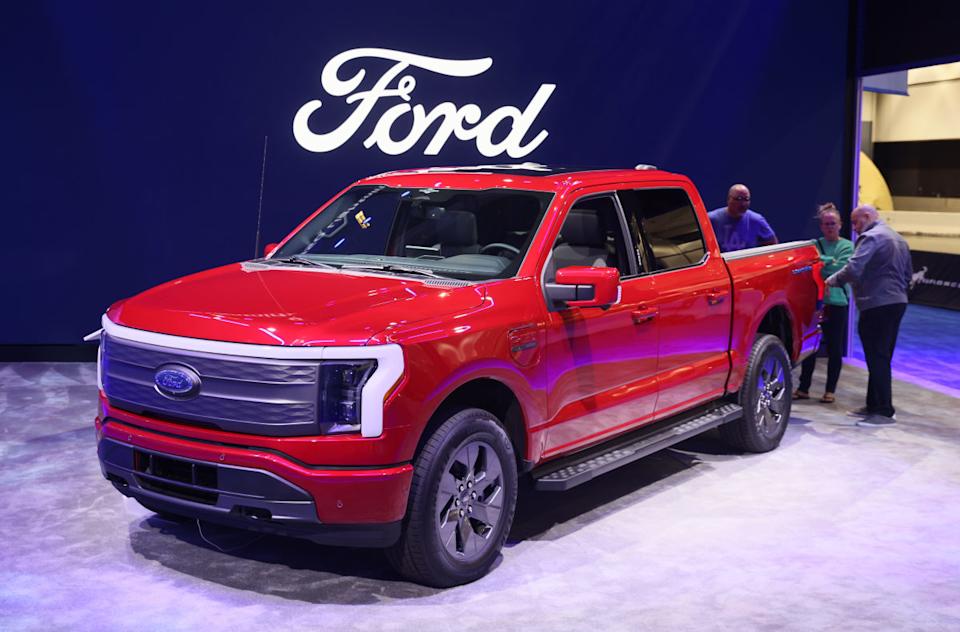
Between 2019 and 2023 EV sales grew almost eightfold and the Biden administration hopes battery-electric vehicles would account for nearly half the U.S. market by early in the coming decade. But the phase-out of those tax credits has effectively short-circuited that plan. After a September surge by buyers hoping to beat the deadline, fourth-quarter sales collapsed. Demand is expected to rebound – at bit – but where all-electric models were once forecast by AutoPacific, Inc. to top 25% by decade’s end, the consulting firm now estimates the figure will come in at barely half that.
Related: Automakers Bet on Performance EVs to Revive Slowing Demand
More products are in the pipeline but others are being delayed or cancelled. And several current models are being dropped, including the Acura ZDX, Ford F-150 Lightning, Nissan Ariya and Volkswagen ID.Buzz. Proponents still hold out hope that a wave of new, low-cost models – such as the upcoming Chevrolet Bolt, and the Universal EV family Ford will launch in 2027 – could rebuild momentum. Promising new battery technology also could help. And, despite conventional wisdom, public chargers are going in by the many thousands each month.
Sales of hybrids, such as the 2026 Toyota Prius Limited, have continued growing, even as demand for EVs falters.Toyota
While EV demand has slowed, other forms of electrification are gaining traction fast. Conventional hybrids are expected to account for 15% of the U.S. market in 2025, double the 2023 share, according to industry data. It helps that today’s HEVs are not only fuel-saving but often the most powerful option available for products like the 2026 Hyundai Palisade. Meanwhile, plug-in hybrids are becoming more common and new extended-range electric vehicle systems are set to roll out, helping overcome range and charging concerns. Ford plans to bring back its Lightning in E-REV form.
Affordability
According to the president, the word, affordability “doesn’t mean anything to anybody.” He’d have a hard time convincing American motorists. As recently as 2015, the average transaction price for a new vehicle – factoring in sticker price, options, and discounts – was $33,500, according to Kelley Blue Book. Currently, it is nudging $50,000, and recent industry announcements make clear the figure will be going up again in the coming months.

A variety of factors, including the cost of raw materials, chips and other components catch some of the blame. Then there are those pesky Trump tariffs. Until now, manufacturers have largely swallowed most of those added duties to avoid hurting sales. General Motors estimated this will result in a $5 billion hit to its bottom line this year, the industry overall expected to feel an $80 billion impact. But more of those costs are beginning to be passed on. Porsche, for one, announced a second tariff-related price hike coming this month.
America’s K-shaped economy – where there’s a widening gap between rich and poor – means low-end buyers are expected to be hit hardest, especially as manufacturers start paring back on entry models such as the Nissan Versa, the last product in the U.S. market starting under $20,000. Cox Automotive foresees manufacturers continuing to downplay lower-priced segments in favor of more luxurious products generating higher margins as affluent consumers seem more willing to absorb tariff-related price hikes.
Shareholder Ready to Reward Musk, Despite Tesla’s Challenges
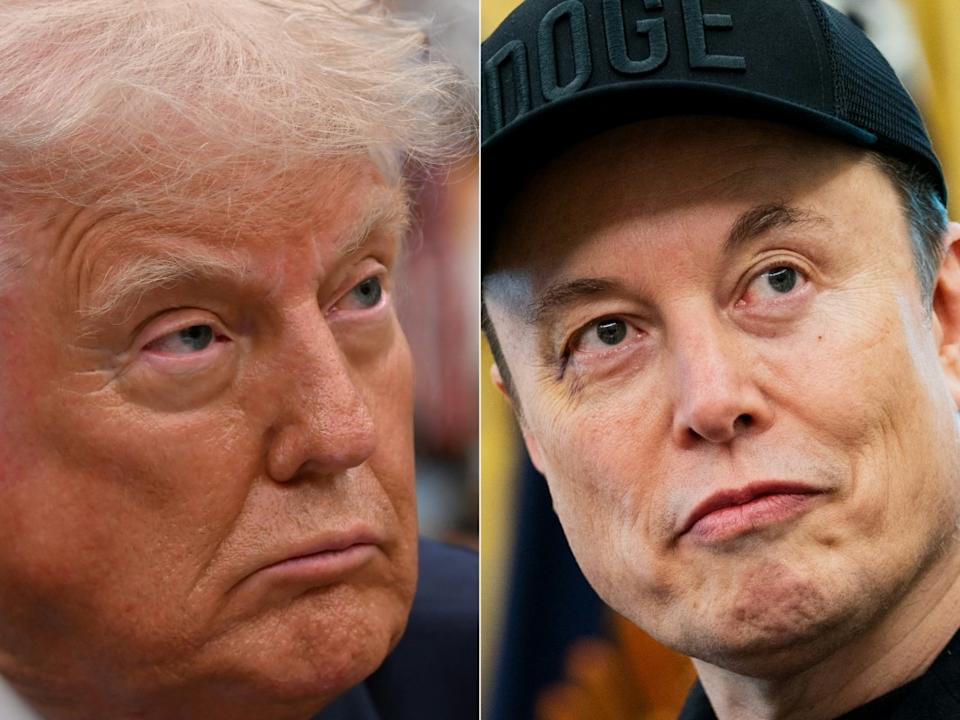
President Trump and Tesla CEO Elon Musk have had an on-again/off-again relationship.Getty
In an industry often run by anonymous executives, Tesla has built its brand on the back of its outspoken CEO Elon Musk. That helped transform the start-up into the world’s leading EV manufacturer. But Musk’s image took a hit when he become an active player in the Trump reelection campaign, subsequently becoming head of the controversial Department of Government Efficiency. Musk demonstrated his strategy when he appeared on stage with a chainsaw – and his team quickly started firing thousands of government workers while claiming a goal of cutting $2 trillion in government “waste.”
Related: Tesla’s Chair Just Made a Bold Claim About Elon Musk’s Future
Musk has since admitted regretting his role and a number of studies have since, found little, if any, savings were achieved. In some areas, costs actually rose. Worse, at least for Musk and Tesla, the exec’s role triggered a massive global backlash resulting in massive demonstrations – and some vandalism – at Tesla stores. And a sharp slump in sales this past year was, at least partially, due to boycotts. Whatever the reason, Tesla sales plunged by 8% in 2025. As a result, it was toppled from its role as global EV king-of-the-hill by China’s ambitious BYD which saw its own sales jump 28%, even though its products aren’t available in the U.S. market.
Not all went wrong for Tesla in 2025. It finally launched its first small fleet of robotaxis in Austin, Texas, this past June, with plans to expand to other markets in the months ahead. It’s also moving ahead with its AI and robotics operations.
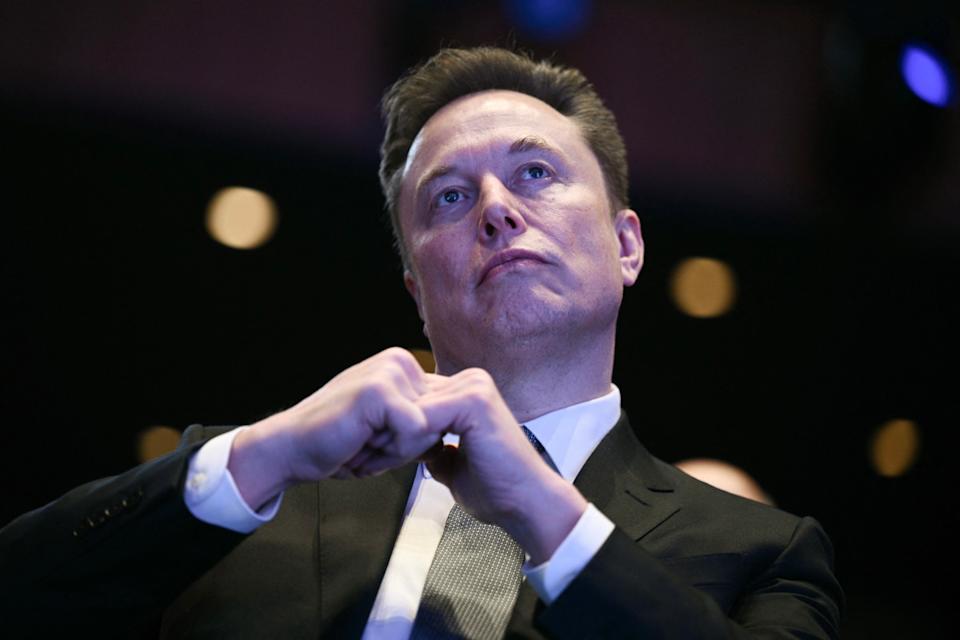
Elon Musk looks on as US President Donald Trump speaks at the US-Saudi Investment Forum at the John F. Kennedy Center for the Performing Arts in Washington, DC on November 19, 2025. BRENDAN SMIALOWSKI/AFP via Getty Images
Musk, for all the pushback, still remains wildly popular with investors who went on to approve a board proposal that could generate an eventually $1 trillion payout for the CEO should he meet a series of targets over the coming years. And while some major shareholders voted no – and, in some cases, sold out their stock – Tesla’s stock price ended the year at more than double its $214-a-share low point last April.
Nissan Struggles for Redemption
No major automotive manufacturer has faced the challenges like Nissan in recent years, the automaker still struggling to reverse the crisis touched off by the arrest and ouster of former CEO superstar Carlos Ghosn back in November 2018. For a while, it seemed, the automaker couldn’t catch a break, its reputation in tatters it saw sales and earnings collapse while its C-suite was wracked by one shake-up after another. The year got off to a bad start when a proposed merger with Honda collapsed.
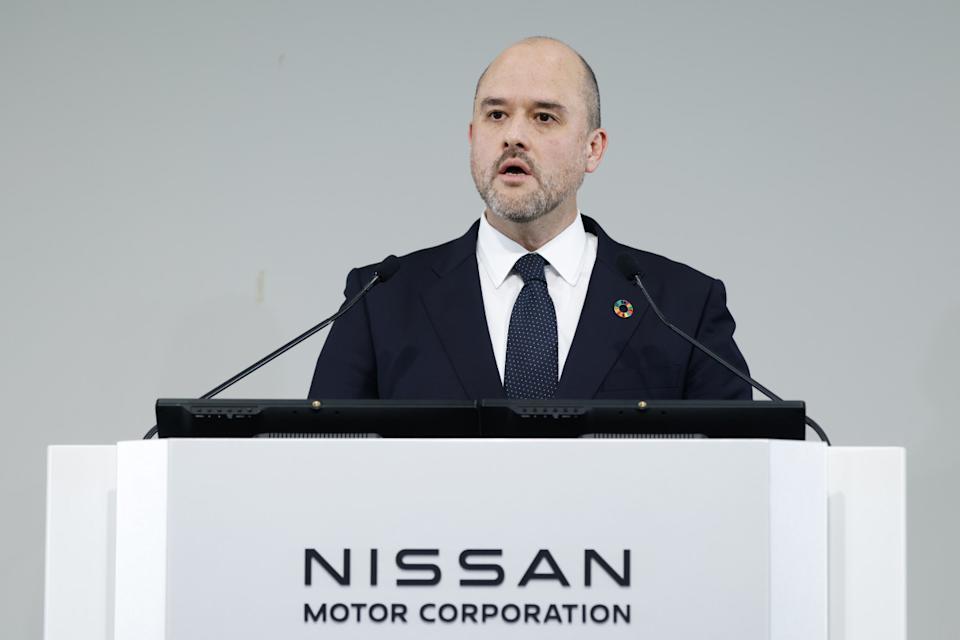
Photographer: Kiyoshi Ota/Bloomberg via Getty ImagesGetty Images
So, the mood was particularly glum when Ivan Espinosa was named chief executive last April. His first move was to press even further with his predecessor’s cost-cutting effort. Newly dubbed RE:Nissan, it called for the elimination of 15,000 jobs, while the company’s production capacity ultimately will be trimmed by a third.
Related: Nissan’s Car Guy Boss Wants to Bring the Silvia Back to Life
But Espinoza has also acknowledged his company can’t simply cost-cut its way to prosperity, putting more emphasis on introducing desirable new products. Among other things, it will soon revive the old Xterra badge. And it is moving ahead with an updated electrification program using its e-Power technology. Espinoza hopes to see improved financial results but its last quarterly figures, covering April through September saw a net loss 22.9 billion yen, with global sales down 7.3%.

Stellantis CEO Antonio Filosa appears on the television program Cinque Minuti. Rome (Italy), October 27th, 2025 (Photo by Massimo Di Vita/Archivio Massimo Di Vita/Mondadori Portfolio via Getty Images)Massimo Di Vita/Archivio Massimo Di Vita/Mondadori Portfolio via Getty Images
Nissan isn’t the only big-name manufacturers with an uncertain future. Stellantis entered 2025 without a CEO, the company in the midst of a six-month search to find a replacement for Carlos Tavares who resigned unexpectedly on Dec. 1, 2024. When Antonio Filosa, then COO of the Americas, was named to replace Tavares last spring he moved quickly to shake things up. Among other things, he approved the return of the iconic Hemi V-8 engine for the Ram 1500 pickup. Filosa also radically altered the Stellantis electrification plan. Whether it all pays off could take a few more quarters to prove out.
Add to the last Jaguar which, last month, ended production of the F-Pace, its last gas-powered model. The struggling British marque is preparing to become an all-electric manufacturer – despite the problems facing the EV market. It’s expected to launch its first new model, drawing from the controversial Type 00 concept, early in 2027.
This story was originally published by Autoblog on Jan 4, 2026, where it first appeared in the Car Buying section. Add Autoblog as a Preferred Source by clicking here.