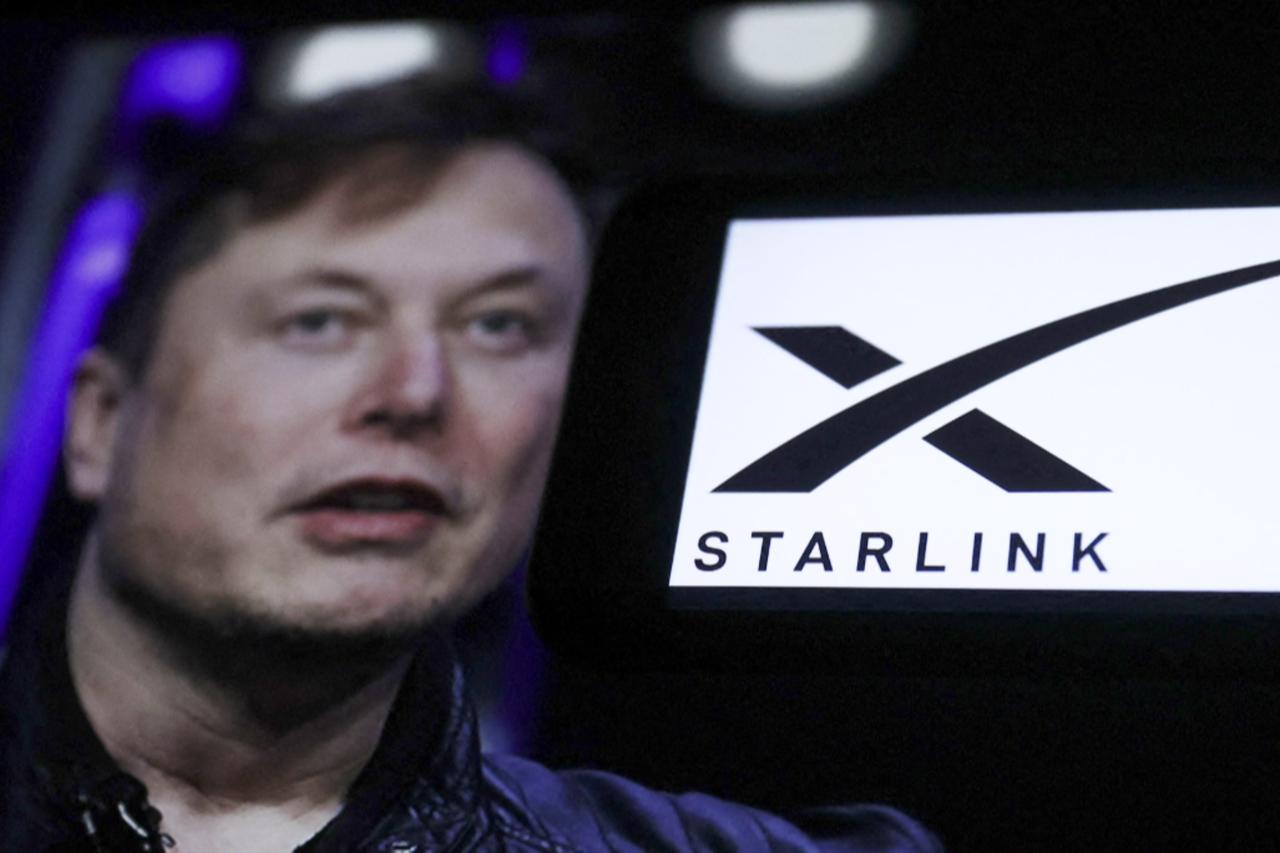
Elon Musk with the Starlink satellite logo in the background during an event, 2023. (AFP Photo)
January 05, 2026 04:10 AM GMT+03:00
China has warned the United Nations that the rapid expansion of SpaceX’s Starlink network in low Earth orbit is raising concerns about global safety and security, with a Chinese representative citing near-collisions involving China’s space station and urging tighter regulation of commercial space activities.
During an informal event at the U.N. Security Council, a Chinese representative said the accelerating pace of commercial space activity, coupled with the absence of effective regulation, has led to the uncontrolled proliferation of commercial satellite networks by “a certain country,” creating serious safety and security challenges.
The Chinese representative pointed to several incidents, including near-collisions involving Starlink satellites and China’s space station in 2021.
Referring to SpaceX’s Starlink satellites, he said such “constellations” crowd orbital spectrum resources (data shared by all satellites in orbit for communications) and significantly increase the risk of collisions, according to the South China Morning Post, which first reported the remarks.
Rising satellite numbers
The Independent cited recent studies warning that the rapidly growing number of satellites in orbit, amid the rise of mega-constellations such as Starlink, is driving a sharp increase in the likelihood of satellite collisions.
The Independent reported there are currently as many as 8,500 of 12,955 active satellites in low Earth orbit, and that just over 66% of them belong to SpaceX’s Starlink constellation.
Starlink’s mega-constellation plan
The Independent also quoted Elon Musk, SpaceX’s chief executive, as saying the Starlink constellation could ultimately include more than 42,000 satellites, while the company currently holds authorization to launch 12,000. Each satellite is designed to operate for five years before being deliberately deorbited and burned up in Earth’s atmosphere.
The Independent reported that China is also planning to launch large-scale internet satellite constellations to compete with SpaceX. A state-backed Shanghai project aims to manufacture and deploy more than 15,000 satellites by 2030 to provide global coverage of high-speed internet.
Warning: Developing countries face higher orbital risk
As low Earth orbit has become increasingly crowded since 2018, the Chinese representative urged countries to tighten enforcement of regulations governing commercial space activities. He said a Starlink satellite in 2021 “came dangerously close to the Chinese space station,” calling it a serious threat to the safety of Chinese astronauts.
The representative, who was not named, added that the situation poses a major risk to spacecraft operated by developing countries that lack the ability to conduct orbital control, maintain space situational awareness, or respond quickly enough.
Beijing also warned of the growing use of commercial satellites for reconnaissance and communications on battlefields, arguing that this has heightened the risk of an arms race in outer space.
The diplomat implicitly urged the United States to strengthen oversight and regulation of its commercial space activities and to respond to the international community’s concerns.

January 05, 2026 04:10 AM GMT+03:00