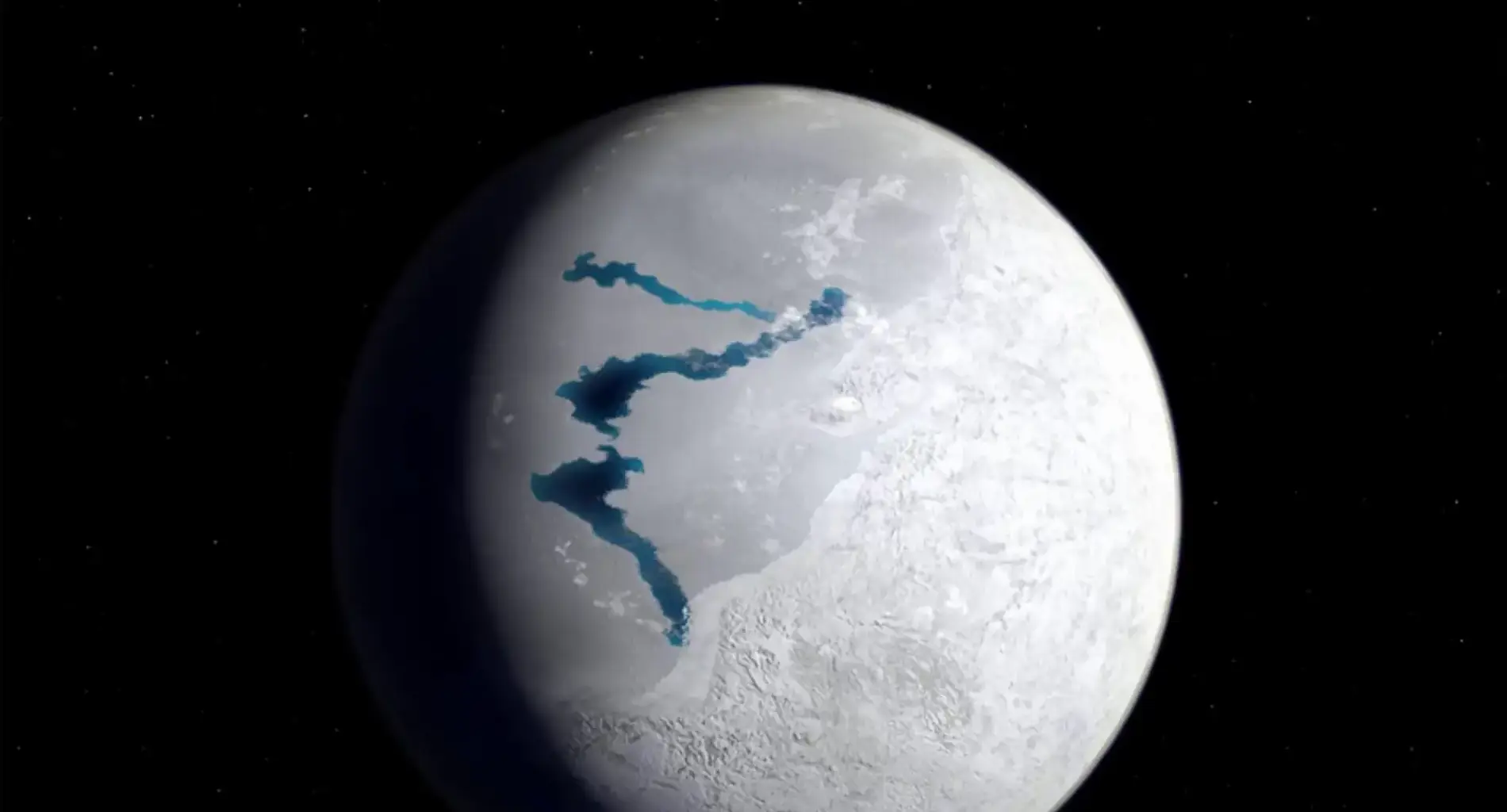
For decades, climate change has been explained as a clear slope towards a warmer world: more CO₂, more heat, more melting. However, new research suggests that Earth’s climate system could “overreact” to extreme heat and, on geological scales, trigger a global glaciation.
A team of scientists from the University of California, Riverside and the University of Bremen identified a potential instability in Earth’s carbon cycle. According to their models, an excessively warm and oxygen-poor ocean could activate a massive cooling mechanism, akin to a “glitch” in the planet’s natural thermostat.
The carbon cycle as a regulator
In the long term, the planet’s temperature is regulated through geological processes. One of the most important is silicate weathering: when CO₂ increases and the climate warms, rains erode rocks and carry carbon and nutrients—such as phosphorus—into the oceans.
There, plankton plays a key role. These organisms use carbon to form mineral structures and, upon dying, sink, trapping CO₂ in the seabed. This process reduces the concentration of greenhouse gases and helps cool the planet.
Until now, this system was understood as a stable regulator: more heat activates cooling processes and vice versa. The new study suggests that under certain conditions, the balance can break.
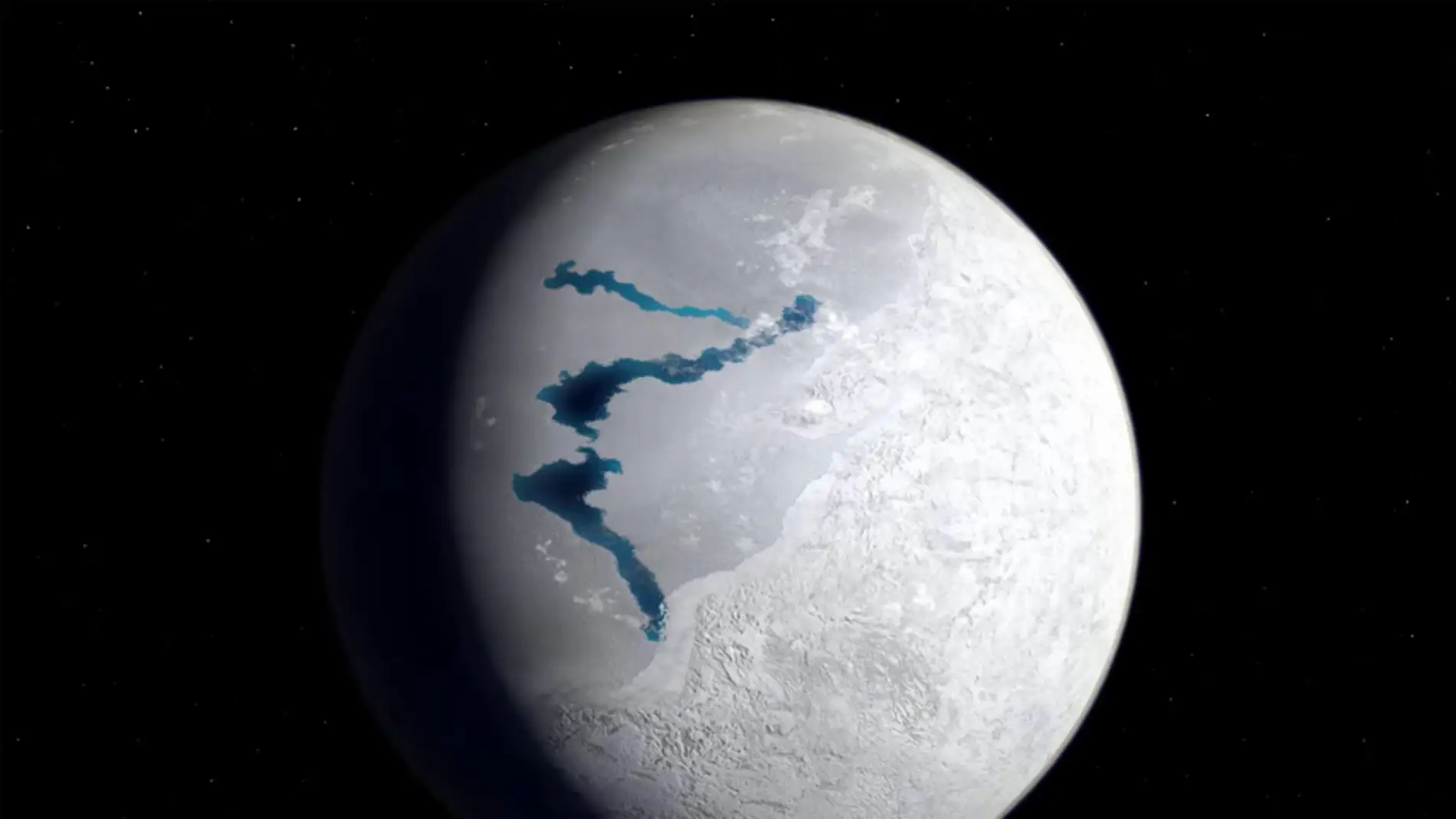 New research reveals how a warm, oxygen-poor ocean could induce a global glaciation in the future.
The vicious cycle of anoxic oceans
Simulations show that extreme warming would increase continental erosion and the input of nutrients into the ocean. This would trigger the proliferation of phytoplankton and algae, which would consume large amounts of oxygen and generate anoxic oceans.
In the absence of oxygen, phosphorus is released back into the water, further fueling biological proliferation. Thus, a vicious cycle is created: more algae, more oxygen consumption, and greater carbon capture in sediments.
The result would be that the ocean floor would absorb CO₂ from the atmosphere at a rate far exceeding the capacity of volcanoes or human activities to replenish it. On a geological scale, this could cause a thermal collapse capable of triggering a severe glaciation, similar to the great Ice Ages of the past.
Geological times versus human times
The authors warn that this mechanism operates on scales of hundreds of thousands of years. It will not cool the planet this century nor prevent the immediate consequences of climate change.
In fact, if it were to activate, it would do so too late and excessively, when civilization would have already suffered the most severe effects of global warming.
A complex and extreme system
This work reinforces an unsettling idea: Earth’s climate is not a delicate balance designed for our survival, but a complex system capable of extreme reactions. Earth can self-regulate, but not necessarily in a way compatible with the stability of human life.