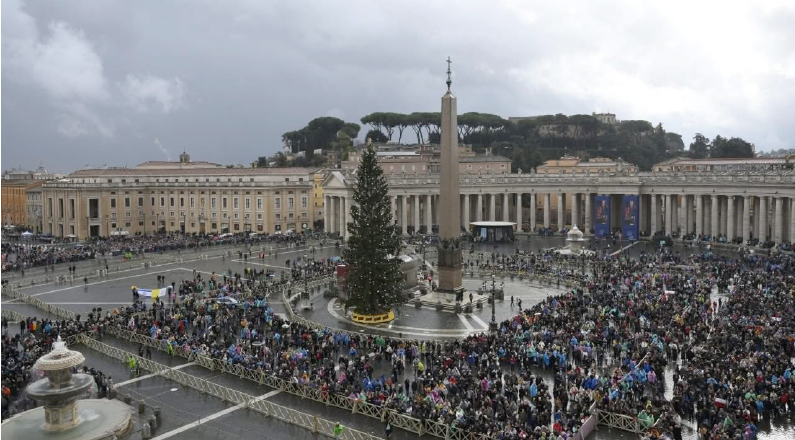
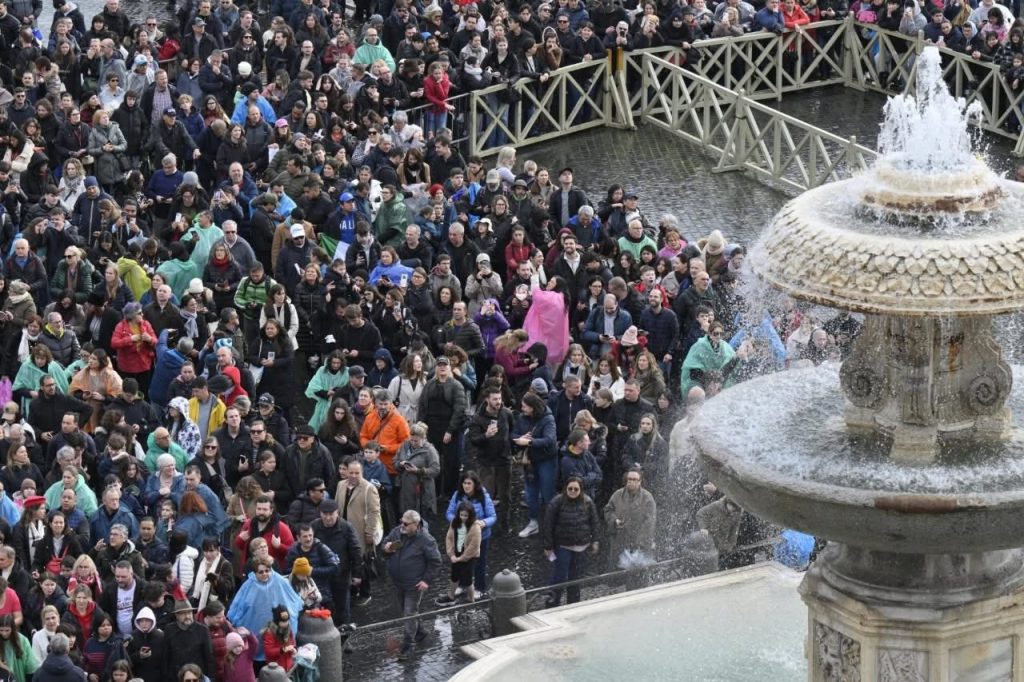
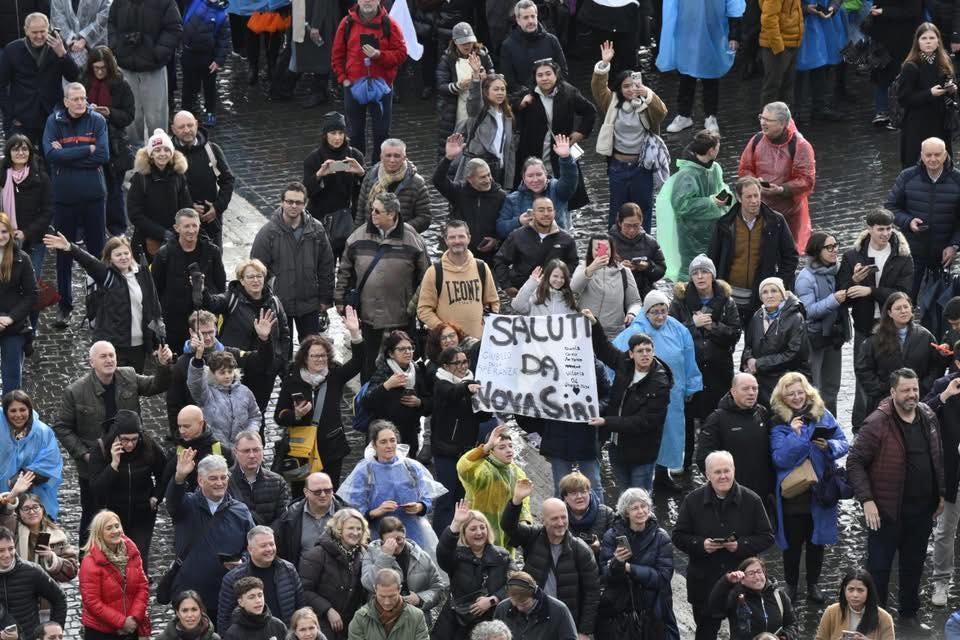
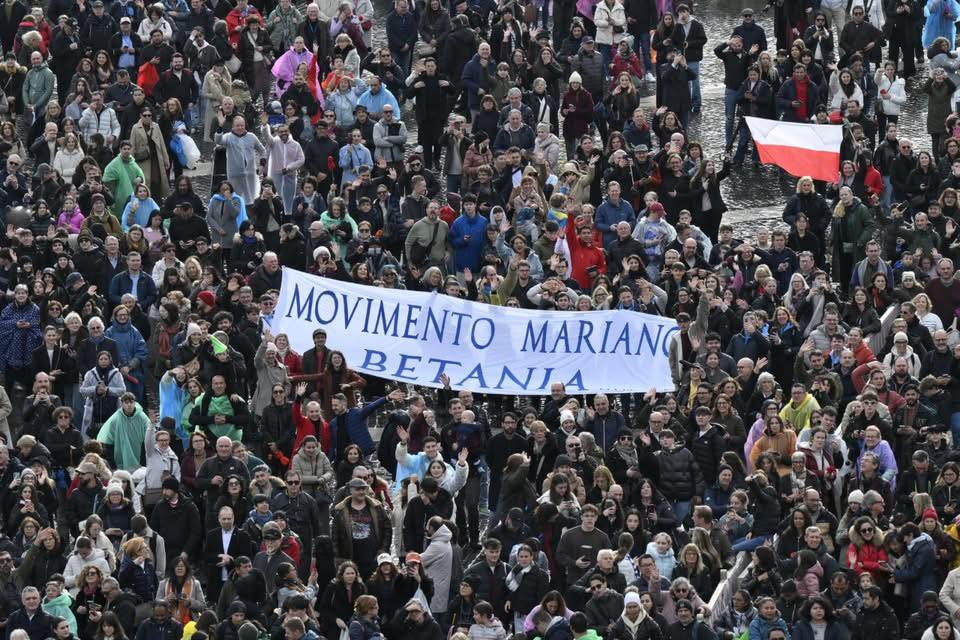
(ZENIT News / Vatican City, 01.04.2026).- On the second Sunday of the liturgical season of Christmas (which this year began on December 25 and continues until Sunday, January 11), Pope Leo XIV prayed the Angelus with thousands of pilgrims gathered in St. Peter’s Square. The Holy Father appeared at the window of the papal apartment at noon and from there delivered the Sunday address, which we offer below translated into Spanish:
***
Dear brothers and sisters, happy Sunday!
On this Second Sunday after the Nativity of the Lord, I wish first to renew my good wishes to all of you. The day after tomorrow, with the closing of the Holy Door of Saint Peter’s Basilica, we will conclude the Jubilee of Hope. The very mystery of Christmas, in which we are still immersed, reminds us that the foundation of our hope is God’s Incarnation. The Prologue of John, which the Liturgy sets before us today, recalls this clearly: “The Word became flesh and lived among us” (Jn 1:14). Indeed, Christian hope is not based on optimistic forecasts or human calculations, but on God’s decision to share our journey, so that we may never be alone as we travel through life. This is God’s work: in Jesus, he became one of us, chose to remain with us, and willed to be forever God-with-us.
The coming of Jesus in the weakness of human flesh rekindles our hope. At the same time, it entrusts us with a twofold commitment: one to God and the other to our fellow human beings.
We are committed to God, for since he has become flesh, choosing our human frailty as his dwelling place, we are called to reconsider how we think about him, beginning with the flesh of Jesus, and not from an abstract doctrine. We must, therefore, constantly examine our spirituality and the ways in which we express our faith, in order to ensure that they are truly incarnate. In other words, we must be capable of contemplating, proclaiming and praying to the God who meets us in Jesus. He is not a distant deity in a perfect heaven above us, but a God who is nearby and inhabits our fragile earth, who becomes present in the faces of our brothers and sisters, and reveals himself in the circumstances of daily life.
Our commitment to all men and women must also be consistent. Since God has become one of us, every human creature is a reflection of him, bearing his image and containing a spark of his light. This calls us to recognize the inviolable dignity of every person and to offer ourselves in mutual love for one another. Moreover, the Incarnation demands a concrete commitment to the promotion of fraternity and communion. Through this commitment, solidarity becomes the criterion of all human relationships, calling us to strive for justice and peace, to care for the most fragile, and to defend the weak. God has become flesh; therefore, there is no authentic worship of God without care for humanity.
Brothers and sisters, may the joy of Christmas encourage us to continue on our journey. Let us ask the Virgin Mary to make us ever more ready to serve both God and our neighbor.
Thank you for reading our content. If you would like to receive ZENIT’s daily e-mail news, you can subscribe for free through this link.
