As the country waits with bated breath for Nicolás Maduro’s appearance in court on Monday, hundreds of thousands of Venezuelan exiles are awaiting more certainty about the future of their home country and their status as immigrants in the United States.Last year, President Donald Trump’s administration revoked the Temporary Protected Status (or TPS) for around 600,000 Venezuelans in the U.S.TPS is given to certain immigrant groups from specific countries, dependent on people from those countries being unable to return due to conditions like:Ongoing armed conflict (such as civil war)An environmental disaster (such as an earthquake or a hurricane), or an epidemicOther extraordinary and temporary conditionsFrom 2021 to 2025, Venezuelans were eligible for TPS, and hundreds of thousands signed up for the protection that prevents them from being deported should they have no other immigrant status.”Many people from Venezuela, because they are political refugees essentially, they have fled a country because of political strife, will likely apply for or have already applied for political asylum here in the United States,” said attorney Melissa Marantes, executive director of the Orlando Center for Justice, a non-profit legal aid group.“If someone had TPS and they had no other form of relief for immigration, if they hadn’t filed another process, they would be in a sort of limbo.” Marantes said Venezuelans, like all other TPS-designee groups, are unique.“Obviously, some may apply for asylum because they may have cases, but others are, I’m sure, really concerned about what’s going to happen now, what’s going to happen next,” she said.Those TPS recipients, some of whom already had prior filed asylum cases, are seeing their TPS statuses revoked as the federal government strips protections along with other groups like Haitians.WESH 2 spoke with one man who we are not identifying because he has a pending asylum case.He said his family filed for political asylum shortly after Maduro assumed power in Venezuela more than 12 years ago.“Yes, it’s a big change, but I do not feel the situation has changed for Venezuelans,” he said. “I have celebrated, and my family has celebrated, and hundreds of thousands of people, I’m sure, have celebrated. But this does not negate the fact that people are also going to be worried and thinking about their next steps.”He said he’s happy to see Maduro finally facing justice, but unless the apparatus is dismantled, nothing will change.Delcy Rodríguez, the vice president under Maduro, has now assumed the role of acting president.Rodríguez is a long-time member of the Venezuelan government and a supporter of both Maduro and Hugo Chávez before him, and has been sanctioned by the United States, Canada and the European Union.U.S. Secretary of State Marco Rubio said the U.S. would give Maduro’s subordinates time to govern.”Things have not been normal in Venezuela for years now, so they’re not going to just go back to normal,” he said. “That concept that now Venezuela is free and we can fully celebrate, I do not endorse that. There’s been so much pain, so much suffering that’s been brought to the country.”
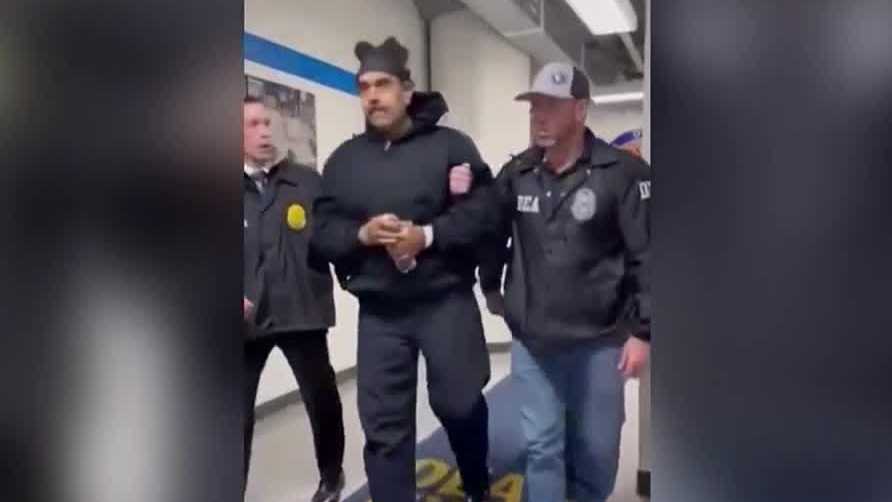
As the country waits with bated breath for Nicolás Maduro’s appearance in court on Monday, hundreds of thousands of Venezuelan exiles are awaiting more certainty about the future of their home country and their status as immigrants in the United States.
Last year, President Donald Trump’s administration revoked the Temporary Protected Status (or TPS) for around 600,000 Venezuelans in the U.S.
TPS is given to certain immigrant groups from specific countries, dependent on people from those countries being unable to return due to conditions like:
Ongoing armed conflict (such as civil war)An environmental disaster (such as an earthquake or a hurricane), or an epidemicOther extraordinary and temporary conditions
From 2021 to 2025, Venezuelans were eligible for TPS, and hundreds of thousands signed up for the protection that prevents them from being deported should they have no other immigrant status.
“Many people from Venezuela, because they are political refugees essentially, they have fled a country because of political strife, will likely apply for or have already applied for political asylum here in the United States,” said attorney Melissa Marantes, executive director of the Orlando Center for Justice, a non-profit legal aid group.
“If someone had TPS and they had no other form of relief for immigration, if they hadn’t filed another process, they would be in a sort of limbo.”
Marantes said Venezuelans, like all other TPS-designee groups, are unique.
“Obviously, some may apply for asylum because they may have cases, but others are, I’m sure, really concerned about what’s going to happen now, what’s going to happen next,” she said.
Those TPS recipients, some of whom already had prior filed asylum cases, are seeing their TPS statuses revoked as the federal government strips protections along with other groups like Haitians.
WESH 2 spoke with one man who we are not identifying because he has a pending asylum case.
He said his family filed for political asylum shortly after Maduro assumed power in Venezuela more than 12 years ago.
“Yes, it’s a big change, but I do not feel the situation has changed for Venezuelans,” he said. “I have celebrated, and my family has celebrated, and hundreds of thousands of people, I’m sure, have celebrated. But this does not negate the fact that people are also going to be worried and thinking about their next steps.”
He said he’s happy to see Maduro finally facing justice, but unless the apparatus is dismantled, nothing will change.
Delcy Rodríguez, the vice president under Maduro, has now assumed the role of acting president.
Rodríguez is a long-time member of the Venezuelan government and a supporter of both Maduro and Hugo Chávez before him, and has been sanctioned by the United States, Canada and the European Union.
U.S. Secretary of State Marco Rubio said the U.S. would give Maduro’s subordinates time to govern.
“Things have not been normal in Venezuela for years now, so they’re not going to just go back to normal,” he said. “That concept that now Venezuela is free and we can fully celebrate, I do not endorse that. There’s been so much pain, so much suffering that’s been brought to the country.”