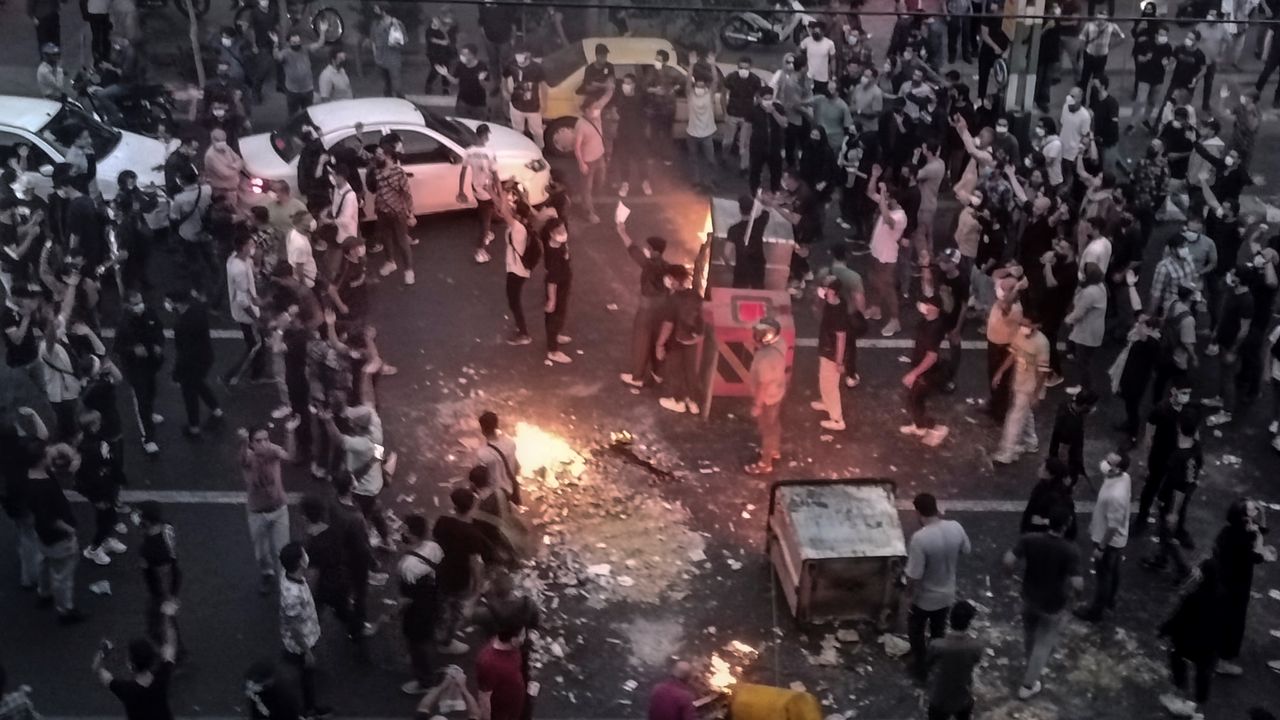
Large protests against mounting economic distress have occurred in many parts of Iran over the past week and have continued in the face of increasing state repression.
There are conflicting reports as to the numbers killed in encounters between protesters and security forces, but the figure is likely 10 or more. On Saturday, the state-affiliated Mehr News Agency reported that a member of the Islamic Revolutionary Guards Corps and two protesters were killed in Malekshahi, a town in western Iran with a large Kurdish population, allegedly when protesters tried to storm a police station.
The protests, the largest since 2022, are of a socially and politically heterogeneous character.
They are fueled by deep-rooted social grievances among Iran’s workers and rural toilers over soaring inflation, mass joblessness, ever-growing social inequality, collapsing public infrastructure and pervasive repression by a bourgeois nationalist, clerical-led regime that is terrified of any form of working-class self-organization.
In addition to calling for economic relief, protesters have raised slogans against the Islamic Republic and its Supreme Leader, Ayatollah Khamenei.
The North American and European imperialist powers have been quick to seize on the protests to justify and amplify their campaign of aggression against Iran. This aggression dramatically intensified in 2025, first with the Israeli-US war on Iran and then the “snap back”—at the instigation of Britain, Germany and France—of crippling economic sanctions. The latter action was justified on the grounds that Tehran had failed to comply with the 2016 UN-sponsored Iran nuclear accord, although it was the US that repudiated the agreement in 2018 and then pursued, under Trump and then Biden, a campaign of “maximum pressure” aimed at crashing Iran’s economy and precipitating regime change.
Early Friday morning, Trump directly threatened Iran, farcically presenting himself as a defender of democracy and human rights. In a tweet on his Truth Social platform, he vowed the US “will come to their rescue” if Iran “violently kills peaceful protesters.” He then menacingly added, “We are locked and loaded and ready to go.”
America’s would-be dictator-president issued his war threat after meeting with Israeli Prime Minister Benjamin Netanyahu on Monday, December 29 to discuss the next steps in the American imperialist-led drive to create a “New Middle East”—including possible further military action against Iran—and as the Pentagon was finalizing preparations for the attack on Venezuela that it mounted that evening. Dispensing with any attempt to camouflage American imperialism’s predatory appetites, Trump baldly declared the next day that the US was seizing Venezuela’s oil wealth and would govern the country for the foreseeable future.
The protests began with a December 28 shutdown of Tehran’s Grand Bazaar, organized by bazaar merchants and traders, historically a pillar of the regime. In subsequent days, they spread to cities and towns across much of the country, including key industrial centers such as Isfahan, Mashhad and Ahvaz. Reports indicate the protest movement has been especially strong in areas with large ethnic minority populations, including Kurdistan.
The protests have involved diverse social layers, including university students, shopkeepers, truck drivers and public sector workers, and taken the form of “sector strikes” as well as short demonstrations and mass gatherings.
On Monday, December 29, as the protest movement was rapidly spreading beyond Tehran, the head of Iran’s central bank, Mohammad Reza Farzin, submitted his resignation. The collapse in the value of Iran’s currency, the rial, is a major factor driving Iran’s 40 percent-plus inflation rate.

The next day, Iranian President Masoud Pezeshkian appealed for “dialogue” with the protesters. “We have fundamental actions on the agenda to reform the monetary and banking system and preserve the purchasing power of the people,” he claimed.
In fact, the “liberalization” measures carried out by Iranian governments in recent years, in accordance with the policy prescriptions of the World Bank and IMF, including privatization and the elimination or curtailment of subsidies on essential goods, have only served to impoverish working people while further enriching a tiny bourgeois elite.
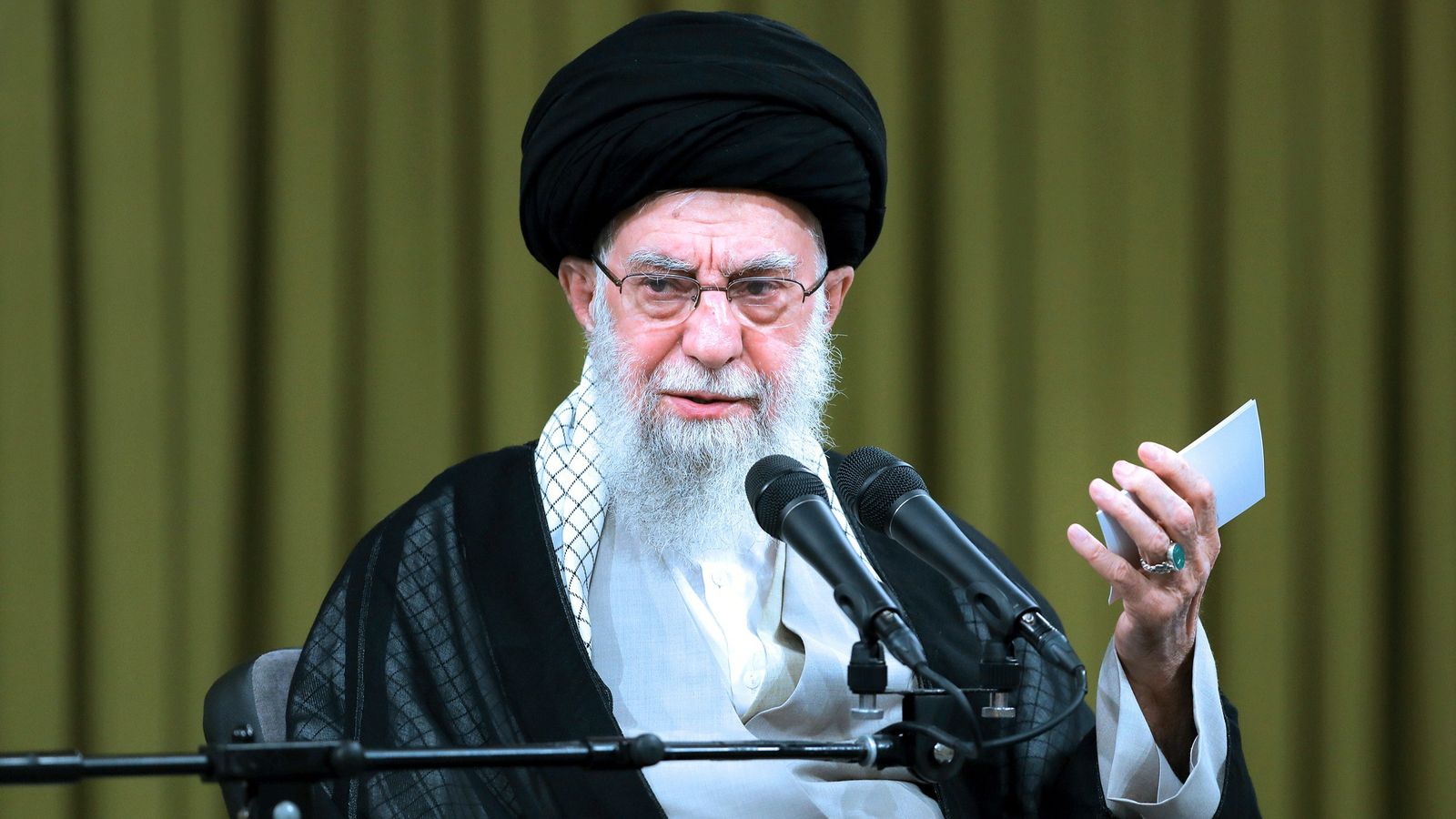
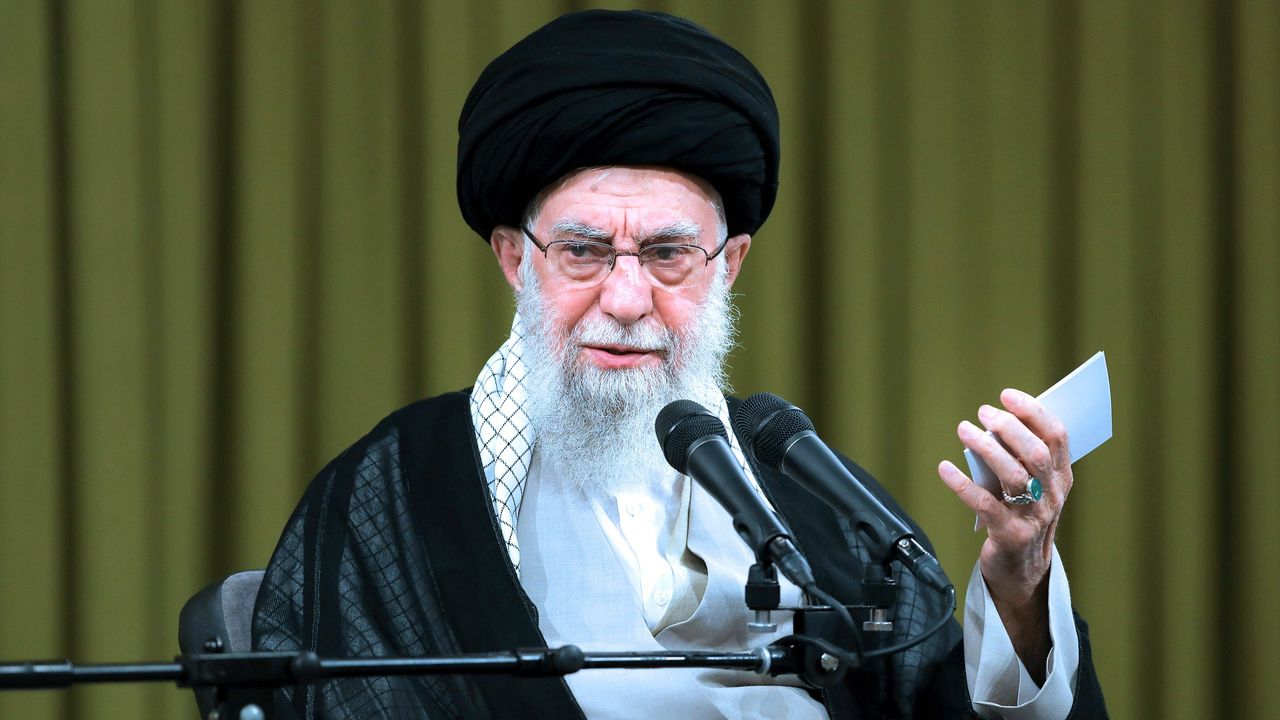
On Saturday, Supreme Leader Khamenei broke his silence on the protests. He combined an appeal to disaffected sections of the bourgeoisie and petty bourgeoisie, whose complaints and frustrations over the state of Iran’s economy he acknowledged, with threats to savagely repress those he identified as “rioters”—that is, unruly working-class elements and youth.
“The bazaari class,” declared Khamenei, “is among the most loyal segments of the country to the Islamic Revolution.”
“The bazaaris were right,” he continued. “They cannot do business in these conditions.”
“We talk to protesters. The officials must talk to them,” said Khamenei, who at 86 years old is now in his 36th year as the Islamic Republic’s Supreme Leader. “But there is no benefit to talking to rioters. Rioters must be put in their place.”
In an attempt to rally support for the regime, Khamenei pointed to Trump’s threats and the continuing drive of the imperialist powers, led by Washington, to return Iran to the neo-colonial bondage that prevailed under the Shah’s monarchical dictatorship.
But the reality is the Iranian bourgeoisie and the Islamic Republic’s political-clerical establishment seeks to place the full burden of Iran’s confrontation with the imperialist powers on the backs of the working class and rural toilers, while enriching themselves and seeking to arrive at an accommodation with Washington and the European imperialist powers.
Years of punishing sanctions; the Iranian bourgeoisie’s pursuit of its selfish class interests; last year’s twelve-day war with Israel, which concluded with a US strike on Iran’s civilian nuclear facilities; the “snap-back” of still more extensive sanctions last October; and the fall in the price of oil have all had a devastating impact on Iran’s economy and the living standards and lives of ordinary Iranians.
As a consequence of dilapidated infrastructure, Iran faces severe energy shortages that have forced rolling power cuts, disrupting production and causing Tehran to temporarily close government offices and impose a shorter workweek across much of the country. Large sections of Iran have also been badly impacted by climate-change-driven drought, further driving up food prices and slashing rural incomes.
Already in 2024, the Ministry of Social Welfare found that 57 percent of Iranians had experienced malnourishment. Meat has become a luxury item, with food prices rising overall last year by about 70 percent. Prices for hundreds of vital medicines doubled or more during 2025, forcing many people to forego vital health care.
Iran’s clerical-led bourgeois-nationalist regime consolidated its power in the aftermath of the anti-imperialist upsurge that toppled the Shah’s tyrannical regime in February 1979 by ruthlessly suppressing the left and the independent organizations the working class forged at the revolution’s height.
Available from Mehring Books
The struggle against imperialism and for workers’ power in Iran
A pamphlet by Keith Jones
Nevertheless, it felt constrained to maintain certain social concessions made to the working class and rural toilers in the revolution’s immediate aftermath. Over the past 15 years, what little remained of these concessions has been under systematic attack. Successive Iranian administrations, whether led by IMF-aligned “reformers” or so-called anti-US, religious “hardliners” (the Principlists), have implemented “pro-market reforms,” from privatization and subsidy cuts to the promotion of precarious contract-labor employment.
As a result, the regime’s base of support among the urban and rural poor has largely eroded. Mass working-class protests erupted across Iran in late 2018, and the country was again roiled by mass protests in the fall of 2022 sparked by the death of 22-year-old Mahsa Amini while in the custody of Iran’s “morality police.”
Recent months have seen a wave of worker protests and strikes, including by teachers, nurses and oil workers. On November 11, contract workers at a dozen refineries in South Pars held protest marches and rallies.
The regime has long been split between a faction advocating a rapid rapprochement with the western imperialist powers, and a faction seeking to drive a harder bargain, by prioritizing economic and military-strategic ties with China and Russia, and by countering US-Israeli military pressure through the so-called Axis of Resistance (a network of allies that includes Hamas, Hezbollah and, until its collapse in December 2024, Syria’s Assad regime). Khamenei, as Supreme Leader, has tried to maneuver between the two factions, favoring first the one, then the other, as he and the Iranian bourgeoisie attempt to maneuver between the great powers and contain the increasingly explosive class contradictions within Iran.
Events have demonstrated the bankruptcy of all factions of the Islamic Republic’s political establishment and Iranian bourgeoisie, the hollowness of their claims to fight imperialism, their hostility to the working class and organic incapacity to mobilize the masses of the Middle East across all religious and ethnic lines in a common struggle against imperialist oppression.
The Iranian regime responded to Trump’s return to the White House by pleading for negotiations, and it continued to do so as he threatened Iran with war and intensified US support for Israel’s genocidal assault on Gaza. For all their bluster about standing up to the US, the leadership of Iran’s national-security apparatus walked eyes-open into the trap US imperialism and its Israeli attack dog laid for them, with Trump feigning that negotiations would continue with Iran on the eve of Israel’s June 13 attack, which began with a successful decapitation strike on much of Iran’s military leadership.
In the months since, Iran has pursued the same strategy, continuing to offer to bargain with Trump and open the Iranian economy to large-scale US investment, while seeking to reconstruct its civilian nuclear facilities to pressure Washington to the bargaining table.
Tehran has reserved much of its anger for the European imperialists. It long counted them as more “reasonable” and amenable to a rapprochement than Washington, only to have Britain, France and Germany initiate the “snap back” of UN sanctions last fall, so as to curry favor with Trump and punish Iran for its limited military support to Russia amid the Ukraine war.
The Iranian working class can assert its class interests only by opposing all factions of the Iranian bourgeoisie and counterposing to the reactionary capitalist Islamic Republic the fight for a workers’ Iran. Only through the development of a mass socialist movement of the working class, rallying the rural toilers behind it, can a genuine struggle against imperialism and its Zionist client be waged.
The entire history of modern Iran—from the failure of the Constitutional Revolution at the beginning of the 20th Century and the overthrow of Mosaddegh’s nationalist regime in 1953 through the hijacking and suppression of the 1979 Iranian Revolution and the 47 years of the Islamic Republic—demonstrates that the only viable strategy for the Iranian working class is the strategy of Permanent Revolution. First formulated by Leon Trotsky, the strategy of Permanent Revolution animated the 1917 Russian Revolution and the struggle against the nationalist Stalinist bureaucracy, that usurped power from the working class under conditions of the revolution’s isolation, and ultimately restored capitalism. It establishes that in the imperialist epoch the democratic tasks associated with the historic bourgeois revolutions of the 18th and 19th centuries—including national independence and unity and the separation of church from state—can only be realized through the establishment of workers’ power and as part of the fight for world socialist revolution.
Workers in North America and Europe, for their part, must indefatigably oppose the continuing imperialist aggression against Iran, which is an integral part of the US-led imperialist drive to repartition the world through global war.
The World Socialist Web Site is the voice of the working class and the leadership of the international socialist movement. We rely entirely on the support of our readers. Please donate today!