Estonian coalition and opposition politicians say Venezuela must swiftly become a rule-of-law state and that chaos and a possible civil war must be prevented after the U.S. operation to capture ex-president Nicolás Maduro.
Prime Minister Kristen Michal (Reform) told “Aktuaalne kaamera” Maduro lacked legitimacy as Venezuela’s president. In future, the prime minister said, internationally agreed rules must be followed, international law respected, and the people’s right to self-determination and free elections guaranteed.
Foreign Minister Margus Tsahkna (Eesti 200) said that developments in Caracas will be viewed keenly elsewhere in the world, and that focus should remain on, for instance, China. The PRC wrapped up 2025 with extensive naval and air force exercises near the coast of Taiwan.
The removal of Maduro “is a good pretext – what is permitted for America could also be permitted for China. China will certainly exploit this geo-politically as well, especially for example in the African countries and perhaps also toward other countries in Latin America,” Tsahkna said.
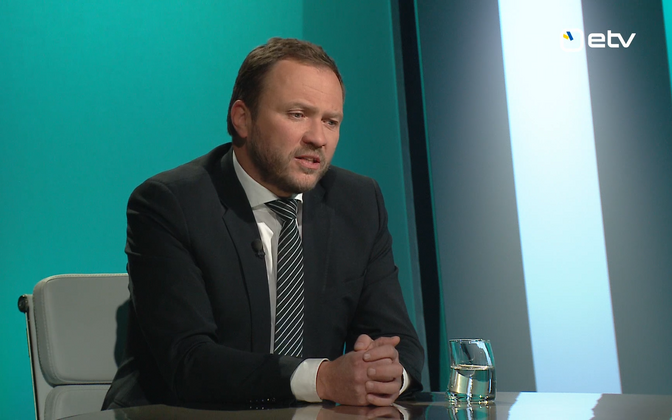 Margus Tsahkna. Source: ERR
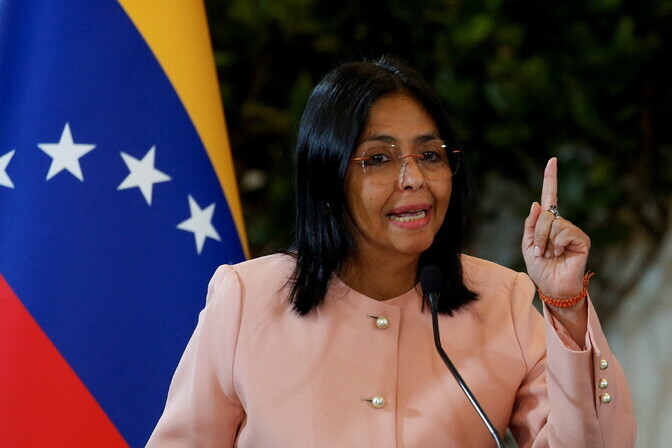
Ensuring Venezuelan sovereignty is the next issue, politicians in Estonia said. The U.S. president has reportedly not spoken with Venezuelan long-term opposition leader and Nobel Peace Prize winner, María Machado, but has named Maduro’s vice president, Delcy Rodríguez, as a possible cooperation partner.
Isamaa chair Urmas Reinsalu noted that while Maduro may be gone, his power structure has not.
“Power, tanks, and weapons are currently in the hands of representatives of the Maduro regime,” he told “Aktuaalne kaamera.” “The United States’ interest is certainly to achieve a transition of that power peacefully. I think many different signals will be sent out in the near future, and behind-the-scenes negotiations will take place,” Reinsalu, a former foreign minister, went on.
Center Party chair Mihhail Kõlvart meanwhile stated the primary aim of the special operation in Venezuela is the takeover of Venezuela’s vast oil reserves. “Exporting” democracy to countries could, in his words, end in major bloodshed if the Caracas operation gets repeated elsewhere.
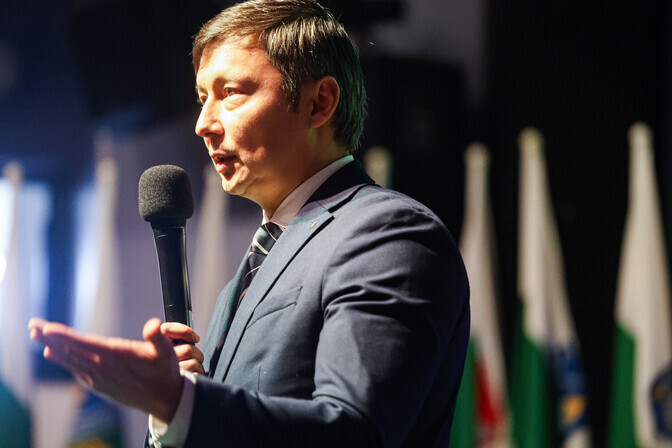 Mihhail Kõlvart. Source: Grigorijs Beškins
“There are 200 member states of the UN. And a fairly considerable portion of the leaders of those states have not been elected in a democratic manner. If a military operation were to take place in every country to bring democracy, that would mean we would have a world war,” Kõlvart said.
Nonetheless, Venezuela’s new leadership will be chosen by the United States, Kõlvart concluded.
While given the go-ahead at Christmas time, the operation to remove Maduro happened overnight Friday to Saturday U.S. time. Russia had been supplying Venezuela with air defenses. The action followed lethal strikes on Venezuelan shipping on the grounds of the country trying to flood the U.S. with drugs and illegal migrants, the U.S. said.
The EU response has mostly focused on the legitimacy of both the operation and Maduro’s former presidency, in terms of international law, rather than its strategic implications. EU Commission President Ursula von der Leyen demanded the observance of international law, while High Representative of the European Union for Foreign Affairs and Security Policy Kaja Kallas has repeatedly said that Maduro “lacks legitimacy.”
—