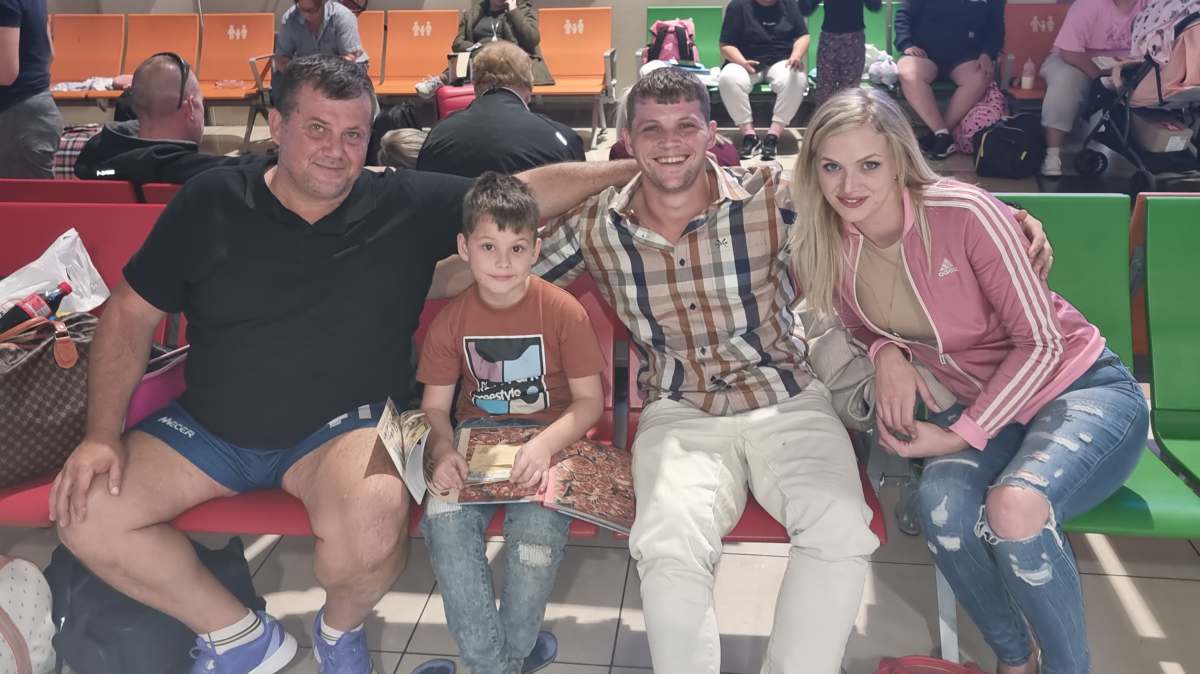
An Afrikaner farmer granted asylum in the US has said he will never visit his home country again, even though he disagrees with the Trump administration’s claim there is “genocide” against white South Africans.
Charl Kleinhaus, 47, left his farm on the Highveld in 2025 because of high levels of crime and alleged discrimination against white South Africans.
He works at a Ford dealership in South Dakota having resettled with his son, daughter and grandson, and has described life in the US as “awesome”.
“I don’t think we’ll go back,” he told the Times. “Even for a visit.”
The Trump administration launched Mission South Africa in February, suggesting there was a “genocide” against white South Africans.
Kleinhaus, however, disputed Trump’s claims of ethnic cleansing in South Africa.
“It’s not a genocide but it’s definitely something against the whites,” Kleinhaus said. “I know a lot of people are getting murdered because of the colour of their skin.”
He said he had white neighbours in South Africa who had been “chopped up with machetes” and he knew families with white children who had been “shot in their bathroom”.

Demonstrators outside the American embassy in Pretoria, South Africa, in February
SIPHIWE SIBEKO/REUTERS
• Fact check: Are white farmers being killed in South Africa?
He said white people were also discriminated against in the workplace because of diversity schemes, adding: “There’s no opportunity for them just because of skin colour.”
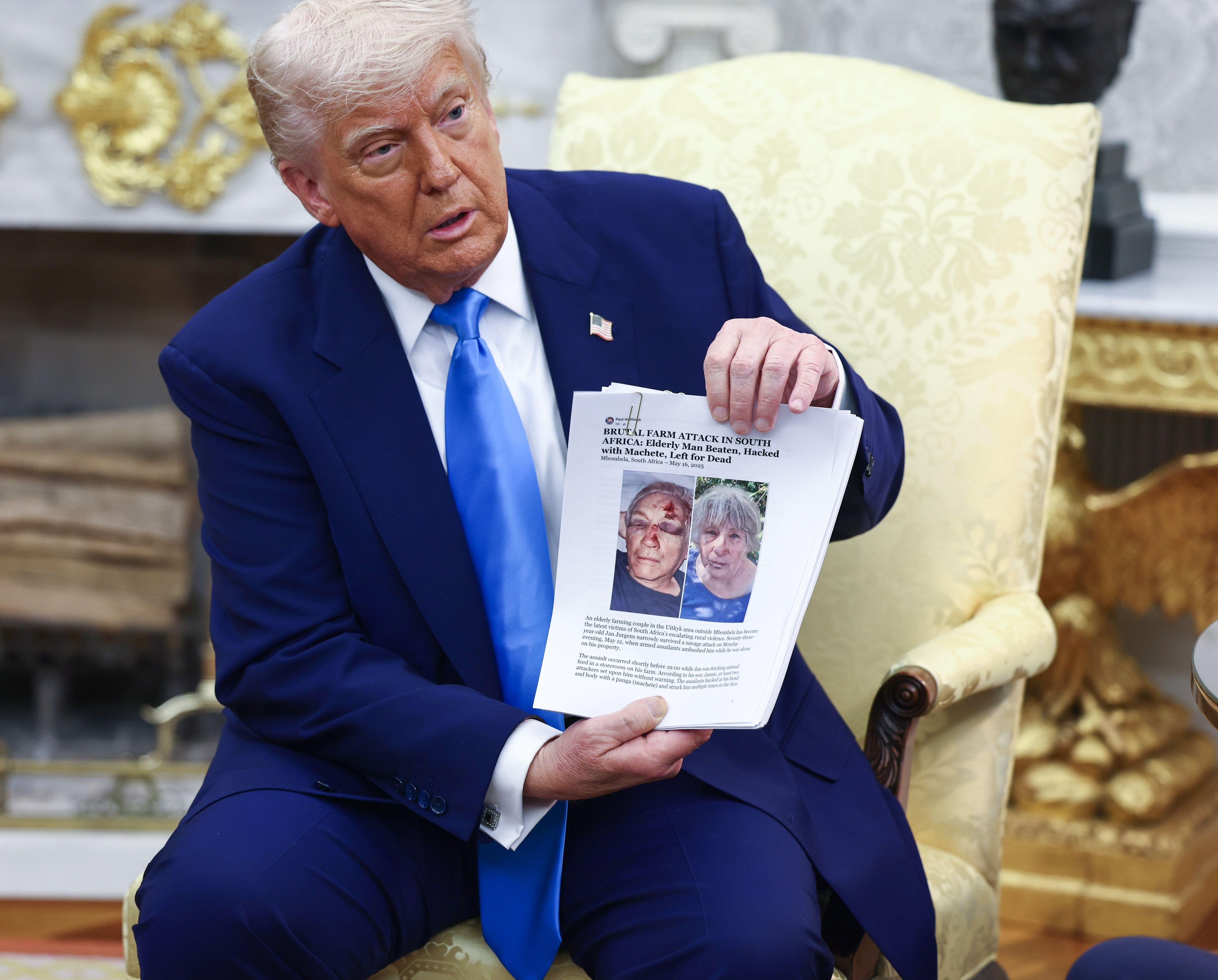
President Ramaphosa of South Africa has accused Trump of making “untrue statements” in an increasingly bitter row over his country’s tortured racial politics.

President Trump confronted President Ramaphosa with claims of a “genocide” against Afrikaners during a meeting at the White House in May
JIM WATSON/AFP/GETTY IMAGES
JIM LOSCALZO/NEWSCOM/ALAMY
• Afrikaners granted asylum in US are cowards, says Ramaphosa
Prominent Afrikaners have also disputed the Trump administration’s claims of a genocide in South Africa, a country with one of the highest murder rates in the world but where the majority of victims are black men living in townships and cities.
In 2023-24 less than 2 per cent only of the 27,600 murders in South Africa took place on farms, plots and smallholdings, areas where white farmers and black workers live.
Thirty years after the end of apartheid, white South Africans make up 7 per cent of the population but own 72 per cent of registered farmland.
Kleinhaus said he had faced three land claims — a post-apartheid scheme to allow black South Africans to seek restitution for land lost because of racial discrimination — for his farm, which he said had been owned by the family since 1830.
“I have about five black South African friends that I’m in constant contact with,” he said. “Two of them have let me know that [coming to the US] was the best choice I could have made for my family.”
Before coming to the US, Kleinhaus said, he had never seen snow. “My farm was on the Highveld but I lived in the Lowveld, so I’m used to the tropical weather,” he said. “The snow is beautiful. I’ve never been in snow my whole life.”

The first group of Afrikaners arrived in the US for resettlement in May
SAUL LOEB/AFP/GETTY IMAGES

JULIA DEMAREE NIKHINSON/AP
Although he has embraced the midwestern lifestyle, Kleinhaus has struggled to appreciate the locals’ love of beef jerky, preferring instead South African biltong.
“I’ve made biltong and we’ve braaied many times,” he says. “It’s way better than jerky. It doesn’t taste like rubber. Jerky is not nice, I don’t like jerky.”
He also prefers tuning into more familiar sports online than watching the locals’ American football. “Yah, there’s rugby on YouTube,” he said.
Having introduced an asylum scheme for white South Africans, Trump has banned all immigration from 12 countries: Afghanistan, Myanmar, Chad, the Republic of Congo, Equatorial Guinea, Eritrea, Haiti, Iran, Libya, Somalia, Sudan and Yemen. He has introduced heavy travel restrictions on a further seven: Burundi, Cuba, Laos, Sierra Leone, Togo, Turkmenistan and Venezuela.
“It’s not just out of being racist or anything,” Kleinhaus said of Trump’s immigration policies. “I don’t think anybody can call Donald Trump racist.”
Kleinhaus has been surprised by the number of immigrants he has encountered in the US. Asked about Trump’s comment that Somalians are “garbage”, Kleinhaus said: “Did you see the Somalians in Minneapolis? I’ve got somebody that I’ve spoken to from Minnesota. They said to me, it’s horrible. It’s super dangerous. He said, ‘How can you allow people like that that’s not going to come here to build up America into the country at all?’”
Kleinhaus also questioned the language skills of Hispanic people he had met in the US, comparing it with his own efforts to adapt from his native Afrikaans. “I’ve met Mexican people who can’t speak a word of English,” he said. “My English is not the best, but they don’t speak one word of English. That, for me, is very strange to me. Somebody’s in this country. They don’t speak like anything. Like, ‘Hello, how are you?’”
He added: “This is America. This belongs to the American people. You have to adapt and work with the American people. Then it’s an awesome life here.”
State Department figures show that 342 refugees were admitted to the US from South Africa in 2025, up from only one person in 2024.