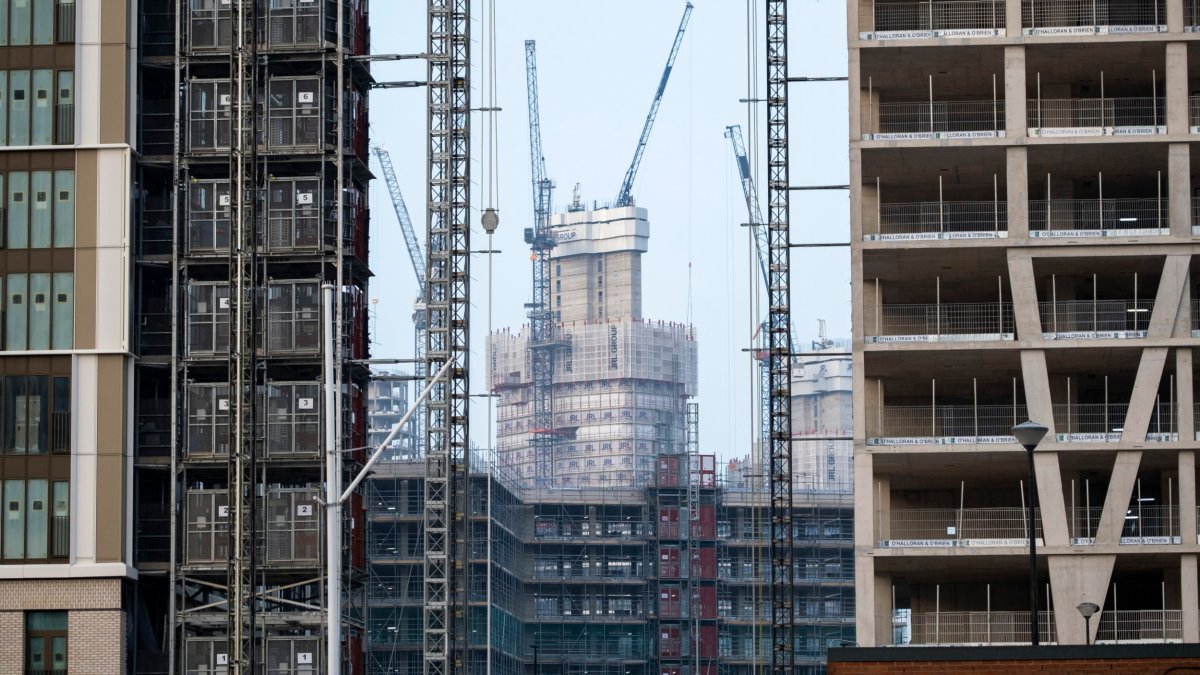
Councils will be given money to build new housing or refurbish unused properties during migrant crisis
Empty homes, office blocks and student halls could be used to house asylum seekers, as the Government pushes to end the use hotels.
Campaigners hope that letting councils take accommodation duties over from private firms will boost Britain’s social housing stock over the long-term.
Around 200 local authorities want to take part in a £200m Government pilot project giving them money to build new housing or refurbish derelict properties for asylum seekers.
Five councils – Brighton and Hove, Hackney, Peterborough, Thanet and Powys – confirmed their interest to The i Paper at the end of December.
New FeatureIn ShortQuick Stories. Same trusted journalism.
Reform UK expressed outrage at the “disgusting” idea of creating council homes for asylum seekers while 1.3 million households are on social housing waiting lists in England.
However, some council bosses are keen on “renationalising” the asylum system, hoping the Home Office’s private contractors can be stripped of responsibility.
The i Paper recently revealed the “squalid” conditions inside hotels, where migrants face overcrowding, bad food, mice, rats and mould.
The Home Office’s contractors – Serco, Clearsprings and Mears – are trying to reduce their use of hotels and get private landlords with homes in multiple occupation (HMOs) to do more.
Office blocks could house ‘vulnerable people’
Converting old, unwanted office buildings into new housing offers one of way for councils to house asylum seekers.
West Berkshire Council has already shown it is possible. In 2024, the local authority turned a disused office block in Newbury into five flats for refugees from Ukraine and Afghanistan who arrived through resettlement schemes.
Liberal Democrat councillor Denise Gaines, executive member for housing, said last year that the converted offices would help “support vulnerable people” and “leave us with accommodation we can use” for social housing in the long-term.
A recent report by the charity Refugee Action highlighted the potential for councils to convert empty office buildings for asylum housing.
The charity surveyed 19 councils in England. A majority of the unnamed councils said “repurposing commercial buildings” was one of the ways that they could create more asylum accommodation.
 Some offices have become increasingly empty due to the rise of home working (Photo: Dylan Martinez/Reuters)
August 2025 research by the Empty Homes Network for Habitat for Humanity also pointed to the huge potential in converting unused offices, shops and leisure centres into social housing.
Although the report did not argue for asylum accommodation specifically, it found that 25,000 new social homes could be created from unused local authority-owned buildings.
Kate Wareing, chief executive of Soha Housing Association in Oxfordshire, hopes the £200m asylum pilot scheme is the start of a major overhaul in the system.
Wareing co-wrote a 2024 report which suggested that giving £1.75bn to social housing providers would let them buy or renovate between 14,000 and 16,000 homes.
The research found that converting offices had the advantage of “adding to the total housing stock” and therefore avoiding competition for existing homes.
However, Wareing warned that many office buildings may be unsuitable for housing. The most suitable ones may have already been converted, she said.
Using empty homes could boost run-down areas
Refurbishing empty homes may be easier than refurbishing empty offices, according to experts.
Wareing suggested that unsold new build flats, or tower blocks that are vacant during estate regeneration projects, could be bought up for temporary asylum housing.
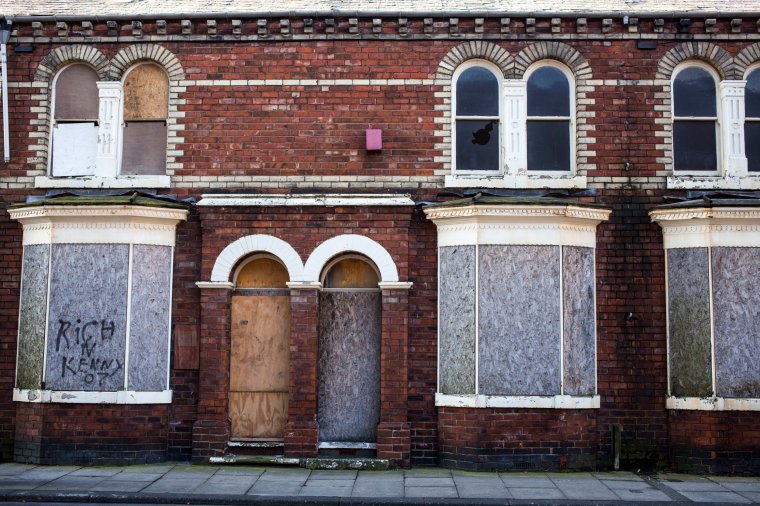 There are many empty properties in run-down areas outside of London (Photo: In Pictures Ltd./Corbis via Getty)
However, she believes that buying up relatively cheap homes on the open market is the best strategy for any councils or housing associations given extra cash for asylum accommodation.
“I think buying in the open market is the best option, and there are opportunities to bring homes that are lying empty for various reasons back into use,” Wareing told The i Paper.
She said it could help with “the regeneration of left-behind neighbourhoods”.
Wareing added: “It’s an opportunity to improve poor-quality rental housing. Social housing providers have the experience in upgrading and improving homes, and they have the incentives and the obligations to improve standards.”
Chris Bailey of Action on Empty Housing believes fixing up at least some of England’s 300,000 long-term empty homes for asylum seekers could address two problems at once.
He previously told The i Paper that it was “scandalous” that “we’re spending billions of pounds on rubbish housing, through these [private] asylum contracts, when we could be spending on it creating better quality housing”.
Student hall plans already under way
Home Office minister Angela Eagle told the Home Affairs Committee in June that “old student accommodation” blocks could be looked at for asylum accommodation.
Since then the Home Office and its contractors have pushed on with attempts to use old student halls, separate from the scheme encouraging councils to do more.
 The Labour Government has promised hotels will be phased out as accommodation for asylum seekers (Photo: Hannah McKay/Reuters)
Asylum seekers began to be moved into Farmer’s Hall in Aberdeen – a former student accommodation block with 150 rooms – in September.
Aberdeen City Council co-leaders Christian Allard and Iain Yuill said they have “significant concerns”, arguing that a lack of consultation had “increased risks to communities”.
Leeds City Council revealed in September that it had received a planning submission from the Home Office to use a student accommodation block in Headingley to house asylum seekers.
Despite unease from some councils about Home Office plans, Eagle told MPs that 198 local authorities had expressed interest in extra funding to create asylum accommodation.
Bella Sankey, leader of Labour-run Brighton and Hove City Council, previously told The i Paper it was an opportunity for an overhaul in who runs the system.
She said current dependence on private contractors allowed taxpayers’ money to be “creamed off for handsome profits by private companies”.
Responding to The i Paper’s story on some councils being keen to create housing for asylum seekers, Reform UK’s Lee Anderson said the idea was “absolutely disgusting”.
Your next read

radio_button_checked
LIVE
The Ashfield MP told GB News: “They should not be given any form of social housing until every single person on the council house waiting list in every constituency in the country have the choice of housing.”
The Home Office vowed again to “close every asylum hotel” and said it was “working closely with local authorities” to look at more suitable accommodation.
“Work is well underway, with more suitable sites being brought forward to ease pressure on communities and cut asylum costs,” a spokesperson added.