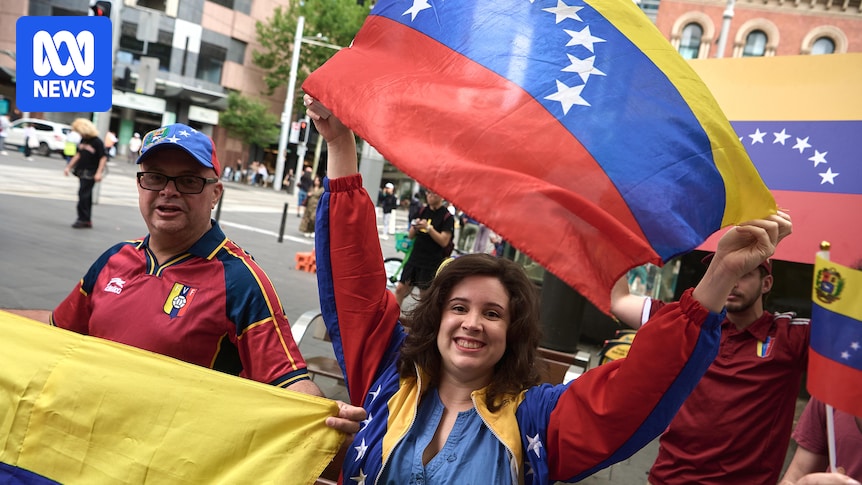
After the United States launched its first major attack on South American soil and seized Venezuelan President Nicolás Maduro, protests erupted globally.
On Sunday night, about 250 protesters opposing the attack gathered in Sydney’s CBD in what organisers described as “emergency actions”, while a smaller group welcomed the capture of Mr Maduro.
It comes almost two weeks after the NSW government passed controversial new laws restricting protests in response to the Bondi Beach terrorist attack that left 15 people dead.
So, how did the protest go ahead under the state’s new laws?
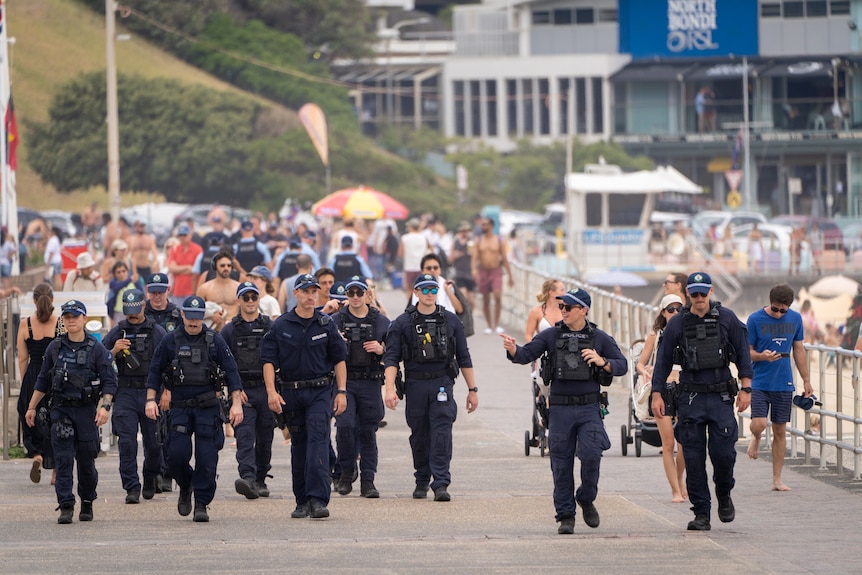
The tougher laws are in response to the Bondi Beach terrorist attack. (ABC News: Che Chorley)
What are the new protest laws?
In the wake of the Bondi mass shooting, the state government recalled parliament to pass a suite of new gun and protest laws.
As a result of a marathon debate in the early hours of Christmas Eve, police were given the power to enact a blanket refusal of all public assemblies for up to three months after a terrorist incident.
It means NSW Police Commissioner Mal Lanyon has the discretion to enforce the ban and can extend it in two-week increments.
The powers were activated just before midnight on December 24.
Premier Chris Minns said “static rallies” — demonstrations in a fixed location — would not be covered by the laws, but police could still shut them down if they were regarded a “breach of the peace”.
What is a ‘breach of the peace’?
On Sunday, three people were arrested and released without charge at the end of the protest, including two arrests for “breach of the peace”.
This is not a specific offence but instead a police power that allows them to arrest or detain someone to prevent violence or serious disturbance.
These powers were not introduced under the government’s protest laws.
Does this mean protests are banned?
In short, no.
Activists launch legal action against NSW protest laws
The new laws have barred police from accepting Form 1 applications, which notify of a planned protest, but that does not mean protests cannot go ahead.
Normally, if police do not challenge an application, the protest automatically has the consent of police and is therefore “authorised”.
If an application is not made, then the event is considered “unauthorised” by default and participants attending are not afforded the same legal protections, putting them at a greater risk of arrest or fines.
Are unauthorised protests considered unlawful?
“Unauthorised” protests are not unlawful; they are just not protected.
You do not need authorisation to protest or for a static gathering in a public place.
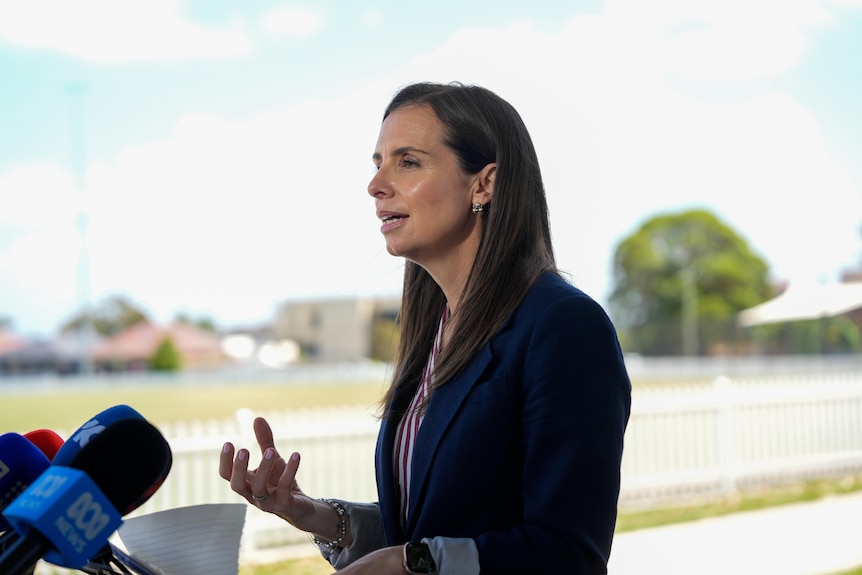
Courtney Houssos says the laws are about keeping the community safe. (ABC News: Victoria Pengilley)
Labor minister Courtney Houssos argued the laws were not designed to stop people from “coming together in a peaceful way”.
“Our laws are designed to ensure that our community stays safe, and our police remain focused on what they need to be focused on at this time,” Ms Houssos said on Monday.
Will Invasion Day rallies go ahead?
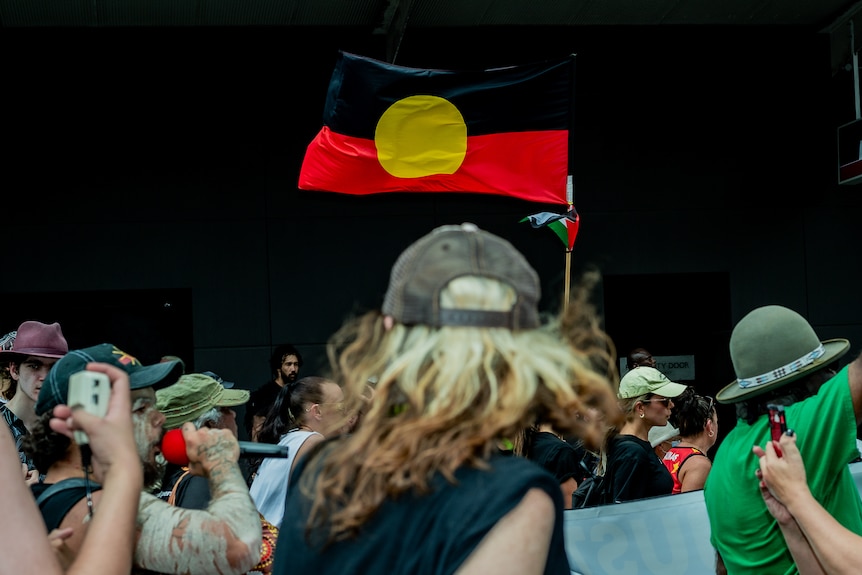
If the restriction on protests is extended, it could impact Invasion Day rallies. (ABC News: Brendan Esposito)
Ms Houssos said police were still considering whether the ban would be extended and they would have “more to say about that soon”.
That means it is unclear whether annual Invasion Day marches on January 26 will be covered by the laws, as police still make considerations about the application of the legislation.
Police are expected to decide in the next two days whether to extend the restrictions for another two weeks.
Are the laws being reviewed?
Advocacy groups, including the Palestine Action Group, Jews Against the Occupation, and First Nations group the Blak Caucus, are preparing a challenge of the laws on constitutional grounds.
A NSW parliamentary inquiry into banning phrases including “globalise the intifada” is also underway and expected to report back to the government at the end of January.
It will not hold any public hearings, and the closing deadline for submissions is January 12 — just three weeks after the inquiry was referred to a committee.
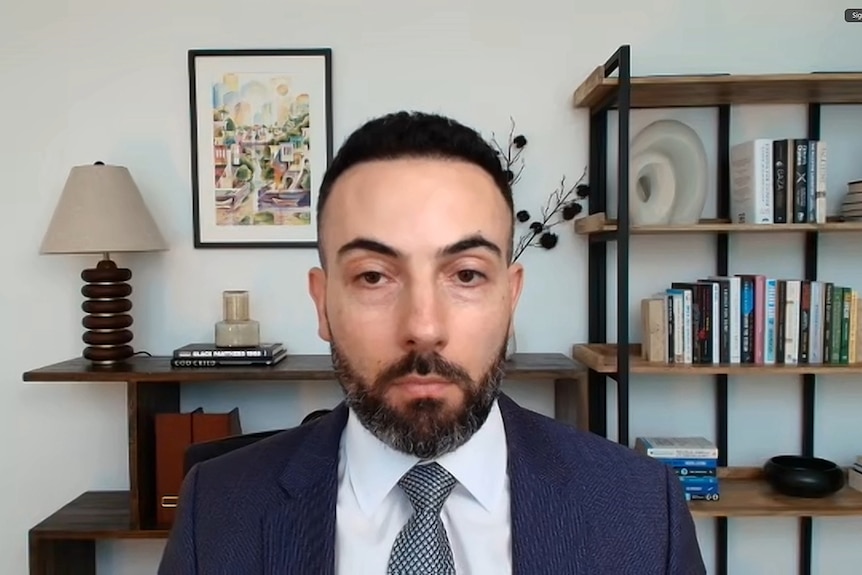
Nick Hanna says the challenge to the laws is expected to be filed “in the next week or so”. (ABC News)
Solicitor Nick Hanna, who is leading the challenge against the protest laws, said there was immense interest in opposing laws that limited freedom of speech.
“If the New South Wales government passes laws that seek to ban the use of phrases such as ‘Globalise the Intifada’ or ‘From the river to the sea’, I would be gobsmacked if there wasn’t a challenge to the constitutionality of those laws,” Mr Hanna said.
He added that he expected the application to be filed “in the next week or so”.
“Today, the government’s talking about banning certain pro-Palestinian phrases, but tomorrow they can then use the same power to seek to ban phrases of other political movements or ideologies and it’s a very slippery slope.”