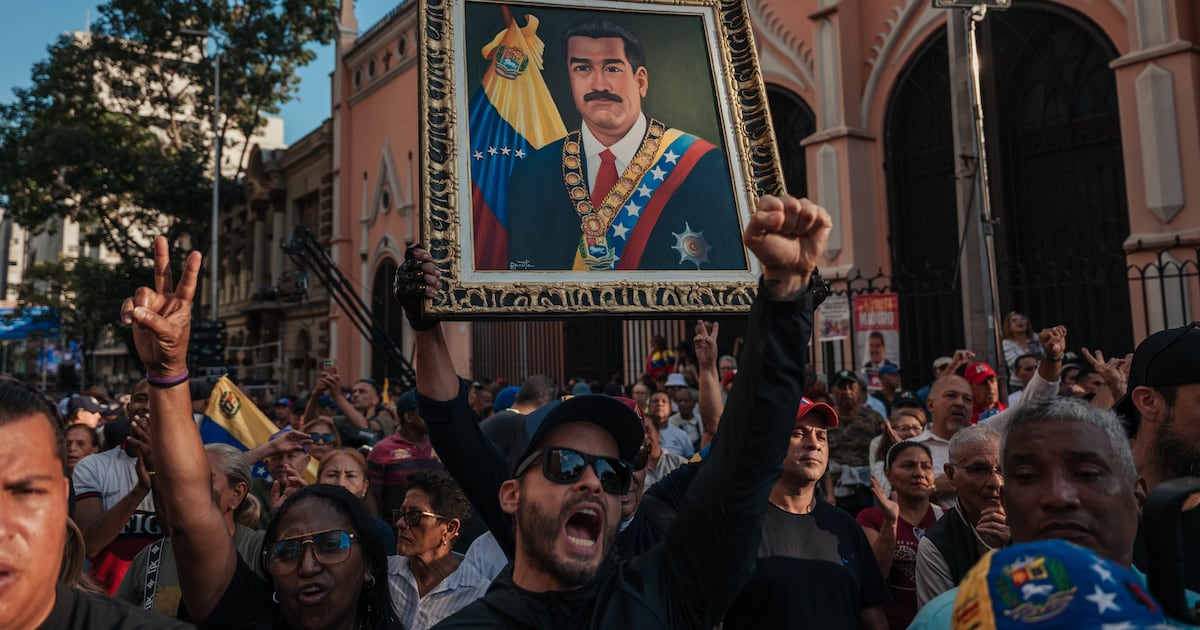
While Europe struggled to agree a common response to the abduction of the Venezuelan president by American special forces, China’s response was immediate and emphatic. The attack threatens Chinese interests in more ways than one.
The logic of state piracy
It took the European Union a day and a half to come up with a statement on the abduction of Venezuelan president Nicolás Maduro that all member states apart from Hungary could endorse. It called for calm and restraint on all sides and said that the principles of international law and the United Nations Charter must be upheld, but did not directly criticise the United States.
China’s foreign ministry issued a statement within hours of the American military action in Caracas, strongly condemning “the US’s blatant use of force” against a sovereign state and its president.
“Such hegemonic acts of the US seriously violate international law and Venezuela’s sovereignty, and threaten peace and security in Latin America and the Caribbean region. China firmly opposes it,” a foreign ministry spokesperson said.
Maduro’s last known meeting before his abduction was with Qiu Xiaoqi, China’s special representative for Latin American Affairs, at the Miraflores presidential palace. Maduro said the strategic relationship between Beijing and Caracas was “progressing and strengthening in various areas for building a multipolar world of development and peace.”
China is the biggest buyer of Venezuela’s oil and the country’s largest creditor and since 2023 the two countries have had an “all-weather strategic partnership”. This is a description Beijing gives to some of its closest, most enduring, strategic relationships with countries such as Pakistan, Belarus and Hungary. Venezuela is the only country in Latin America to receive the designation.
China has major investments in Venezuelan mining and infrastructure but the biggest threat Donald Trump’s action poses may be to Chinese oil companies if Washington presses Caracas to restrict their activities. Trump’s National Security Strategy made clear that the US regards the western hemisphere as a sphere of influence where its companies should have privileged access to resources and contracts and that it should be “free from hostile foreign incursions or ownership of key assets”.
Some western commentators have suggested that Trump’s action against Maduro could offer Beijing a useful precedent to decapitate the political leadership in Taiwan. But China’s outrage at Washington’s latest assault on international law and the UN Charter is more than rhetoric: it reflects Chinese interests.
China has benefited greatly from the postwar international order and the UN system has been crucial in the expansion of Beijing’s diplomatic influence alongside its economic power. Like other big powers, China interprets the rules in a way that suits its purposes but unlike Russia, it wants to protect the framework offered by the international system.
China Daily reflected official policy in an editorial this morning that described the US action in Caracas as an act of imperialist aggression and warned that Venezuela might not be the last country in Latin America to fall victim to Trump’s colonial ambitions.
“From fabricated charges to military strikes and regime change, the operation follows a familiar and deeply troubling script – one that reflects the logic of state piracy. Sovereign governments are first delegitimized, then destroyed by force, after which foreign capital moves in to carve up natural resources. This behaviour drags the world back toward a barbaric colonial era of plunder, in open defiance of international law,” it said.
“What the world is witnessing is not a ‘rules-based’ order, but colonial pillaging. Upholding sovereignty, equality and noninterference is not optional. It is the foundation of global stability – and it must be defended.”
Please let me know what you think and send your comments, thoughts or suggestions for topics you would like to see covered to denis.globalbriefing@irishtimes.com