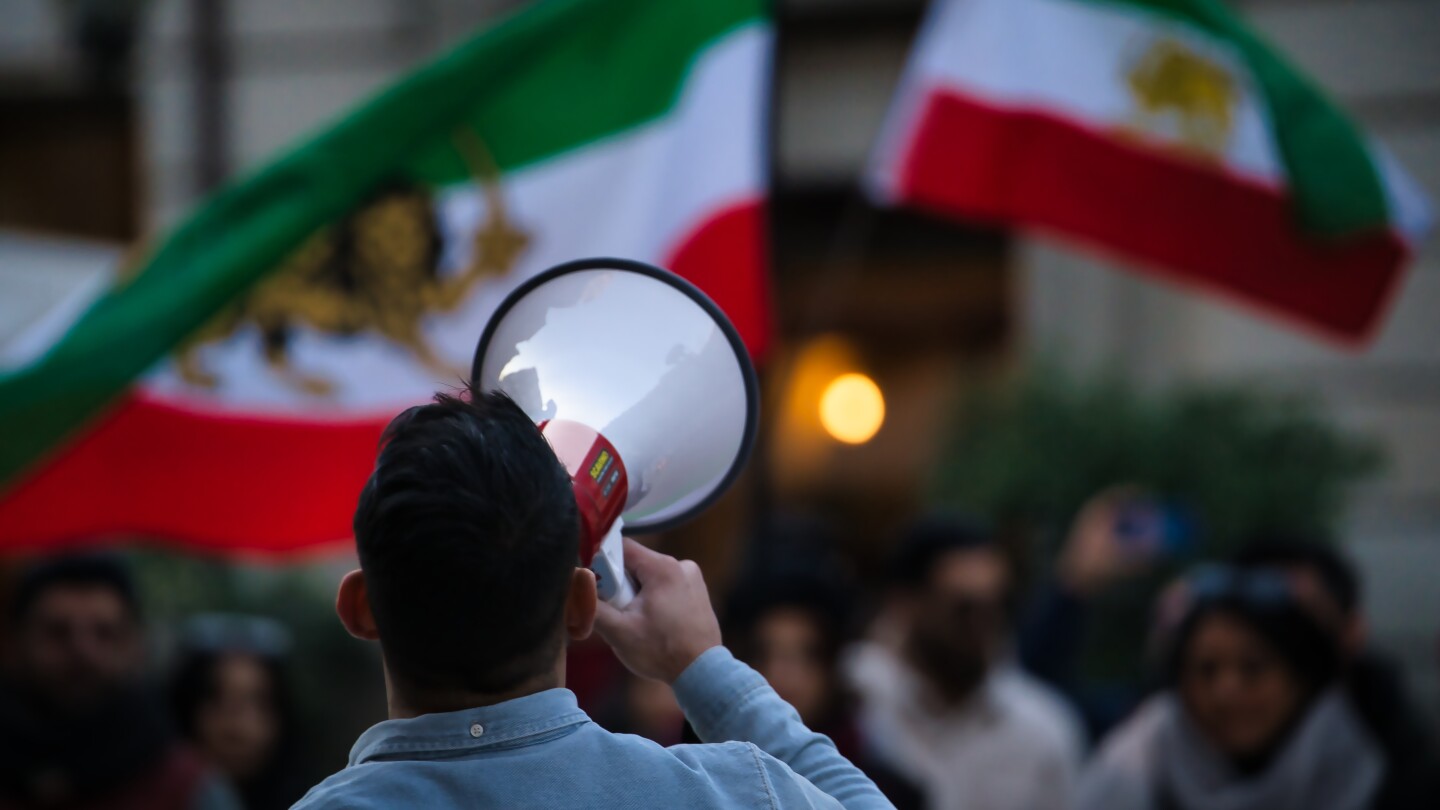
Following the twelve-day war in June 2025 between Israel and the Islamic Republic of Iran, many outside observers expected ordinary young Iranians to rise and overthrow the regime. Instead, the clerical leadership deployed security forces to crush domestic civil unrest, arresting and executing individuals on false charges of working for Israel. As the Jewish state prepares for another round of conflict with the Islamic Republic, it should focus on crippling the regime’s security forces by arming Iran’s youth.
Some among Iran’s youth believe that only armed resistance can impose costs on the regime and lead to its eventual ouster.
For decades, the Islamic Republic has relied on its Islamic Revolutionary Guard Corps, its paramilitary Basij, and other internal security forces to quell peaceful student and youth-led protests with impunity. For many young Iranians, these events have led to the conclusion that peaceful protest, online activism, and international sanctions cannot break the regime’s grip on power. However, some among Iran’s youth believe that only armed resistance can impose costs on the regime and lead to its eventual ouster.
ProPublica described the case of a young Iranian college student from a working-class area near Tehran, whom the Basij detained and tortured alongside his classmates. The experience left him angry against the regime and, following his release, he allegedly helped sabotage Iranian air defense and missile infrastructure during the twelve-day war.
His case is not unique but, rather, reflects how anger consumes some young Iranians who have endured humiliation, violence, and imprisonment at the hands of the regime. Regional states should recruit such individuals to cripple the regime’s internal security apparatus. Such an approach has precedent. Israel, for example, has allegedly recruited Iranians to assassinate key Iranian nuclear scientists and Revolutionary Guard commanders.
If Israel were to take the lead, instead of supplying recruits with Israeli-made weapons, Jerusalem could draw from Iran’s own stockpile of weaponry. In March 2024, Israeli security forces seized fragmentation bombs, anti-tank mines, grenade launchers, explosives, shoulder-launched missiles, assault rifles, and handguns that Iran sought to smuggle into the West Bank. In the months since, Israeli security forces and the Israel Defense Forces have thwarted other Iranian weapon smuggling operations, confiscating anti-tank rockets, Claymore charges, drones, a rocket-propelled launcher, warheads, hand grenades, pistols, assault rifles, machine guns, and pistol rounds.
The Israel Defense Forces also foiled a weapons smuggling attempt from Syria into Lebanon, and charged three Turkish nationals with attempting to smuggle firearms from Iran through Jordan into Israel. In September 2025, the Israeli military revealed that it had thwarted 130 drone-assisted smuggling attempts along the Egyptian border. Two months later, the Israel Defense Forces intercepted weapons smuggled from Egypt, including machine guns and handguns.
Later in the month, the Israel Defense Forces and Shin Bet prevented another Iranian effort to smuggle large quantities of advanced weapons, including rockets, mortars, rocket-propelled grenades, sniper rifles, and explosive devices, to terrorist operatives in the West Bank, while also thwarting a drone-based attempt to smuggle pistols from Jordan into Israel.
If other regional states threatened by Iran are serious about supporting the people of Iran, they must provide weapons, not words.
Instead of storing these weapons, Israel should repurpose and use them to recruit and train young Iranians in guerrilla warfare to engage in targeted attacks against Basij foot soldiers, morality police officers, prison guards, and interrogators from prisons such as Evin, Adel Abad, and Qarchak. Locating such individuals and providing intelligence on their whereabouts would be easy, given that, unlike senior Islamic Revolutionary Guard Corps commanders and nuclear scientists, they lack high-level security protection.
Supporting such an initiative would instill fear among regime supporters and enforcers while encouraging other Iranians who might have been wary of engaging in armed revolution to join, creating a counterrevolutionary movement against the regime. If other regional states threatened by Iran are serious about supporting the people of Iran, they must provide weapons, not words. By providing weapons, training, and operational support, Israel will have strengthened any future military operation against the Islamic Republic, weakening it from within and accelerating its collapse. If Israel in particular enables Iranians to do so with the regime’s own weaponry, the irony would be delicious.