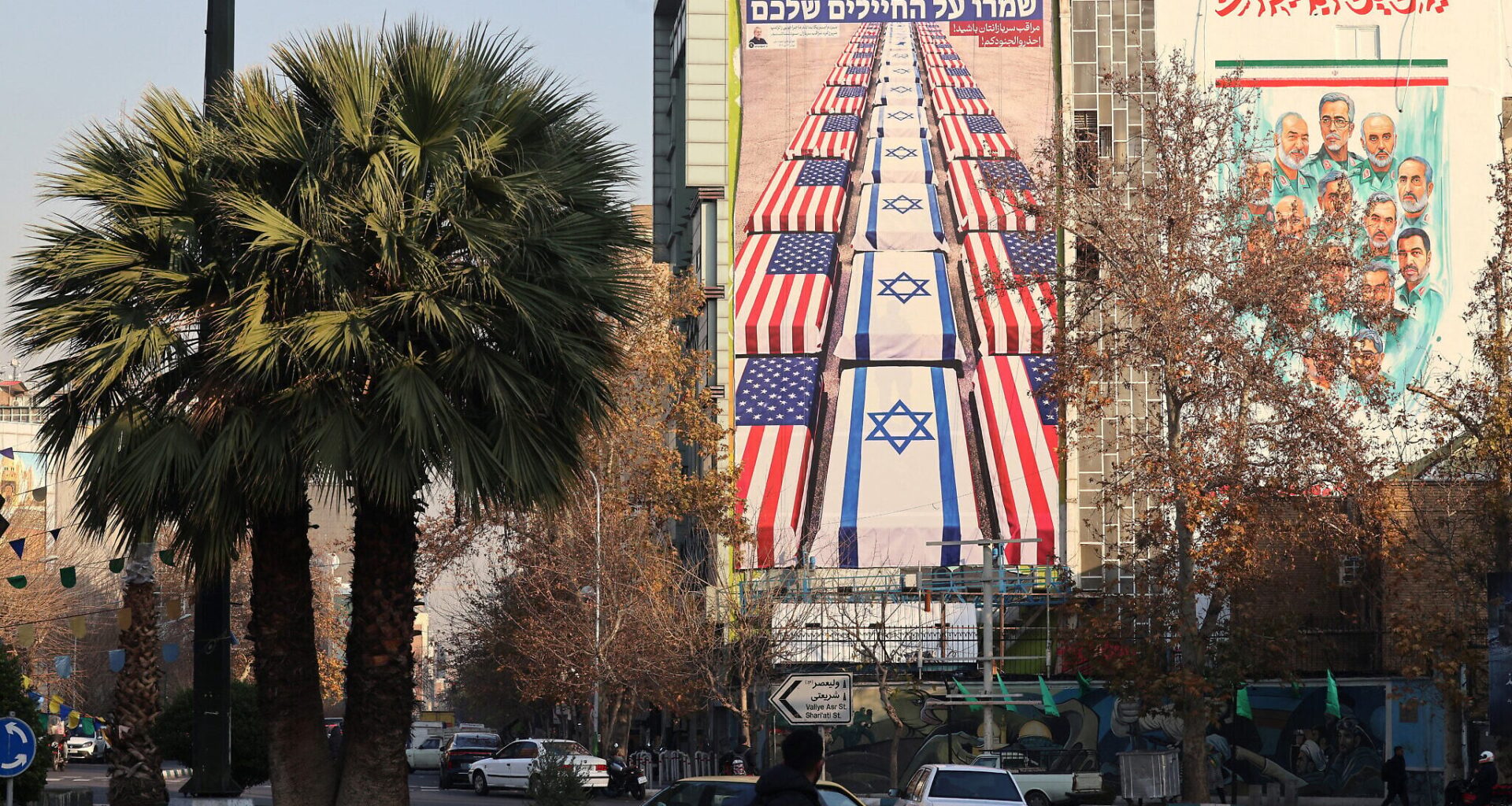
Iran accused Israel on Monday of trying to undermine its national unity after Prime Minister Benjamin Netanyahu expressed support the previous day for the mass protests that have swept the Islamic Republic over the past week and which show no sign of slowing down.
“The Zionist regime is determined to exploit the slightest opportunity to sow division and undermine our national unity, and we must remain vigilant,” said Iranian foreign ministry spokesman Esmail Baqaei at a weekly press conference.
He accused Israeli and US leaders of “incitement to violence.”
At least 20 protesters have been killed in clashes with Iranian security forces, according to human rights groups, since market vendors in Tehran first took to the streets last Sunday, December 28, to demonstrate against the economic crisis.
The protests have expanded rapidly since then, reaching over 220 locations in 26 of Iran’s 31 provinces, the US-based Human Rights Activists News Agency reported early Monday.
Get The Times of Israel’s Daily Edition
by email and never miss our top stories
By signing up, you agree to the terms
Around 1,000 people have been arrested since December 28, according to the agency, which relies on an activist network inside Iran for its reporting, and which has been accurate in documenting past unrest.
Netanyahu: ‘We identify’ with the Iranian people
In his weekly cabinet meeting on Sunday, Netanyahu issued his first public remarks on the protests in Iran, suggesting it could be a pivotal moment for the more than 92 million people who live there.
“The government of Israel, the State of Israel, and my own policies — we identify with the struggle of the Iranian people, with their aspirations for freedom, liberty and justice,” Netanyahu said. “It is quite possible that we are at a moment when the Iranian people are taking their fate into their own hands.”

Prime Minister Benjamin Netanyahu leads a cabinet meeting in Jerusalem on January 4, 2026. (Maayan Toaf/GPO)
Senior Israeli officials had previously told Channel 12 that, though the government seemed to endorse the protests online, the premier himself was abstaining from commenting on the situation so that the Islamic Republic would not use his remarks as a pretext to attack Israel.
Tehran is working to rebuild its damaged ballistic missile and nuclear programs in the wake of its 12-day war with Israel back in June.
Amid speculation that Israel could launch another attack against Iran to prevent it from reconstituting the weapons programs, reports have stressed leaders’ concerns over a miscalculation, in which one side, mistakenly anticipating an attack, could trigger another war to preempt it.
Widening protests
While the protests in Iran were initially focused on economic issues, protesters soon began chanting anti-government statements as well. Anger has been simmering in recent years, particularly since the 2022 death of 22-year-old Mahsa Amini in police custody that triggered nationwide demonstrations.
The protests do not appear to be stopping, although regime-affiliated media alleged that they were slowing down, even after Supreme Leader Ayatollah Ali Khamenei said on Saturday that “rioters must be put in their place.”
His warning was reiterated by the head of Iran’s judiciary, who on Monday said that the country would offer no leniency to “rioters,” though the public has a right to demonstrate.
“I instruct the attorney general and prosecutors across the country to act in accordance with the law and with resolve against the rioters and those who support them… and to show no leniency or indulgence,” Gholamhossein Mohseni Ejei said, according to the judiciary’s Mizan news agency.
He added that Iran “listens to the protesters and their criticism, and distinguishes between them and rioters.”
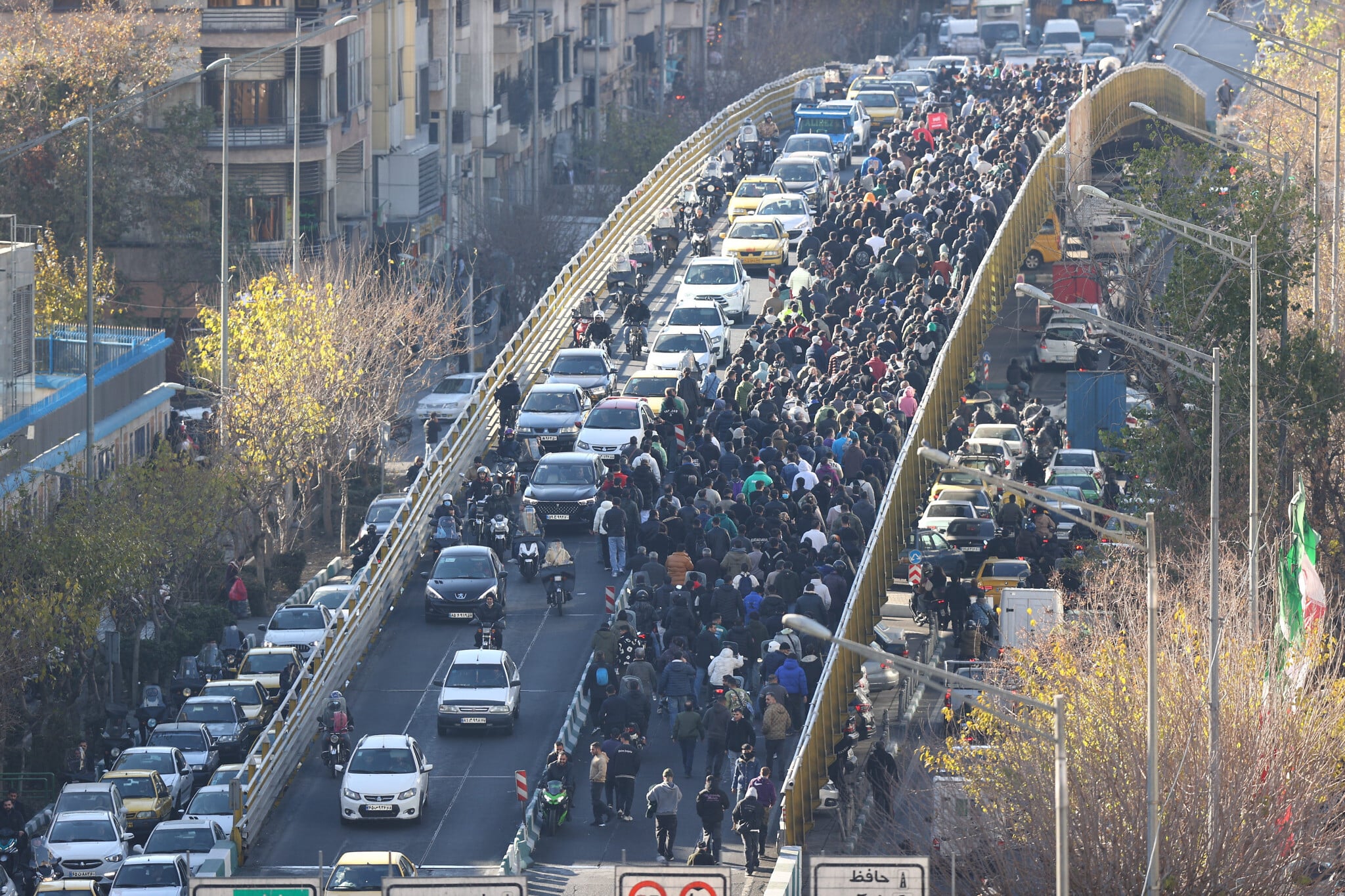
Shopkeepers and traders walk over a bridge during a protest against the economic conditions and Iran’s embattled currency in Tehran on December 29, 2025. (Handout/Fars News Agency/AFP)
The semi-official Fars news agency said Monday that “the trend observed on Sunday night shows a notable decrease in the number of gatherings and their geographic reach compared to previous nights.”
Local media’s accounting of the protests is not exhaustive, and state-run outlets have downplayed their coverage of the demonstrations, while videos flooding social media are often impossible to verify.
Publicly, officials have struck a conciliatory tone when it comes to protesters’ economic demands, while vowing to take a hard line against any chaos and destabilization.
The most intense clashes have been reported in western parts of Iran, but there have also been protests and clashes between demonstrators and police in Tehran, in central areas, and in the southern Baluchistan province.
Currency crash
The protests were triggered by the ongoing economic crisis in Iran and the collapse of the national currency, the rial.
The rial has lost more than a third of its value against the US dollar over the past year, while double-digit inflation has been undermining Iranians’ purchasing power for years.
It was depreciating again on Monday against the greenback after strengthening in recent days, according to the informal black-market rate, which stands at around 1.4 million rials, compared with about 770,000 a year earlier.
In December, Iran introduced a new pricing tier for its nationally subsidized gasoline, raising the price of some of the world’s cheapest gas and further pressuring the population. Tehran may seek steeper price increases in the future, as the government now will review prices every three months.
International sanctions over Iran’s nuclear program were reimposed in recent months, the government has struggled to provide water and electricity across the country throughout the year, and global financial bodies predict a recession in 2026.
Times of Israel staff contributed to this report.
You appreciate our journalism

You clearly find our careful reporting valuable, in a time when facts are often distorted and news coverage often lacks context.
Your support is essential to continue our work. We want to continue delivering the professional journalism you value, even as the demands on our newsroom have grown dramatically since October 7.
So today, please consider joining our reader support group, The Times of Israel Community. For as little as $6 a month you’ll become our partners while enjoying The Times of Israel AD-FREE, as well as accessing exclusive content available only to Times of Israel Community members.
Thank you,
David Horovitz, Founding Editor of The Times of Israel
Already a member? Sign in to stop seeing this