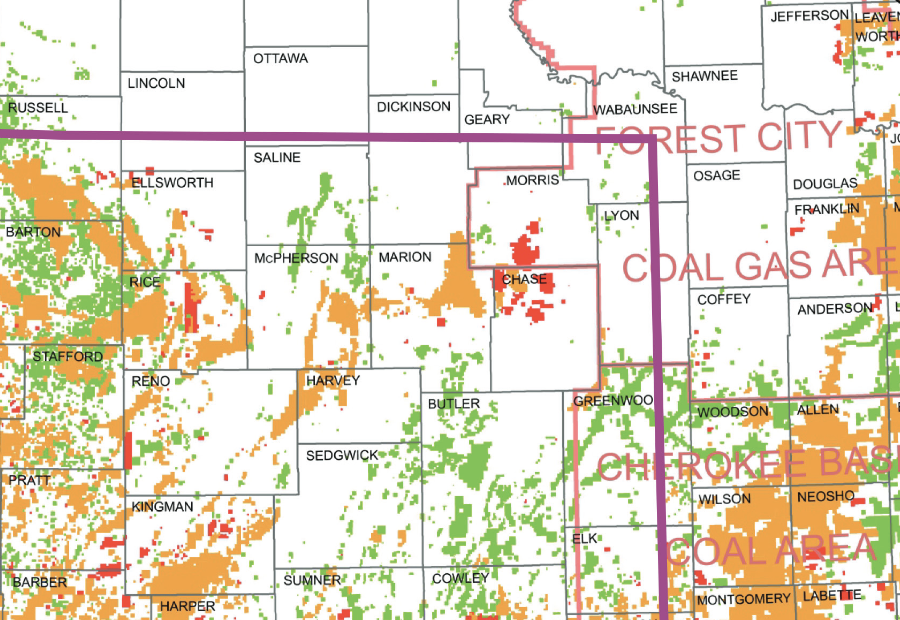
LAWRENCE — A new publication from the Kansas Geological Survey offers the most in-depth research to date into the origin and migration of natural gas sources in central and western Kansas. The research details the chemistry of these gases, offers insight into how the composition of gases alter as they age and mix with water and other gases in the subsurface, and provides guidance for future energy research and development efforts.
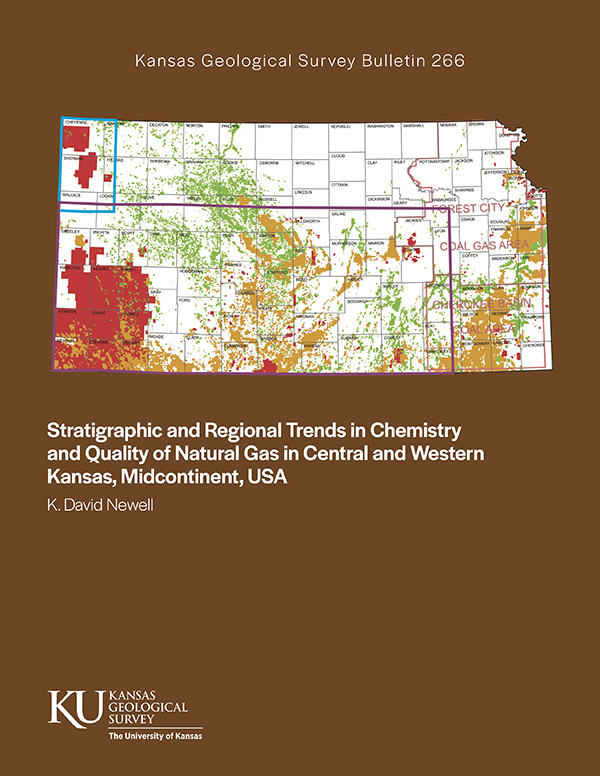
“Natural gas produced in Kansas has been an important source of energy for decades,” said K. David Newell, author of the report and associate scientist emeritus at the KGS. “Natural gas offers a lighter carbon footprint than other fossil fuels and is increasingly used as a replacement for coal to generate power. Future exploration for natural gas resources increases the possibility that the state will remain a major source in the USA in the future.”
KGS Bulletin 266, “Stratigraphic and Regional Trends in Chemistry and Quality of Natural Gas in Central and Western Kansas, Midcontinent, USA,” identifies areas and geologic strata that may have potential for additional exploration of natural gas, helium and the new search for natural hydrogen.
Until now, no single publication has discussed the chemistry and chemical variability of natural gas in central Kansas, particularly with emphasis on the age of the rocks that harbor this gas and with respect to its geographic and geologic distribution.
“This publication provides an introduction and regional overview of energy and non-energy component gases in Kansas,” Newell said. “It also contributes to academic research into the occurrence, emplacement and geologic conditions of significant gas in southern and western Kansas and the U.S. midcontinent.”
The bulletin maps and compares component gases of natural gas, including those such as methane and ethane that contribute to heating value. It also analyzes noncombustible gases such as helium and nitrogen.
Historically, the main source of helium produced in the United States has been gas fields in Kansas, and in turn, the United States has been the main source of helium produced in the world. The fields that account for most of the helium production in Kansas were discovered decades ago and are steadily depleting.
“I think the maps in this report could help in pointing the way to additional gas deposits,” Newell said.
In analyzing the chemical compositions of natural gases in Kansas, the report maps occurrences of low-BTU gases that currently hold little importance to energy companies because of their low heating value. If the energy landscape changes in the future, making these gases economically valuable, the industry may see renewed interest in these areas.
The report also identifies areas in which sour gas, a potentially deadly drilling hazard, is found. An appendix lists fields where sour gas has been reported.
The data upon which the bulletin is based were compiled over several decades. As of 2025, nearly 6,000 analyses were included in the database, the most extensive publicly available compilation of natural gas analyses for the state. These analyses are available as a KGS open-file report.
About the Kansas Geological Survey
The Kansas Geological Survey is a nonregulatory research and service division of KU. KGS scientists study and provide information about the state’s geologic resources and hazards, including groundwater, oil and natural gas, rocks and minerals, and earthquakes.