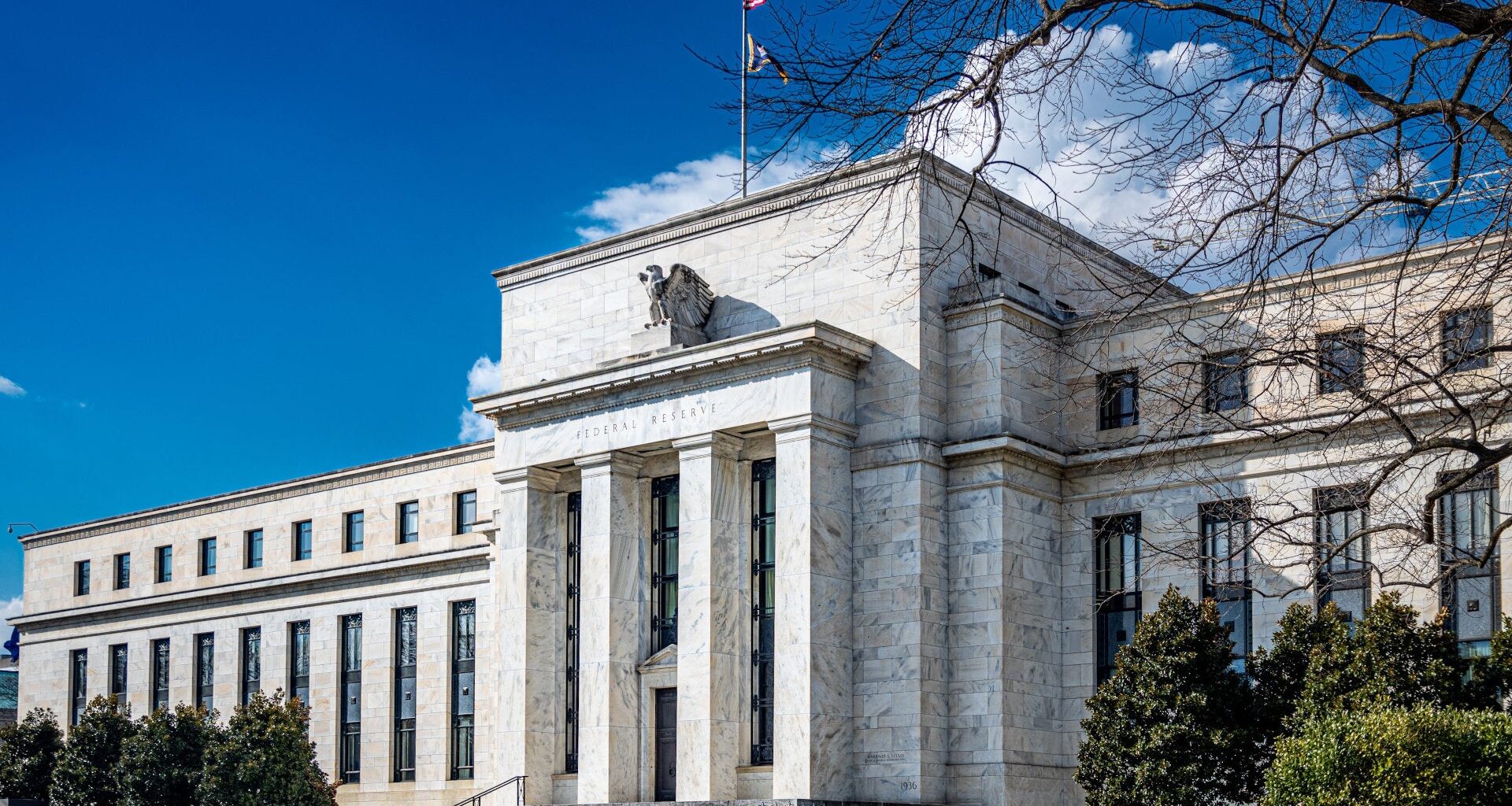
Empirical analyses demonstrate the importance of the independence of central banks. Countries whose central banks are more insulated from politics, for example by having long terms for their governors, tended to have lower inflation and no worse unemployment than countries whose central banks were more subject to political pressure. That is why economists are concerned with the president’s attacks on the independence of the Federal Reserve—political pressure could lead to higher inflation and a destabilization of the economy.
This isn’t the first time a president tried to pressure the Federal Reserve, is it?
President Nixon, in the run-up to the 1972 election leaned on Federal Reserve Chairman Arthur Burns to ease monetary policy. Nixon was very worried about a recession hurting his chances of reelection—he blamed the economic slowdown in 1960 for his loss to John Kennedy in a very close election. Evidence shows that Nixon’s pressure to lower interest rates in advance of the 1972 election helped spur inflation.
Then the Federal Reserve under Paul Volcker hiked interest rates and tackled inflation. Did that become a lesson for the central bank?
Volcker’s policy choices were very unpopular at the time they were implemented in 1979 and 1980, but they broke the back of the inflationary cycle of the 1970s and set the stage for sustained growth with low inflation. This demonstrated the importance of the independence of the Federal Reserve, and that experience, as well as economic theory and empirical analyses, set the stage for legislation that made central banks across the globe more insulated from politics.
This has contributed to lower inflation since the early 1980s, not only in the United States but across the world. With greater independence, central banks were not forced to finance government debt or bend to politician’s desires, but could make decisions based on good economic analysis on how to stabilize the economy.
What’s a recent example of the failure of central bank independence, and the consequences of that?
Turkish president Recep Erdoğan took political control of his nation’s central bank over the past few years, keeping interest rates low even as inflation heated up. Erdoğan wanted lower interest rates because that would help promote investment and consumption of big-ticket items. But the consequence was even higher inflation. This was not the case of boosting an economy before an election, but of a sitting leader wanting to control the economy through pressure on the central bank. But it didn’t end well.
President Trump has also mentioned how lower interest rates would help lower the government’s interest payments on the national debt. What is the link between monetary policy and fiscal policy?
When the government runs a budget deficit, it sells bonds to pay its creditors. The bonds can be bought either by the public or by the central bank. When the central bank purchases bonds, it uses money that had not been in circulation—so the money supply increases with what is called the “monetization of the deficit.”
To limit this possibility, countries have a firewall between their treasury or finance ministry, which collect tax revenues and pay for government goods and services, and the central bank, which controls the supply of money and interest rates.
A central bank controlled by the executive branch could be prone to monetize the government’s budget deficits as a way to avoid the more transparent cost of raising taxes. This leads to inflation, which is itself a kind of tax.
There are a number of examples of this. Argentina has had persistent economic crises because they ran big budget deficits financed by printing money. One of the most dramatic and famous examples is the German hyperinflation of the 1920s. Germany had to make large reparation payments, which were seen as illegitimate within Germany, and it was very hard for the government to tax to pay those.
So the German central bank printed money to make payments, which led to runaway hyperinflation. You can trace the defeat of Germany in 1918 and the subsequent hyperinflation and economic instability of the 1920s directly to the rise of fascism and, ultimately, to World War II.