The European Union’s response to US intervention removing Venezuelan president Nicolás Maduro from power has been a stuttering one, with the bloc mostly holding its tongue to avoid antagonising Donald Trump.
The private shock at the US decision to deploy military force was followed by a muted public reaction.
A joint EU statement negotiated over the weekend called for the principles of international law to be upheld, but stopped short of any direct criticism of Washington’s actions.
“Members of the United Nations Security Council have a particular responsibility to uphold those principles, as a pillar of the international security architecture,” was as far as the EU went in taking a swipe at the US.
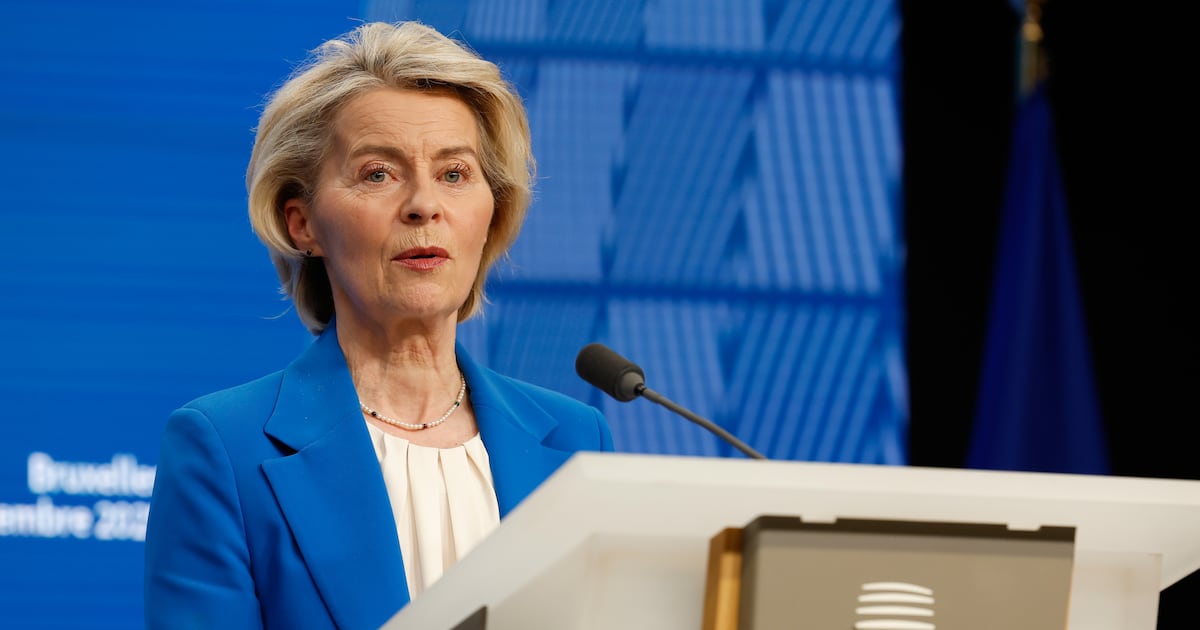
The European Commission, the union’s executive branch led by Ursula von der Leyen, refrained from threading any further.
Questions about the legality of the US military strikes and capture of Maduro should be left to the United Nations, said Paula Pinho, the commission’s chief spokeswoman.
“Maduro lacked the legitimacy of a democratically elected leader, therefore the events over the weekend provide the opportunity for a democratic transition, led by the Venezuelan people,” another EU official said.
The commission could not say how those hopes for a democratic transfer of power tallied with Trump’s own claims the US would “run” Venezuela. The reference suggested the remainder of the Chavista-Maduro administration might be permitted to stay in place, as long as it took direction from Washington.
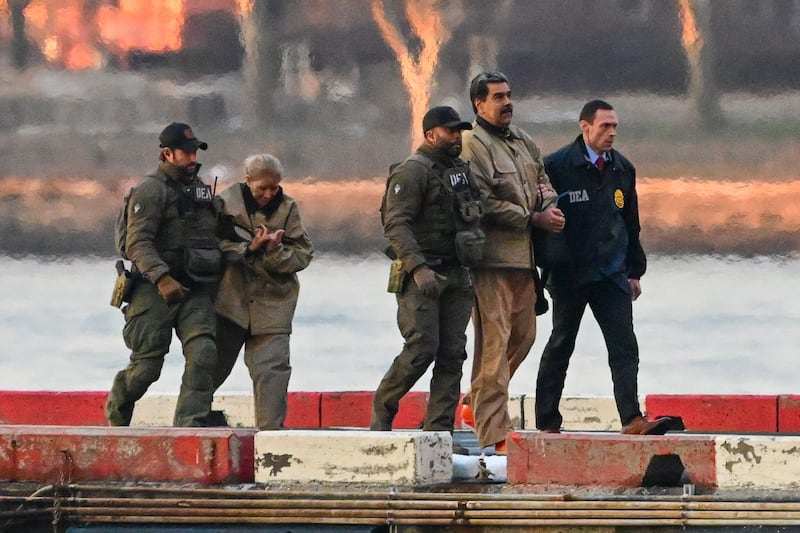 Captured Venezuelan president Nicolas Maduro and his wife, Cilia Flores, arrive at the Wall Street Heliport during their transport to the federal courthouse for their arraignment in New York. Photograph: EPA
Spain’s left wing prime minister Pedro Sánchez was the most forthright, condemning Trump’s intervention in Venezuela as a “violation of international law”.
A desire to keep the White House onside in the Ukraine war meant statements from other EU leaders were much more circumspect.
European leaders are concerned about what this will mean for Greenland, the autonomous Danish territory near the Arctic that Trump has talked about his desire to control.
When asked again on Monday about the likelihood of a forceful takeover, Trump told reporters on Air Force One that the US needed Greenland.
Denmark’s prime minister Mette Frederiksen said it was “absolutely absurd” for an ally to be talking about taking over Greenland. The territory was “not for sale” Greenland’s prime minister Jens-Frederik Nielsen said.
Trump’s public ambitions to gain control of Greenland set off a diplomatic crisis in Copenhagen at the start of his second term in the White House. Though his focus quickly moved off elsewhere, the Danish government always firmly believed Trump would return to the subject.
[ After US captures Nicolás Maduro, could Iran’s supreme leader be next?Opens in new window ]
The huge land mass, which is located near Canada and has population of about 57,000, is seen as strategically important to the US, who already have a military base on the island.
Denmark has traditionally been one of Washington’s staunchest allies in Europe, a relationship Trump’s threats has severely strained in the last year.
The military action in Venezuela has been widely seen as the Trump administration flexing its might in what it views as its sphere of influence.
Officials in Brussels stressed Greenland and Venezuela were very different cases, noting the self-governing Danish territory was part of the Nato military alliance.
“Greenland is an ally to the US, and is also covered by the Nato alliance, and that is a big, big difference and so we therefore completely stand by Greenland and in no way do we see a possible comparison,” commission spokeswoman Pinho said.
The problem is Trump appears to view the island as a desired piece of real estate on the map and has shown little attachment to the transatlantic relationship that for decades has bound Europe and the US together. The previously inconceivable prospect of US military action there can no longer be dismissed as unthinkable.