A friend recently narrated an incident that has stayed with me. He runs a medium-scale manufacturing unit in Punjab — an MSME with a proven record of quality and timely delivery. For years, he had been supplying his product to a Punjab government department without complaint. When a tender worth Rs 22 crore was floated, he qualified on both technical and financial grounds. In the final bid, he lost to a Delhi-based firm by a few lakh rupees. What followed reveals much about how Punjab undermines its own economy.
My friend represented to the department that under the state policy, MSMEs are entitled to price preference. He annexed copies of the relevant orders. He pointed out that as a Punjab-based unit, he would charge SGST, while the Delhi supplier would bill CGST, yielding zero revenue for the state. His inputs were largely sourced locally, creating a virtuous cycle of tax revenue, logistics spending and employment within Punjab. The supplies were to be distributed across districts — transportation, warehousing, labour, all local.
At an 18 per cent GST rate, he calculated that Punjab would lose Rs 40 lakh in tax revenue — many times the price difference that disqualified him. Yet, the objections were overruled and the tender went to the out-of-state firm. This case is symptomatic of an unbusinesslike approach to public procurement — one that treats government purchasing as a clerical exercise rather than an economic lever.
Ironically, GST officers in Punjab often advise traders to “buy locally”, which is commendable. But what is the incentive when the state’s own procurement ignores local value creation? A decade ago, before GST, I came across tender documents issued by the Odisha government. One clause was invariably present: out-of-state suppliers were required to obtain local VAT registration and bill under state tax. This policy had far-reaching consequences, forcing firms to establish local offices, create jobs and integrate themselves into the state’s economy.
If other states could do this, what stops Punjab? Such measures can easily be extended. Even modest rebates or incentives for local sourcing would encourage companies to establish distribution hubs, warehouses and offices in Punjab. Tepla in Patiala district has emerged organically as a distribution point. With deliberate policy, Punjab could leverage its highways, not just as transit corridors bypassing cities, but also as arteries for regional distribution serving North India.
Punjab has sacrificed vast tracts of land to expressways that largely facilitate pass-through traffic. Without a complementary logistics and warehousing policy, these highways deliver little local benefit.
The urgency is real. Punjab’s 2025-26 Budget projected GST collections of Rs 27,650 crore. By November, only Rs 16,996 crore had been collected, leaving a big shortfall to be recovered in four months. Punjab is a high-consumption state, yet its tax collections do not match the consumption levels. Expanding in-state distribution and billing would raise revenue and also curb smuggling and tax evasion. Small measures, multiplied across sectors, can reshape the economy. Punjab has maintained a 17-25 per cent share of manufacturing in its GDP, comparable to the national average. Yet, large public and private investments have largely bypassed the state. Investment summits, foreign tours and roadshows have yielded little on the ground.
What is often forgotten is that Punjab’s industry is mostly homegrown. Every major industrial house in the state started small. They are the products of Punjabi entrepreneurship, not external capital. Punjab today offers little that attracts large greenfield projects: land is among the costliest in the country, making projects unviable; raw materials are scarce; trained manpower migrates out. The oft-lamented “flight of capital” is far deeper than industrial relocation — it begins at the village level.
A farmers’ leader told me that three families in his village received compensation for land acquired for a highway. Almost all of it was transferred to Canada. This pattern has spread from villages to mandi towns. Thousands of business families have sold properties, migrated abroad and invested in rental real estate overseas.
The real capital of Punjab lies in its districts. The real estate boom around Mohali was fuelled by surplus money from mandi towns like Barnala. These are families with steady businesses, surplus capital and technically qualified children. They are precisely the people who could industrialise Punjab. Yet, they are neither invited to summits nor offered viable pathways for productive investment. With no guidance, surplus capital flows into speculative land deals, which generate no economic activity but inflate land prices. The result is predictable: talent drain, capital flight and stagnation.
Punjab does not need a few large investors. It needs thousands of small and medium entrepreneurs engaged in productive activity, spread across districts, rooted in local pride. For this, economic planning must be decentralised. The village can no longer be treated solely as an agricultural unit. It must also become a manufacturing and processing unit. Villages have land, capital and manpower. What they lack is knowhow, branding, marketing, managerial support and access to organised markets.
Why should land-use decisions remain a monopoly of the state? Across Europe, local councils decide how land is deployed for economic activity. Empowering village institutions to shape local industrial development could unlock immense potential. Agriculture, even when profitable, has limits. At present prices and yields, farmers can generate a surplus, but this is insufficient to meet the expenses of education, healthcare, social obligations and unforeseen needs. It is this gap — not inefficiency — that fuels indebtedness. Diversification slogans mean little unless they translate into income stability and dignity.
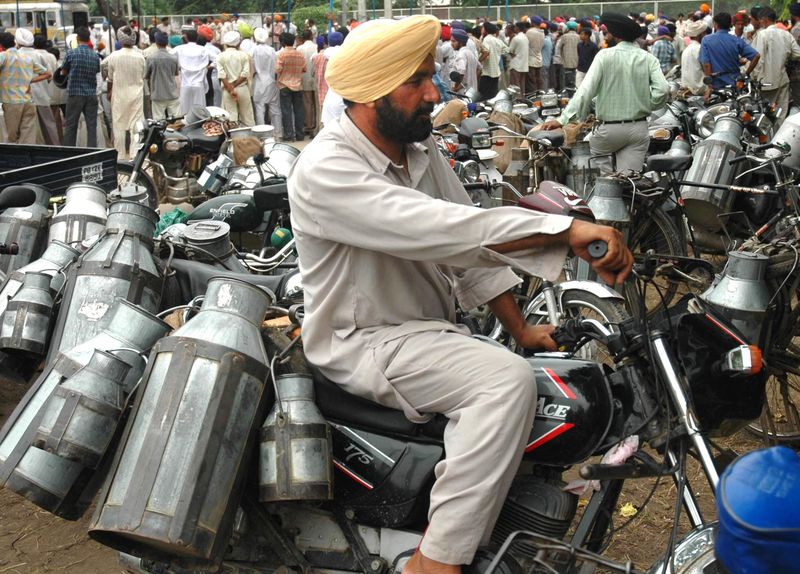
Punjab’s entrepreneurial skill has always compensated for the lack of raw material. Yet, it remains underexploited. Brands like Sohna and Verka are telling examples — pioneers in ready-to-eat foods and dairy products, yet confined largely within the state’s borders. Punjab produces no high-value-added dairy products despite massive milk output. Wheat and rice are sold largely as commodities, with minimal downstream processing.
Why do we not leverage what we have? Punjab’s recovery will not come from a single mega project or corporate saviour. It will come from many small, feasible investments —multiplied across districts, towns and villages — retaining talent, circulating capital locally and restoring confidence in productive work. Big business often takes flight at the first sign of distress. It is the small entrepreneurs, rooted in the soil, who stay till the end. Increasing their income is the surest way to increase the state’s income and address its mounting debt.
These ideas are not exhaustive but starting points. What is required is political will, administrative imagination and the courage to look inward — before Punjab’s economic hollowing becomes irreversible.