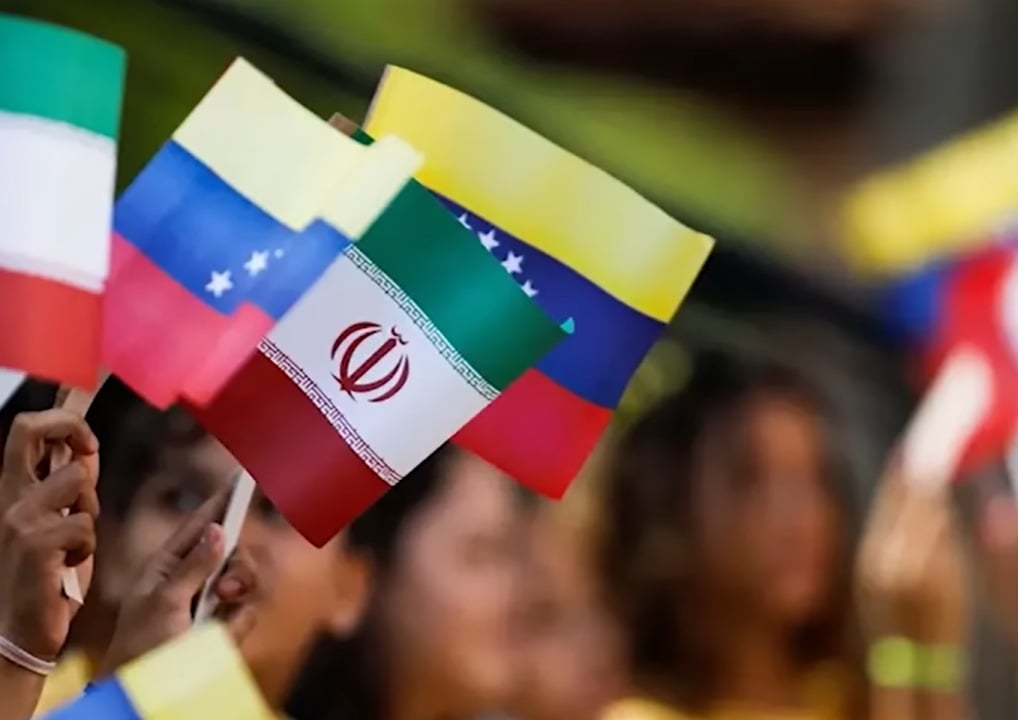
The arrest of Venezuelan dictator Nicolas Maduro in a US raid launched in Caracas on the night of January 3rd is indeed good news for Israel since Venezuela, under the Bolivarian regime led first by Hugo Chavez and then by Maduro himself, became Iran’s stronghold in Latin America, with an extensive intelligence network for the IRGC and an operational asset for Hezbollah. It is also worth remembering that, following the Israeli offensive against Hezbollah in Lebanon in 2024, numerous operatives and their families moved to Venezuela.
In June 2022, Iran and Venezuela formalized a 20-year cooperation agreement, in which Maduro explicitly aligned his country with Iran’s Axis of Resistance. Moreover, Iran and Venezuela have extensively collaborated to evade international sanctions through sophisticated economic, logistical, and military networks.
On December 30, 2025, the Treasury Department’s Office of Foreign Assets Control sanctioned a group of individuals and entities based in Iran and Venezuela that are allegedly linked to the weapons trade between the two countries. Among them, the Venezuelan company Empresa Aeronautica Nacional, which is allegedly linked to millions of dollars of Iranian drone sales to Venezuela.
At this point, it’s difficult to predict what will happen in Venezuela. At a press conference on January 3, 2026, US President Donald Trump stated that the United States would govern the Latin American country during the transition to democracy.
However, this prospect still seems distant, given that Defense Minister Vladimir Padrino López and Interior Minister Diosdado Cabello, both blacklisted by Washington, remain in office, while Vice President Delcy Rodríguez has been appointed by Maduro and recognized by the Venezuelan army as the country’s new leader.
On January 4th, US Secretary of State Marco Rubio made clear that Rodriguez is not the country’s legitimate president, and called for elections to determine the country’s next leader.
If the Bolivarian regime were to collapse, it would be a significant problem for the ayatollahs (assuming that the theocracy in Tehran does not fall in the meantime) and their assets on Venezuelan territory may have to quickly leave the South American country and find a nearby new host and the choice seems to be very limited as South America is rapidly moving away from the far-left axis.
Regardless of the support for Maduro coming from the former-FARC militant and Colombian president Gustavo Petro, it is quite unlikely that the Iranians will pick Colombia as their new hub.
Colombia has been a staunch ally of Washington, both in the fight against drug trafficking and against terrorism. The Colombian armed forces are trained by the United States and have been working together since the war against the Medellín and Cali cartels in the 1990s. In 2022, Gustavo Petro was elected president, but despite his efforts, he was unable to separate the country’s institutions from Washington.
The only plausible alternative seems to be the Lula-led Brazil. As explained to The Times of Israel by Gianpiero Spinelli, U.S.DoD Military & Security Contractor with extensive operational experience in Latin America:
“The disintegration of the Venezuelan leadership will soon trigger the migration of paramilitary assets linked to Hezbollah to countries that, although officially denying or showing timid counteraction, will actually facilitate this migration in order to maintain a balance between the pro-Lebanese terrorist organization and the most notorious drug cartels. Both Colombia and Brazil will be affected. Despite officially closing their borders, both countries enjoy thousands of kilometers of uncontrolled borders, where free transit is absolutely possible.”
Spinelli adds:
“This migration will strengthen the PCC (Primeiro Comando da Capital), the largest cartel in Latin America and Hezbollah’s main strategic point of reference and Brazil will become the new hub for narco-terrorism. Moreover, we must keep in mind that Brazilian laws do not recognize Hezbollah as a terrorist group but as a political entity”.
The current situation is still full of uncertainties, as the Caracas regime has not yet fallen, and it’s unclear whether the Brazilian leadership has the means and the will to intervene in the event of an Iranian network transfer. One thing is certain: the leaders of the São Paulo Forum, the Latin American far left, aligned against Israel, now know that Trump is no joke and it might not be worthwhile to stand against him.
Giovanni Giacalone is a senior analyst in Islamist extremism and terrorism at the Italian Team for Security, Terroristic Issues and Managing Emergencies-Catholic University of Milan, at the Europe desk for the UK-based think tank Islamic Theology of Counter-Terrorism, and a researcher for Centro Studi Machiavelli. Since 2021 he is the coordinator for the “Latin America group” at the International Institute for the Study of Security-ITSS. In 2023 Giacalone published the book “The Tablighi Jamaat in Europe”.