By Shairee Malhotra
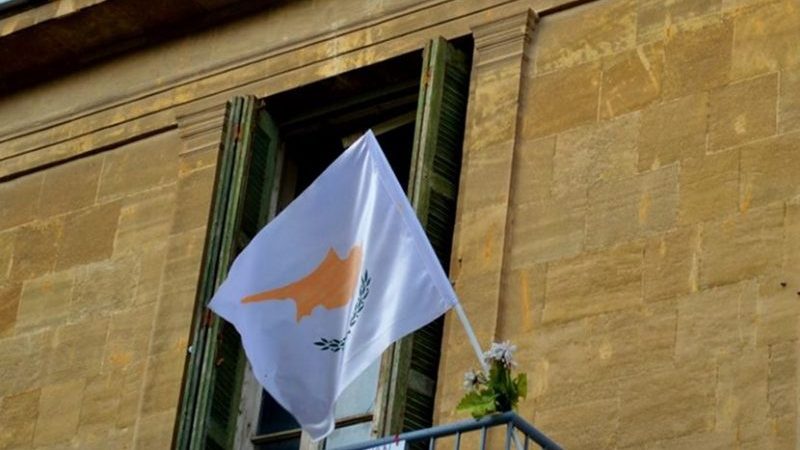
On 1 January 2026, Cyprus assumed the rotating Presidency of the Council of the European Union (EU) under the motto “An Autonomous Union. Open to the World”. Fourteen years after its first EU presidency in 2012, the current global system — marked by fragmentation, conflict, and crisis — stands in stark contrast.
Taking over the baton from Denmark, the Cypriot presidency marks the last in the 18-month trio of presidencies comprising Poland, Denmark, and Cyprus. The presidency offers Cyprus the opportunity to chair the Council’s meetings, ensure continuity in its agenda, and also allows it to prioritise some of its own national concerns.
The Cypriot Programme
Acknowledging the current “backdrop of acute geopolitical upheaval and unpredictability”, the Cypriot presidency programme identifies five pillars to strengthen EU strategic autonomy: autonomy through security, defence readiness, and preparedness; autonomy through competitiveness; an EU open to the world; an autonomous Union of values for all; and a long-term budget for an autonomous Union.
Under the first pillar, the presidency aims to support the implementation of key EU defence initiatives such as the White Paper for European Defence, the Security Action for Europe (SAFE) initiative — through which Cyprus has secured over €1 billion in funding — and the European Defence Industry Programme (EDIP).
The second pillar focuses on strengthening competitiveness by reducing bureaucracy, simplifying regulation, and advancing the Omnibus proposals in defence, agriculture, and digitalisation, thereby building on the work of the Danish presidency and following the recommendations outlined in the Mario Draghi report. The programme aims to enhance the Single Market, modernise industrial bases by securing critical raw materials and clean supply chains, and strengthen Europe’s digital sovereignty through key technologies.
To protect supply chains and enhance resilience, the agenda prioritises the security of critical maritime routes through the implementation of the EU Maritime Security Strategy, while also empowering the clean and digital transitions through the EU’s forthcoming Ports and Industrial Maritime Strategies.
Broadening the concept of security to include migration management, the programme emphasises the full implementation of the EU Pact on Migration and Asylum, including through collaboration with third countries and the establishment of “return hubs” based on the “safe third country” concept adopted during the Danish presidency.
On foreign policy, Cyprus intends to strengthen transatlantic relations and EU-NATO cooperation (although Cyprus is not a NATO member, partly due to Turkish reservations), as well as deepen cooperation with the United Kingdom and Canada. It also vows to strengthen EU engagement in the Indo-Pacific region, including by advancing the EU-India strategic partnership, which is expected to receive a strong boost at the forthcoming EU-India summit. Meanwhile, Prime Minister Narendra Modi’s visit to Cyprus in June 2025 laid the groundwork for an upgrade of New Delhi’s ties with Nicosia. With regard to China, the programme supports dialogue on issues and cooperation in areas of shared interest. It further highlights plans to deepen cooperation with ASEAN nations, African partners, countries in Central Asia, Latin America, and the Caribbean, and the EFTA bloc of non-EU European states.
The programme commits to advancing the agenda of EU enlargement, with a particular focus on the Western Balkans, and underscores this as “a strategic investment in Europe’s future”. Meanwhile, support for Ukraine will remain a central focus. Cypriot President Nikos Christodoulides visited Ukraine on 4 December, and Ukrainian President Volodymyr Zelensky expects the six-month Cypriot presidency to accelerate Ukraine’s EU accession process through the opening up of clusters.
While acknowledging “the risks inherent in certain economic dependencies”, the programme refers to trade agreements as “a vital instrument for diversification and resilience”. In this context, it emphasises EU negotiations with India and the United Arab Emirates (UAE) and aims to finalise Council procedures for concluded agreements with Latin American and ASEAN partners. It also lists the issue of water resilienceas part of the EU’s sustainability and security goals. Another top priority is advancing negotiations on the 2028-2034 Multiannual Financial Framework, encompassed in the final pillar.
Prioritising the Region
Overall, the Cypriot presidency will build on the momentum achieved during the previous Polish and Danish presidencies and focus on the key European issues of the day. But like most EU presidencies, Cyprus will also take into account its regional concerns by harnessing its strategic geographical location in the Eastern Mediterranean and its close relations with key regional actors, as evident in the success of its Amalthea initiative — a maritime corridor created to dispatch humanitarian aid to Gaza. According to the Hellenic Foundation for European and Foreign Policy, the EuroMediterranean region, home to 500 million people and 10 percent of global GDP, is the world’s least interconnected region. Therefore, a key goal is to revitalise EU engagement in the Eastern and Southern neighbourhoods, including with the Gulf states ahead of the second EU-Gulf Cooperation Council Summit slated for 2026, to implement the Pact for the Mediterranean, and to support the India-Middle East-Europe-Economic-Corridor (IMEC), where Cyprus has positioned itself as a key node.
The programme emphasises international law in the context of Russia’s ongoing war against Ukraine and states that “double standards are not the EU’s compass”. It remains to be seen whether the EU applies the same critical legal lens to recent US actions in Venezuela. Moreover, there are concerns that Cyprus may obstruct EU security cooperation with Turkey, as it has done with Turkish participation in the SAFE initiative.
As one of the EU’s smallest member states, the presidency offers Nicosia the opportunity to make a mark and navigate the Union through the many economic and strategic conundrums it currently faces.
About the author: Shairee Malhotra is Deputy Director – Strategic Studies Programme at the Observer Research Foundation.
Source: This article was published by the Observer Research Foundation.