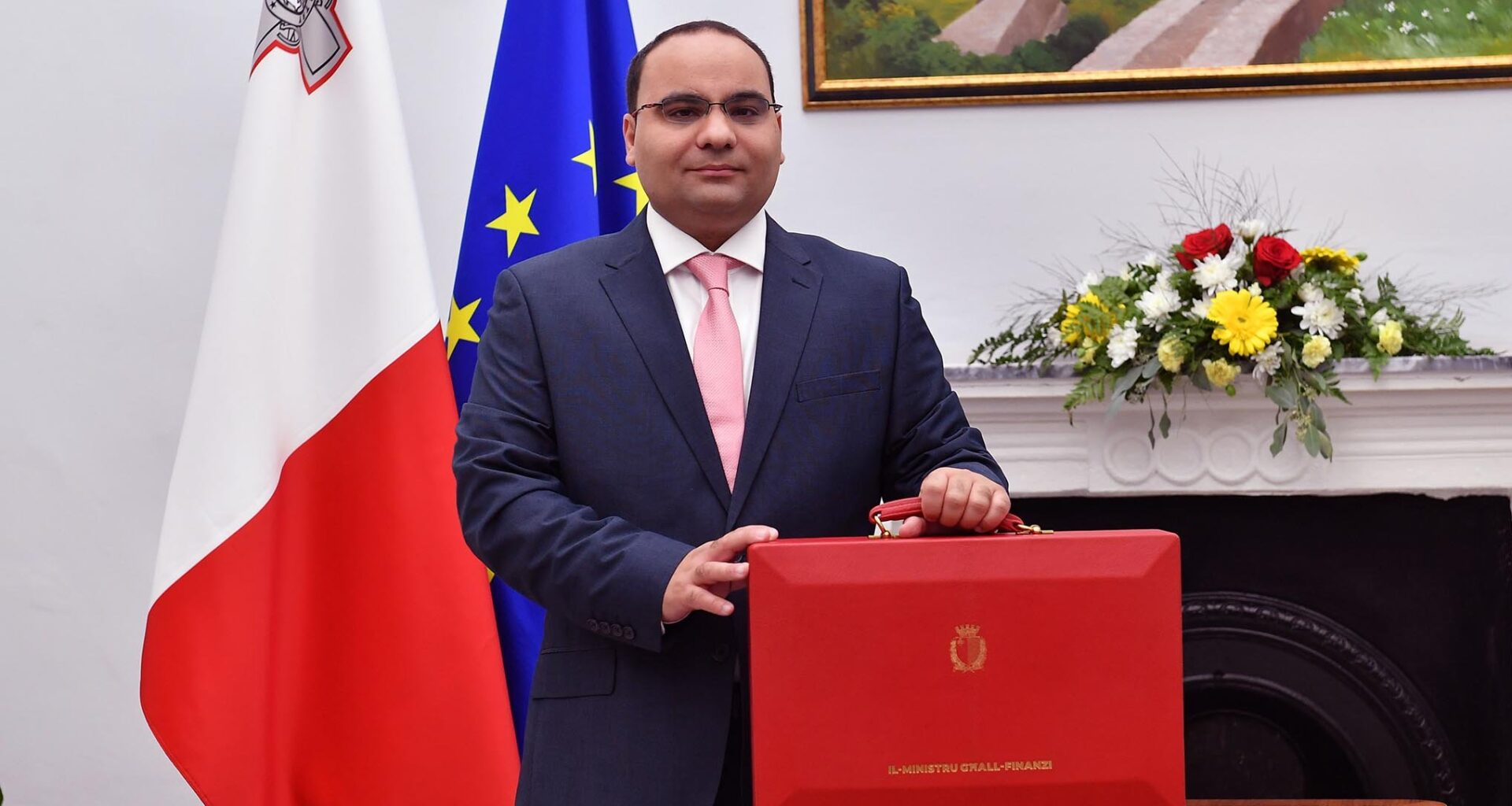
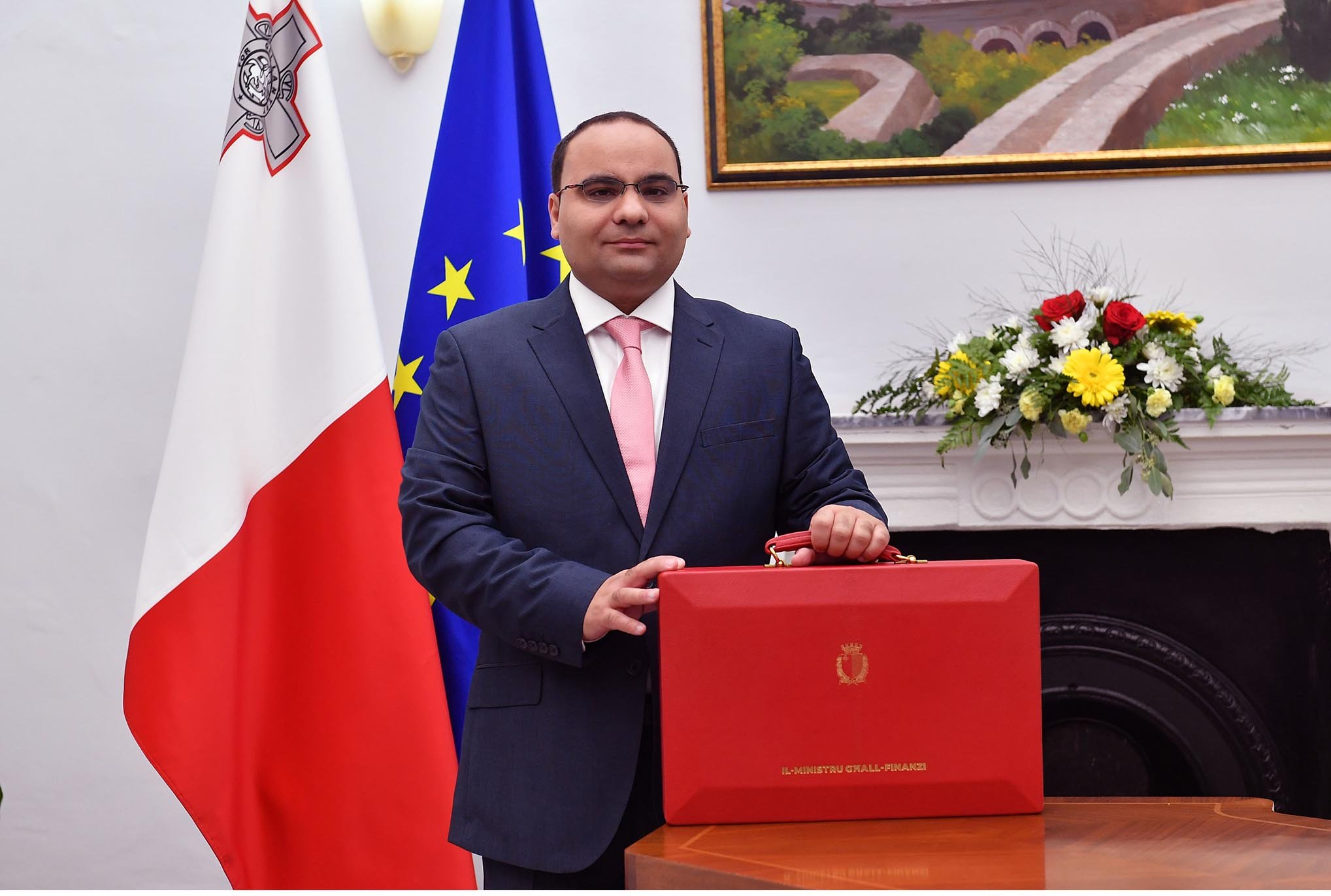
 Traditional photoshoot of the Minister in his office just prior to his
departure to the President’s Palace
Minister for Finance leaves MFE (DOI)
The Nationalist Party has seized upon warnings from the government’s own fiscal watchdog, arguing that the Labour administration’s financial mismanagement has become so severe that even its handpicked experts are sounding the alarm.
Shadow minister for finance Adrian Delia and shadow minister for the economy Jerome Caruana Cilia issued a statement highlighting the Malta Fiscal Advisory Council’s latest assessment, which warns that government spending is placing the country in a vulnerable position and calls for strengthening Malta’s public finances.
In its 19 December report assessing the Draft Budgetary Plan 2026, the MFAC, a group of experts appointed by the finance minister, expressed concern that “Malta has significantly exceeded its expenditure commitments under the Medium-Term Fiscal Structural Plan and Excessive Deficit Procedure, largely due to exceptional spending in 2024.”
While the government had initially planned no growth in net expenditure for 2025 to correct this deviation, the DBP26 now projects a 5.8% increase. The Council noted this growth exceeds recommended expenditure ceilings “despite that Malta is benefiting from the European Union’s most flexible limit and strong economic growth.”

The MFAC warned that “high spending leaves Malta vulnerable if economic conditions weaken” and projected that Malta would “continue breaching the expenditure path threshold for the remainder of the forecast period.”
The council calculated cumulative deviations from the net expenditure path at 2.19% and 1.44% of GDP in 2025 and 2026 respectively, significantly exceeding the 0.6% control account threshold.
The council’s third recommendation particularly resonated with opposition warnings. It emphasised “the importance of using fiscal policy as a strategic enabler to raise productivity and strengthen Malta’s long-term competitiveness,” calling for prioritising “productive public investment, particularly in infrastructure, education, skills, and innovation” to “improve labour and capital productivity, support higher value-added economic activity, and raise the country’s growth potential in a sustainable manner.”
Delia and Caruana Cilia noted this “fully mirrors the warnings repeatedly issued by the Partit Nazzjonalista and several constituted bodies ahead of the most recent budget – warnings which Robert Abela’s Government chose to ignore entirely.”
The warnings represent the latest in a consistent pattern of concern from the fiscal watchdog. Over recent years, the MFAC has repeatedly cautioned that Malta’s economic model, relying on domestic demand and labour-intensive growth, is “unsustainable” and places excessive strain on infrastructure and environment.
The opposition statement highlighted that Malta is already under the European Commission’s Excessive Deficit Procedure, with the Commission issuing a clear warning in November that unless the government changes course, it would be “compelled to take further steps against Malta, posing a direct threat to the country’s sovereignty.”
Over the past year, Malta’s national debt has reached €11 billion, with the Labour government paying more than €260 million in interest on its debt in just one year. The Auditor General has similarly warned that spending on interest is “crowding out investments that would otherwise promote economic growth and social development.”
The MFAC’s first recommendation urged the government to “refrain from further inflating expenditure and ensure compliance with the expenditure ceiling,” while its second recommendation pressed authorities to “use the present favourable economic conditions to strengthen Malta’s public finances,” directing any extra revenue towards reducing the deficit and rebuilding fiscal buffers through “fiscal restraint in non-productive expenditure.”
The council also expressed concern that Malta would not meet the 31 December 2025 deadline to update the Fiscal Responsibility Act in line with the new EU economic governance framework, calling for “stronger engagement, transparency, and parliamentary support to ensure a modern and credible fiscal framework.”
The PN concluded by calling on the government to “listen to its own experts, the Auditor General, European institutions and constituted bodies, and to stop burying its head in the sand,” arguing that “Malta deserves financial accountability and fiscal prudence, where taxpayers’ money is invested in initiatives that genuinely deliver returns and improve people’s quality of life.”