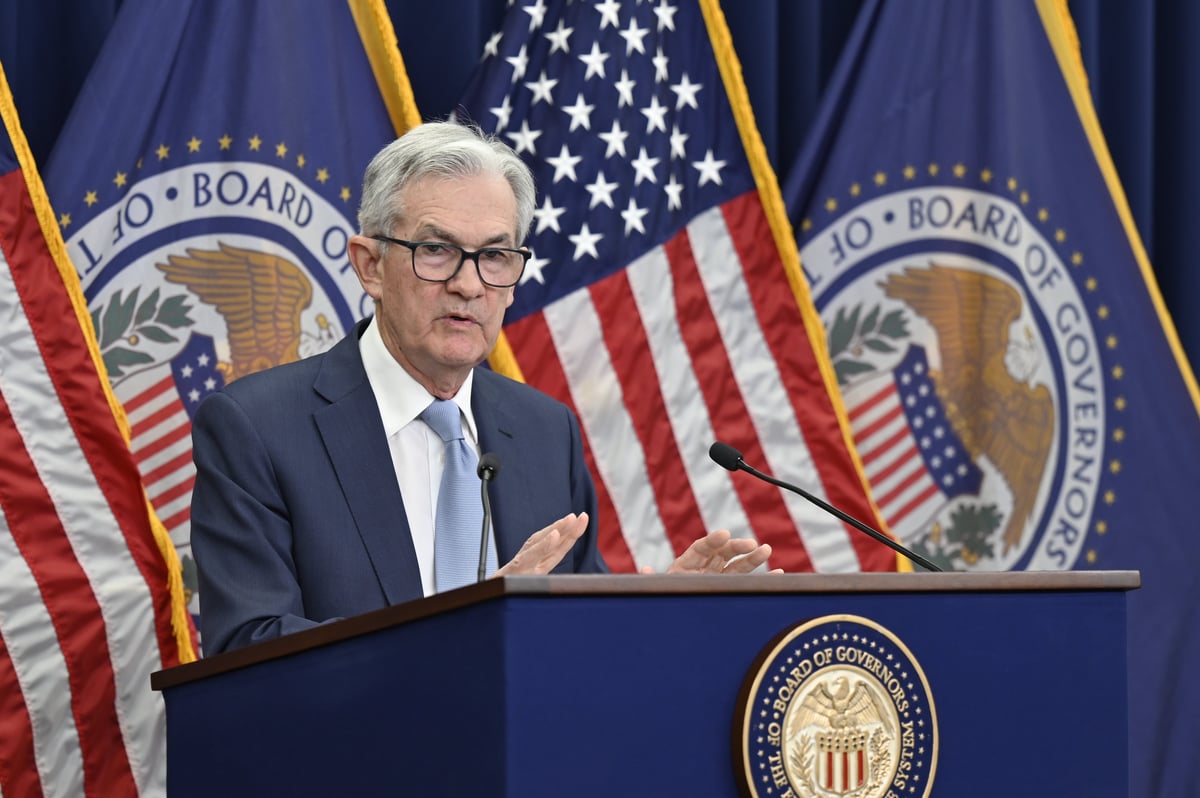
Several Federal Reserve officials have commented on the stock market’s elevated valuation.
The S&P 500 (^GSPC +0.64%) advanced 16% in 2025, the third consecutive year where the benchmark index has posted double-digit returns. However, the stock market’s winning streak could come to an end in 2026. Midterm election years are typically difficult for investors, and valuations are elevated by historical standards.
In September, Federal Reserve Chairman Jerome Powell warned, “By many measures… equity prices are fairly highly valued.” The S&P 500 has increased since then and valuations have become more stretched. In fact, the index currently has one of its most expensive price tags in history.
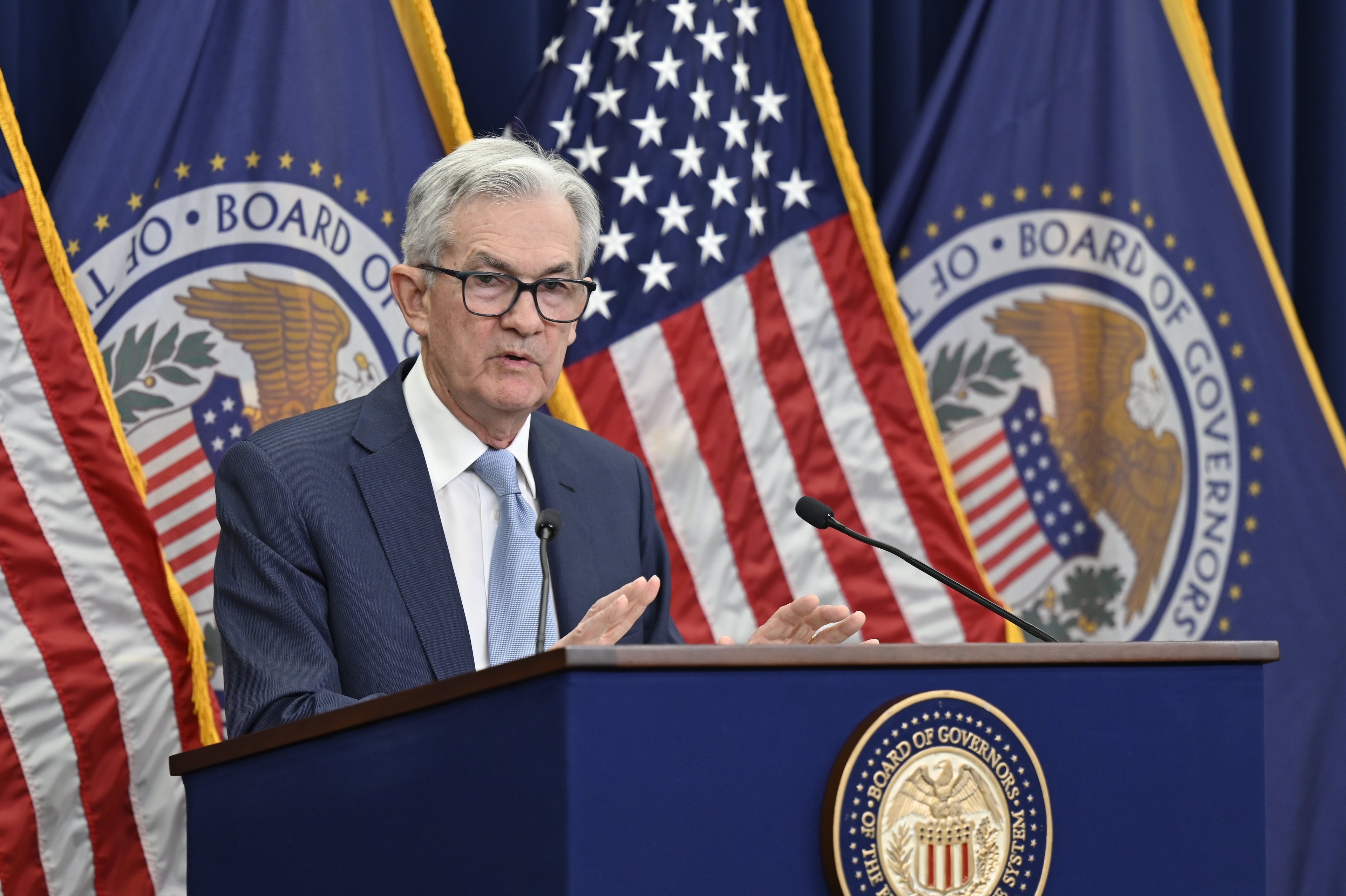
Image source: Official Federal Reserve Photo.
The stock market has typically performed poorly during midterm election years
The S&P 500 has been through 17 midterm elections since its creation in 1957, and it has returned an average of 1% (excluding dividends) during those years. That is well below the annual average of 9% since 1957. The S&P 500 has performed particularly poorly during midterm elections when a new president holds office. The index has declined by an average of 7% in those years.
Why does that happen? Midterms elections create policy uncertainty, especially because the political party of the current president tends to lose seats in Congress. Markets tend to fall during periods of uncertainty because investors are unsure where to put their money. Will the political party in power lose enough seats in Congress to disrupt the president’s economic agenda?
Fortunately, policy uncertainty clears quickly. The six months after the midterm elections (i.e., November to April) have historically been the strongest of the four-year presidential cycle, according to Carson Investment Research. The S&P 500 has historically returned an average of 14% during that period.
The Federal Reserve warns investors about the stock market’s elevated valuation
Chairman Jerome Powell is not the only Federal Reserve official to warn investors about the stock market’s rich valuation. Minutes from the October FOMC meeting stated, “Some participants commented on stretched asset valuations in financial markets, with several of these participants highlighting the possibility of a disorderly fall in equity prices.”
Fed Governor Lisa Cook echoed that sentiment in November. “Currently, my impression is that there is an increased likelihood of outsized asset price declines.” She also mentioned the central bank’s most recent Financial Stability Report, which warned that the S&P 500’s forward price-to-earnings (PE) ratio was “close to the upper end of its historical range.”
Indeed, the S&P 500 currently has a forward PE multiple of 22.2, according to Yardeni Research. That is a meaningful premium to the 10-year average of 18.7. In fact, the S&P 500 has only traded above 22 times forward earnings during three periods in history, and the index eventually fell sharply all three times.
Dot-com bubble: The S&P 500’s forward PE ratio topped 22 during the late 1990s as investors paid increasingly absurd prices for speculative internet stocks during the dot-com bubble. The S&P 500 had dropped 49% from its high by October 2002.
COVID-19 pandemic: The S&P 500’s forward PE ratio topped 22 in 2021 as investors failed to anticipate how much pandemic-driven supply chain disruptions and stimulus programs would raise inflation. The S&P 500 had dropped 25% from its high by October 2022.
President Trump’s election: The S&P 500’s forward PE ratio topped 22 in 2024 as investors focused on the positive aspects of President Trump’s reelection, but underestimated how profoundly his tariffs would shake the market. The S&P 500 had dropped 19% from its high by April 2025.
Here’s the big picture. A forward PE ratio above 22 does not signal an imminent market crash, but the S&P 500 has always eventually declined sharply after reaching such an expensive valuation. However, when considered alongside the index’s historical performance during midterm election years, it’s reasonable to assume the stock market could struggle in 2026.