This story has been updated.
By Gary Gately
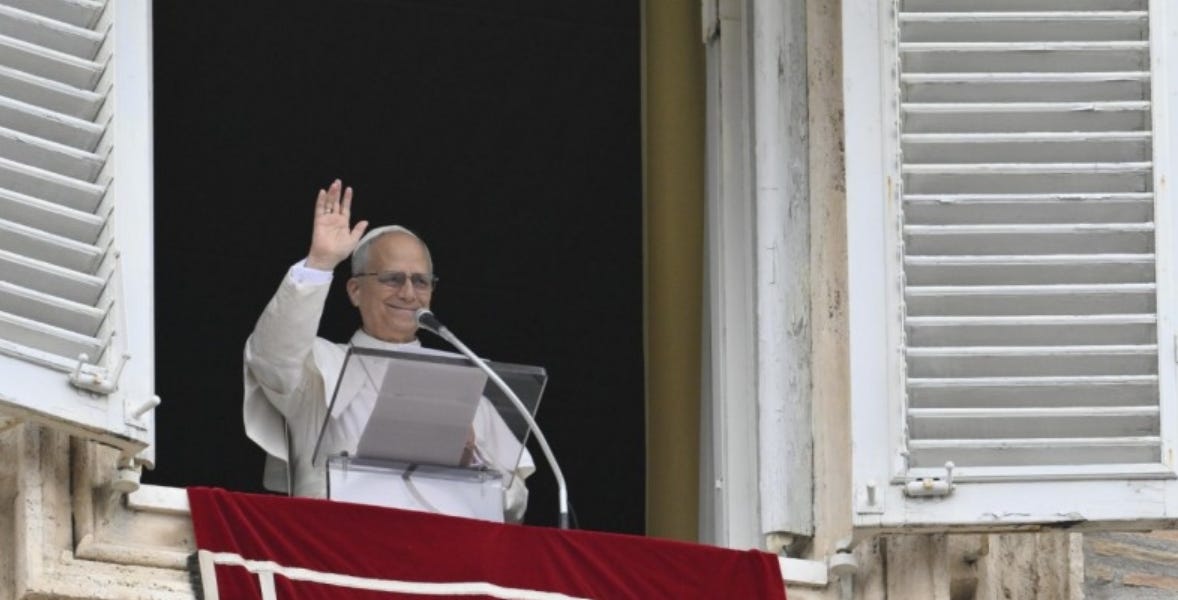
Pope Leo XIV expressed “deep concern” Sunday over the U.S. military’s capture of Venezuelan President Nicolás Maduro and his wife while calling for respect for the nation’s sovereignty and protection of human and civil rights.
“The good of the beloved Venezuelan people must prevail over every other consideration,” Pope Leo told thousands of pilgrims gathered in a rain-soaked St. Peter’s Square. “This must lead to overcoming violence and taking up a journey of justice and peace, guaranteeing the sovereignty of the country, ensuring the rule of law enshrined in the Constitution, respecting the human and civil rights of all and working to build a peaceful future of cooperation, stability and harmony.”
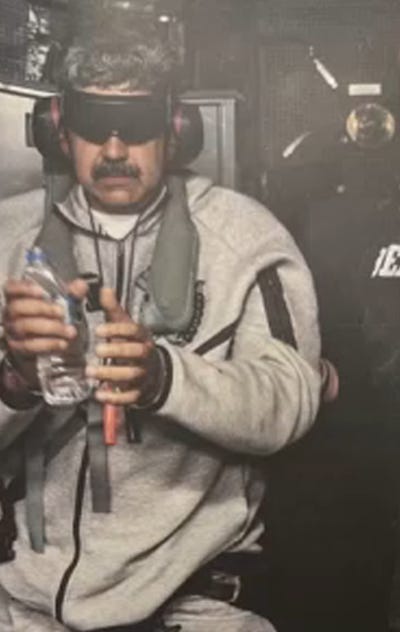
The first U.S.-born pope’s comments, at the end of his Angelus address, came a day after predawn U.S. military raid in Venezuela’s capital, Caracas, culminating in the capture of Maduro, and his wife, Cilia Flores, at their home. Maduro and Flores appeared Monday before a U.S. District Court judge in New York to face federal drug trafficking and other charges. During a brief hearing, broadcast on monitors outside the courtroom, the 63-year-old Maduro and Flores pleaded not guilty, and Maduro, speaking in Spanish, told the judge: “I’m innocent. I’m not guilty. I am a decent man. I am still president of my country.”
The Catholic publication Crux, meanwhile, reported Monday that Leo and Vatican diplomats are closely monitoring the Venezuela situation and international reaction and that if the pope is taking cues from anyone about how to respond, it would be the Venezuela’s Catholic bishops.
The bishops, along with the nation’s Catholic priests, have often spoken out against the Maduro regime and demanded the release of political prisoners.
Since the raid, which killed at least 80 people, the bishops have condemned all forms of violence and urged prayers for peace, but have not commented directly on the U.S. military action or the capture of Maduro and his wife.
The nation’s bishops’ conference said in a statement posted on X Saturday: “In light of the events that our country is experiencing today, let us ask God to grant all Venezuelans serenity, wisdom, and strength. We express our solidarity with those who were wounded and the families of those who died.”
Bishop Juan Carlos Bravo Salazar of Petare, just outside Caracas, said in a statement that “our strength and hope are in the Lord of life and peace,” calling on people to “maintain serenity.” “So often,” he added, “who suffers in these situations is the people, not the authorities.”
The Vatican confirmed that the 70-year-old Leo had met Monday with Cardinal Christopher Pierre, the papal nuncio to the U.S., the Vatican’s top diplomat to the American government and the country’s Catholic Church.
On Sunday, speaking from the window of his studio overlooking St. Peter’s Square, Leo invoked the intercession of Venezuela’s patroness, Our Lady of Coromoto, the country’s title for the Virgin Mary, and its first two saints, St. José Gregorio and St. María Carmen Rendiles Martínez, both of whom the Holy Father canonized in October.
Leo also urged “special attention to the poorest” in the nation, where an economic collapse, shortages of food and medicine, political repression and widespread human rights prompted about 1 in 5 Venezuelans to flee the country during Madura’s 12-year tenure. More than 8 million of them have done so since 2014 in the largest mass exodus in modern Latin American history, according to the United Nations refugee agency.
Roughly 1.6 million of the Venezuelan refugees settled in Peru, and the former Cardinal Robert F. Prevost had ministered to many of them as bishop of Chiclayo in northern Peru from 2015 to 2023.
In early December, Leo had urged the Trump administration not to resort to military intervention in Venezuela.
On the papal plane as he returned to Rome after his apostolic trips to Turkey and Lebanon, the leader of the 1.4 billion-member Catholic Church told reporters that the Vatican was working with its ambassador and the bishops’ conference of Venezuela “to calm the situation, seeking above all the good of the people, because in these situations it is often the people who suffer, not the authorities.” He said he believes “it is better to seek dialogue within this pressure, including economic pressure, but looking for another way to bring about change, if that is what the United States decides to do.”
But on Sunday, Leo stopped short of directly criticizing President Donald J. Trump or Saturday’s U.S. military action.
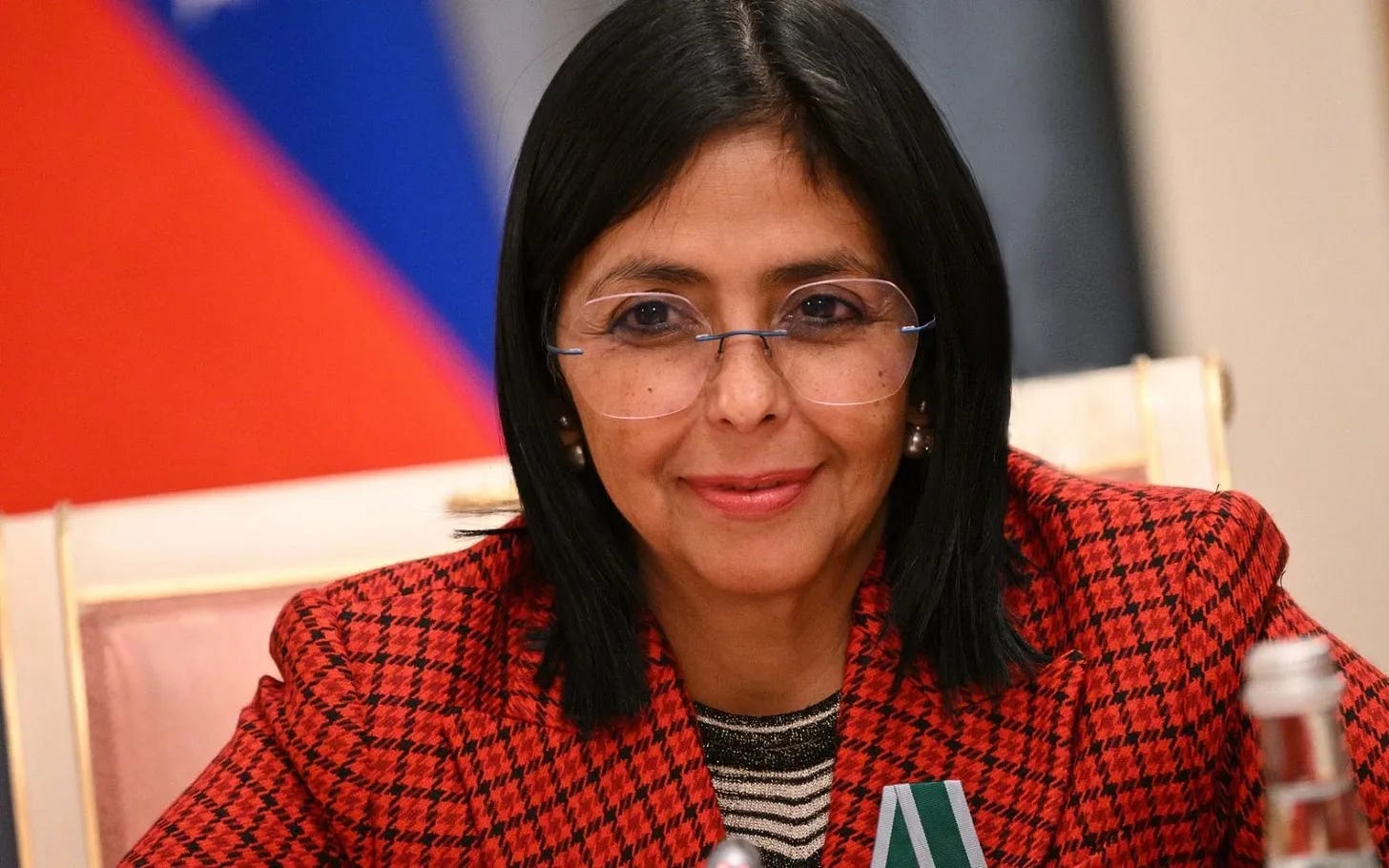
For his part, Trump once again asserted Sunday night that the U.S. was “in charge” of Venezuela, where Delcy Rodríguez, who had served as Maduro’s vice president since 2018, was sworn in Monday as interim president.
Earlier Sunday, Trump delivered a warning to Rodríguez in a telephone interview with The Atlantic: “If she doesn’t do what’s right, she is going to pay a very big price, probably bigger than Maduro.”
Hours later, the 56-year-old Rodríguez took on a conciliatory tone, saying in an Instagram post that her government considers it “a priority to move towards a balanced and respectful relationship between the U.S. and Venezuela” and pledging to work with the U.S. “on an agenda for cooperation that is aimed towards shared development.”
That stands in sharp contrast to her remarks in a televised address Saturday when she denounced the U.S. actions as “an atrocity” that violates international law and proclaimed that Maduro remained “the only president of Venezuela.”
But some critics questioned why Trump chose to continue working with a key player in the autocratic regime of the ousted Maduro, while dismissing the possibility of María Corina Machado, the 58-year-old opposition leader and 2025 Nobel Peace Prize winner, becoming Venezuela’s interim president.
Trump told reporters at a news conference Saturday at his Mar-a-Lago resort that while Machado is a “nice woman,” it would “be very tough for her to be the leader” because she “doesn’t have the support or the respect within the country.”
But The Washington Post, quoting anonymous sources close to the White House, reported Sunday that Trump’s refusal to support Machado actually stemmed from her decision to accept the Nobel Peace Prize, which the president has coveted.
While Machado had dedicated the award to Trump, he viewed her accepting it as the “ultimate sin,” one source told The Post. “If she had turned it down and said, ‘I can’t accept it because it’s Donald Trump’s,’ she’d be the president of Venezuela today,” the source said.
Trump also hinted at another motive Saturday, saying that at least for the short term, the U.S. would oversee extraction of oil in Venezuela. “The money coming out of the ground is very substantial,” he said.
Trump’s dismissive remarks about Machado, despite her widespread popularity in Venezuela, left opposition leaders in the nation stunned and disheartened, Bloomberg News reported Monday, quoting anonymous sources. But some of them told the news agency that they cling to hope that the Trump administration would ultimately include Machado and other opposition leaders into the Venezuelan government.
Machado, a Catholic from a wealthy Venezuelan family, had been a vocal critic of Maduro and organized the 2024 presidential campaign of opposition candidate Edmundo González, who ran after Maduro barred Machado from running. González won the election by a 2-1 margin, but Maduro claimed victory and refused to leave office. González sought exile in Spain, where he recorded a video Sunday calling the capture of Maduro “an important step, but not enough” and demanding “as president of Venezuela” that the army “enforce the elections that his political movement won in 2024.”
The Nobel committee recognized Machado “for her tireless work promoting democratic rights for the people of Venezuela and for her struggle to achieve a just and peaceful transition from dictatorship to democracy.”
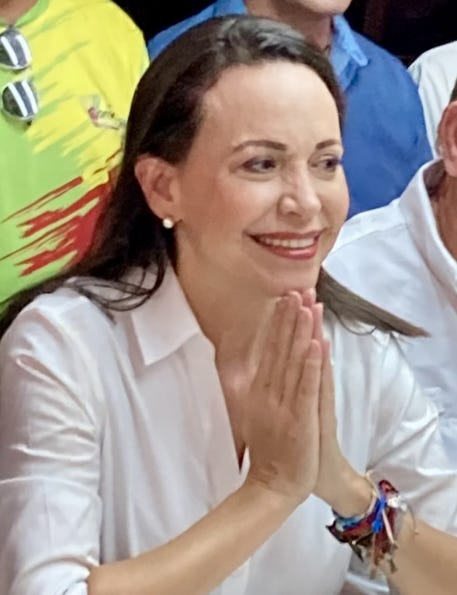
Machado, who went into hiding after the disputed election and whose whereabouts remain unknown, has strongly supported the Trump administration, including its attacks targeting “narco-terrorists” off Venezuela, killing at least 115 people in what UN experts call “extrajudicial executions” that violate international law.
The predawn raid that led to the capture of Maduro and his wife drew praise from Machado, who wrote in an X post that it had “fulfilled its promise to enforce the law.”
In the post, which has attracted more than 20 million views, Machado wrote in Spanish: “The time for freedom has come! Nicolás Maduro from today will face international justice for the atrocious crimes committed against Venezuelans and against citizens of many other nations…. Today we are ready to assert our mandate and take power. Let us remain vigilant, active, and organized until the democratic transition is complete.”
The U.S.’s raid and forced ouster of Maduro drew decidedly mixed reactions.
In a joint statement, the Latin American countries Brazil, Chile, Colombia, Spain and Uruguay condemned the U.S. actions, saying they violated the “fundamental principles of international law” and “set an extremely dangerous precedent” that threatens regional peace and security.”
But right-wing Latin American leaders praised the U.S. actions.
Argentine President Javier Milei posted on X: “We celebrate the fall of the narcoterrorist dictator Maduro.” And Ecuador’s conservative president, Daniel Nobo, delivered a warning in an X post to followers of Hugo Chávez, Maduro’s predecessor and political mentor: “To all the narco chavista criminals, your time is coming. Your structure will completely collapse across the entire continent.”
UN Secretary-General António Guterres, through his spokesman, said the U.S. actions represent “a dangerous precedent,” adding that he’s “deeply concerned that the rules of international law have not been respected.”
Pax Christi International, the Catholic peace movement, denounced the U.S. military raid as a “grave violation of international law,” an “affront to world peace” and “a direct threat to the foundations of sovereign coexistence among States.”
The European Union said through a spokesperson that a “democratic transition” in Venezuela must include González and Machato.
French President Emmanuel Macron said in a post on X that González would play a key role in a transition of power that “must be peaceful, democratic, and respectful of the will of the Venezuelan people.” In another post, Macron said he had spoken to Machato Saturday. “Like all Venezuelans, she can count on France’s support to raise her voice in favor of a peaceful, democratic transition that fully respects the sovereign will of the Venezuelan people,” the prime minister wrote.
President Miguel Diaz-Canel of Cuba, which Trump said Sunday “looks like it is ready to fall,” accused the U.S. of a “criminal attack.”
China, Russia, North Korea, Iran and Belarus — all of which had been allies of the Madura regime — also condemned the U.S. raid.
Read the indictment charging Venezuelan President Nicolas Maduro, his wife, his son and three other people with federal drug trafficking and other charges.
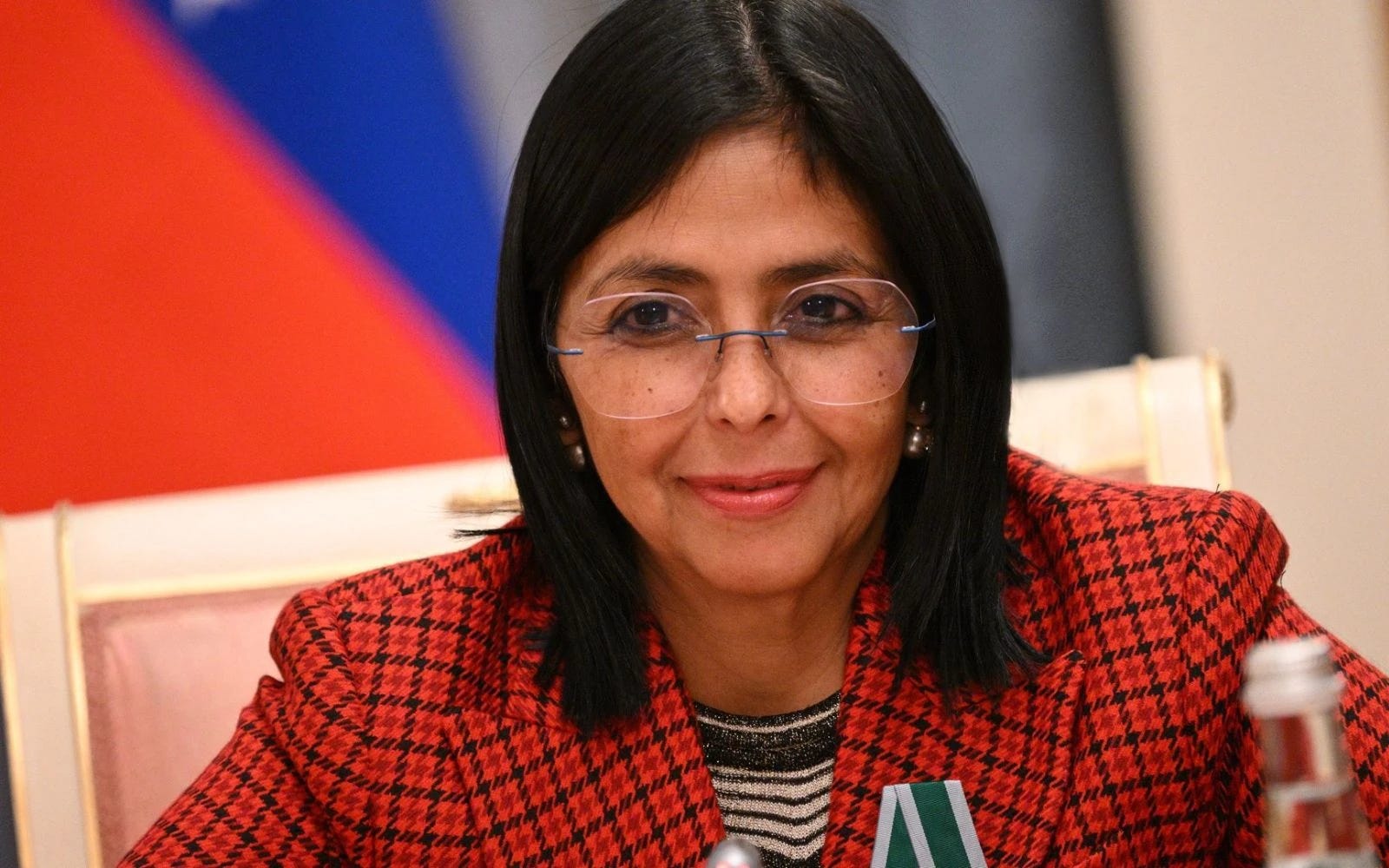
PARIS: French President Emmanuel Macron said on Saturday that Venezuelan opposition leader Edmundo González Urrutia should help oversee the change in power in Venezuela, after the capture of President Nicolas Maduro by US armed forces.
“The transition to come must be peaceful, democratic, and respectful of the will of the Venezuelan people. We hope that President Edmundo González Urrutia, elected in 2024, will be able to ensure this transition as quickly as possible,” wrote Macron on X.
Macron added in a subsequent message on X that he had also spoken to Venezuelan opposition leader and 2025 Nobel Peace Prize winner Maria Corina Machado.
Read the federal indictment charging Venezuelan President Nicolas Maduro, his wife and four other people with narco-terrorism conspiracy and other charges