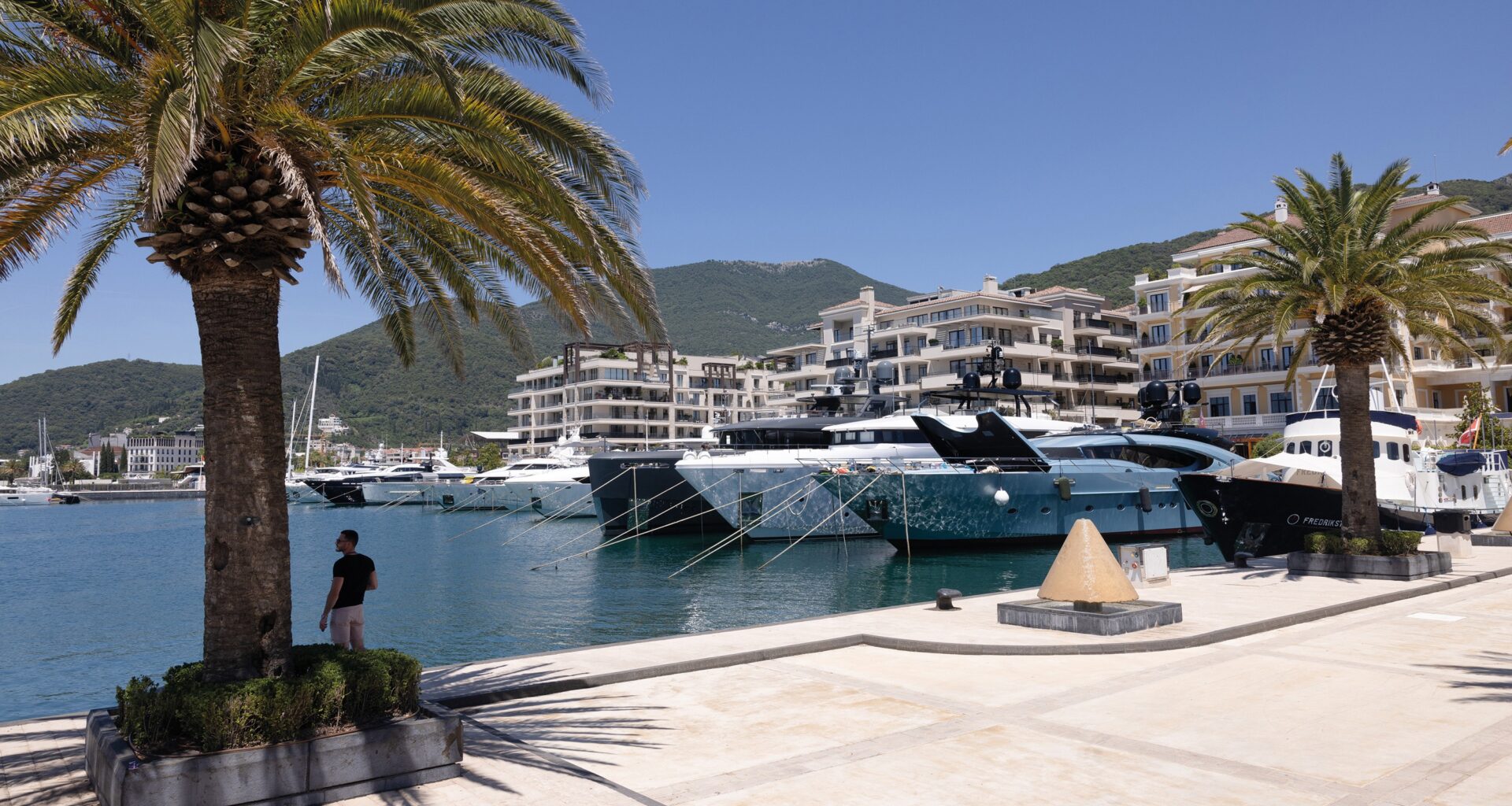
The EU sent its strongest signal yet last month that Montenegro is at the front of its membership queue. Speaking in the resort city of Tivat on 13 October, European Commission president Ursula von der Leyen said Montenegro is “well on track to join our union”.
The Balkan country, which already uses the euro, has opened all 33 negotiating ‘chapters’, of which seven have been provisionally closed. This makes Montenegro the most advanced of the seven countries currently negotiating for membership, with the government hoping to be inside the bloc by the end of the decade.
Growing up
When Montenegro declared independence in 2006, the country faced an uncertain future. With just 600,000 people, few natural resources and a location outside major trading routes, it looked to be in an unenviable position. The country did, however, possess two key assets. The first was natural: its stunning beauty and rich history, which are recognised with four World Heritage Sites. The second was due to policy choices: its ability to lure investors and high-net-worth individuals with low taxes and light-touch regulation.
The Porto Montenegro development, just outside Tivat on the shores of the Bay of Kotor, is one of the fruits of these efforts. Canadian mining magnate Peter Munk spotted the potential of a derelict shipyard to be transformed into a luxury tourism development. Now owned by the Investment Corporation of Dubai, the site is home to one of the world’s largest superyacht marinas, plus an exclusive property development offering a mix of residences and hotel rooms.
David Margason, managing director of Porto Montenegro, said being outside the EU “was a good way for the project to start”.
“A business-friendly tax environment certainly was very important,” he says, noting that Porto Montenegro enjoyed reduced VAT on marine services, while yacht owners benefited from duty-free fuel.
Now, with the country seemingly heading towards the EU, the economy will need to “adjust and mature”, Margason says. Montenegro has already scrapped a controversial ‘citizenship by investment’ programme that allowed wealthy foreign nationals — including many that reside in Porto Montenegro — to acquire a Montenegrin passport. Overall, however, Margason is enthusiastic about membership.
“There are certain freedoms that come with being outside the European behavioural regime. But that regime is there for a reason, and the reason that it’s there is to give people confidence, comfort and a belief that you live in a meritocracy, and that you live in a balanced and equitable society,” he says. “For all the things that we may lose, we will gain the halo of that, and I think that will have an immediate positive effect on property values — particularly commercial property values — trading businesses and hotels and so on.”
A positive adjustment?
Petra Čelebić, country lead for Montenegro at advisory Aretera Public Affairs, says that accession by 2030 is “plausible” for Montenegro, given that multiple negotiating chapters are close to completion.
“Montenegro’s small size and advanced status lower the integration ‘cost’ for the EU, making it the easiest candidate to absorb if benchmarks are met,” she notes. Concerns over immigration have seen the pace of EU expansion stall in recent years (Croatia was the last country to join, back in 2011). Yet even if Montenegro does suffer a “brain drain” — something that Čelebić describes as a “real risk” — the effect on the EU as a whole would be negligible.
Montenegro’s former Europe minister Jovana Marović concedes that some parts of the economy “may feel short-term strain” as they adjust to the competitive pressures that come with EU membership.
“But that adjustment is precisely what Montenegro needs,” she adds. “Montenegro may lose some opportunistic investors, but it will gain access to more stable, high-quality FDI.”
Investing in infrastructure
Corporate lawyer Vladimir Radonjic is also positive about membership, arguing that joining the EU “will be a confidence boost for Montenegro”. Yet he says membership “will not resolve all of our problems”, noting the country needs to reform its bloated bureaucracy. Another priority is investing in infrastructure, he says, pointing to the poor state of Tivat airport, one of the key gateways for foreign visitors.
A drawn-out process to award a concession to international companies to operate the airports in Tivat and the capital Podgorica is inching closer to a conclusion. Korean company Incheon International Airport Corporation was again named as the preferred bidder in November, after the government was forced to review a previous decision on the award. Notwithstanding further legal challenges, a contract could be signed by early 2026.
This is one of several developments around the Bay of Kotor that suggest Montenegro’s ‘wild west’ days could be drawing to a close. Foreign investors and super-wealthy residents are looking towards the EU era with a mix of excitement and apprehension.