PARIS, Jan 5 (Reuters) – More than 145 countries agreed on Monday to amend a 2021 global minimum corporate tax agreement, addressing Washington’s concerns the rules could penalise U.S. multinational companies.
The Organisation for Economic Cooperation and Development said the fresh package preserves the 15% global minimum tax framework designed to ensure large multinationals pay a baseline tax wherever they operate.
The update includes simplifications and carve-outs to align U.S. minimum tax laws with global standards, accommodating earlier objections raised by the Trump administration.
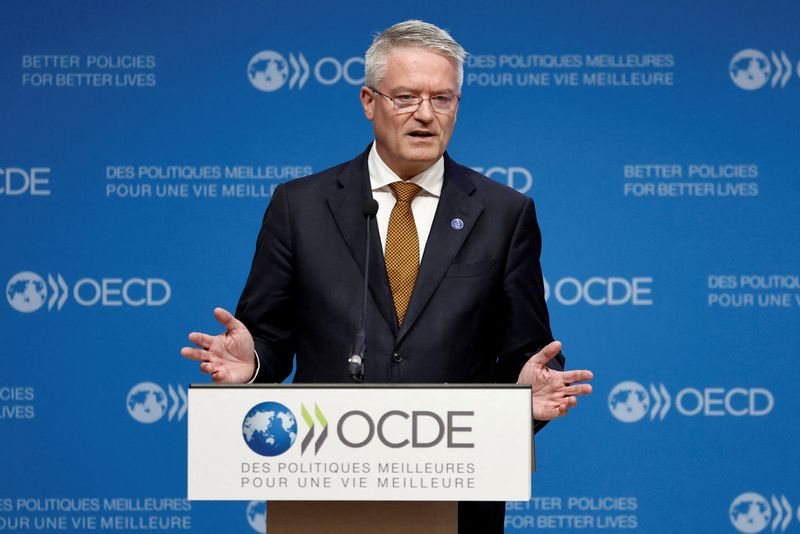
OECD head Mathias Cormann said in a statement the arrangement “enhances tax certainty, reduces complexity, and protects tax bases.”
U.S. President Donald Trump declared in an executive order when he took office nearly a year ago that the OECD global minimum tax deal would have “no force or effect” for the U.S.
Treasury Secretary Scott Bessent said Monday’s agreement would ensure that U.S.-headquartered companies would only be subject to U.S. global minimum taxes and preserve benefits of U.S. research and investment tax credits.
“This agreement represents a historic victory in preserving U.S. sovereignty and protecting American workers and businesses from extraterritorial overreach,” Bessent said in a statement. He pledged to continue engagement with other countries on a “constructive dialogue” on taxation of the digital economy, a reference to a second, more difficult pillar of the OECD tax framework.
As of October, more than 65 countries had begun implementing the 2021 global tax deal, which requires nations to apply a 15% corporate tax or impose a top-up levy on multinationals booking profits in jurisdictions with lower tax rates.
The revised agreement solidifies global backing after G7 countries, including the U.S., brokered a deal in June exempting some U.S. companies from parts of the original framework.
A broader agreement, reached on Monday after Washington pressured holdouts to back the updated arrangement, helps stabilise the global deal.
The pact’s future was thrown into doubt last January when President Donald Trump criticized the 2021 deal negotiated by the Biden administration, saying it wasn’t applicable in the U.S.
The Trump administration threatened retaliatory taxes against countries that imposed levies on U.S. firms under the 2021 deal.
(Reporting by Leigh Thomas; Editing by Bernadette Baum and Nick Zieminski)