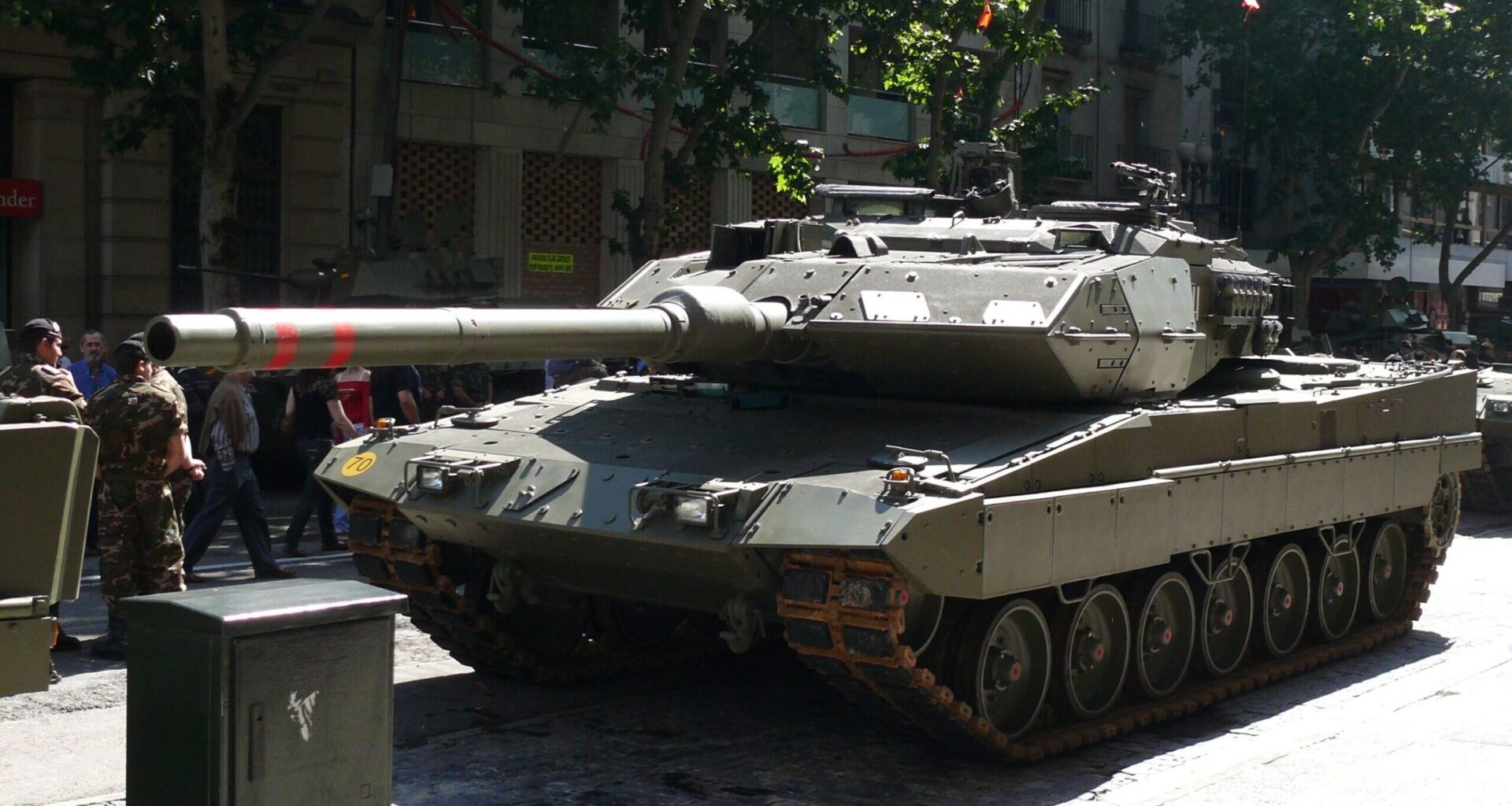

Spain’s arms procurement agency has awarded Indra Sistemas a research and development contract to support the development of a future main battle tank for the Spanish Army.
The two-year, 45-million-euro ($53-million) contract forms part of the army’s special modernization program aimed at ensuring operational continuity beyond 2040, when the Leopard 2E main battle tank is expected to be withdrawn from service.
The effort focuses on developing key technologies for a future land-based combat platform, including advanced electronics, integrated sensor architectures, command-and-control systems, active protection solutions, enhanced mobility, and improved situational awareness.
Its design is expected to deliver increased effective range without extending barrel length or compromising overall vehicle maneuverability.
Futuristic Capabilities
Additional anticipated capabilities include the integration of unmanned ground vehicles (UGVs) and unmanned aerial systems (UAS), either individually or in coordinated swarms.
Interoperability with networked UGVs and UAS, as well as the ability to command and operate swarming assets, is viewed as a decisive tactical advantage on the modern battlefield.
“The program’s scope encompasses the development of a next-generation armoured platform designed to operate in highly demanding environments, with a level of performance far exceeding current capabilities,” the Spanish government explained in a notice.
Pan-European Platform
Beyond replacing the Leopard 2E, the platform is also described as a potential successor to the French Leclerc main battle tank, suggesting possible export prospects to other European and international customers.
France and Germany are already pursuing their own next-generation main battle tank program, intended to replace both the Leopard and Leclerc fleets.
The effort involves German and French firms including KNDS Deutschland, KNDS France, Rheinmetall Landsysteme, and Thales.
Although Spain is not currently part of that initiative, the two programs could converge in the future given their shared objectives, according to Spanish defense outlet InfoDefensa.