Published on
January 6, 2026
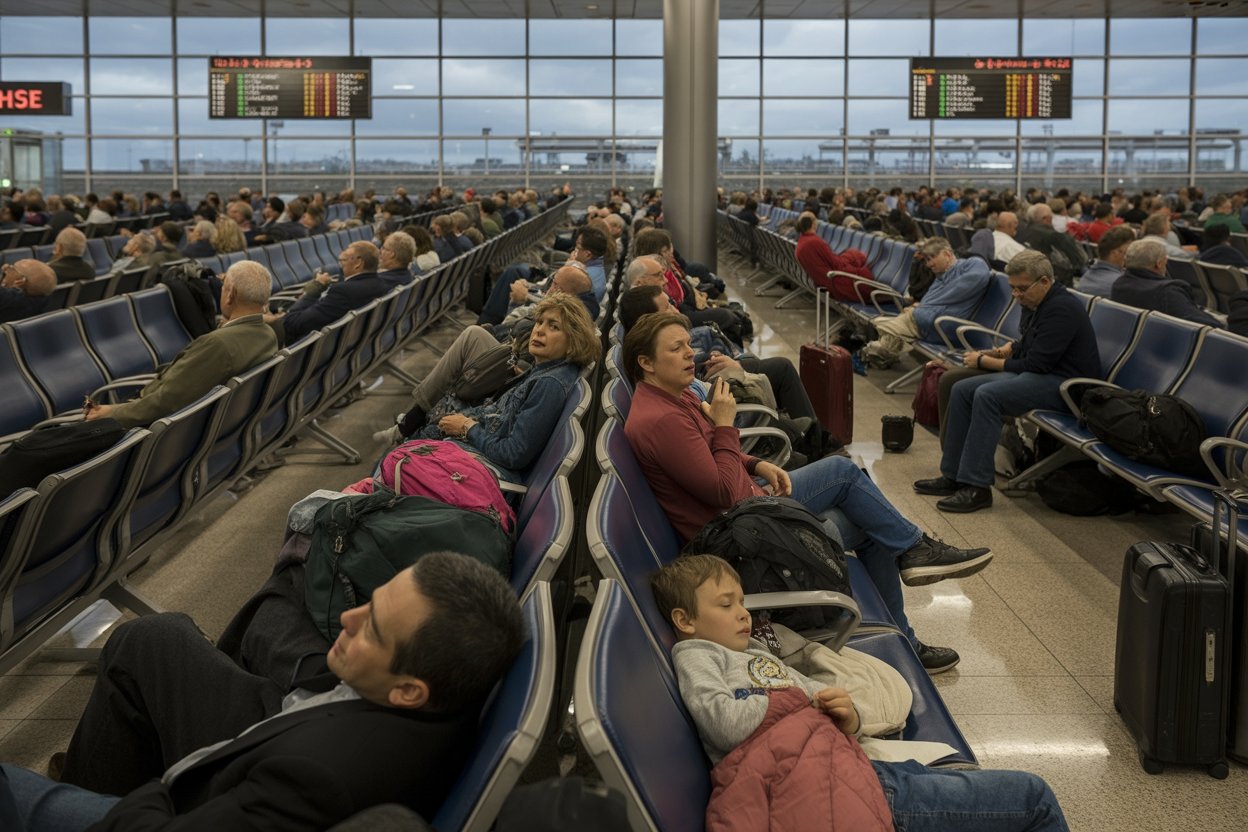
Air travel across Germany experienced significant disruption this week as airlines cancelled a total of 60 scheduled departures at five major airports: Hamburg, Düsseldorf, Berlin-Brandenburg, Munich, and Frankfurt am Main. These European flight cancellations primarily affected short-haul routes connecting Germany with major international hubs, including Amsterdam Schiphol, Paris Charles de Gaulle, and Liverpool John Lennon Airport. The cancellations unfolded over multiple days, indicating sustained operational strain rather than isolated schedule changes.
The repeated suspension of hub-focused routes reduced connectivity for both business and leisure travelers and created knock-on effects across wider European networks.
Hamburg Airport: Concentrated Disruptions on the Amsterdam Route
Hamburg Airport recorded ten cancelled departures, all serving Amsterdam Schiphol. KLM cancelled the majority of these flights across Monday, Tuesday, and Wednesday, disrupting early-morning, mid-morning, and evening schedules. German Airways also cancelled one afternoon service.
Key impacts included:
Repeated cancellations of KLM1750, KLM1752, and KLM1754Morning departures cancelled as early as 06:05 CETA cancelled Boeing 737-800 evening flightGerman Airways cancelling GER1756 on Monday afternoon
These Hamburg Airport cancellations significantly weakened Hamburg’s access to Amsterdam as a key transfer hub.
Düsseldorf Airport: Hub and International Links Disrupted
Düsseldorf International Airport experienced twelve cancelled departures across multiple carriers. KLM cancelled several Amsterdam-bound flights throughout the day, while German Airways and HOP! also withdrew scheduled services.
Notable cancellations included:
KLM1798, KLM1800, and KLM1804 cancelled on multiple daysGerman Airways cancelling GER1796 and GER1802HOP! cancelling HOP1007 to Paris Charles de Gaulle
These Düsseldorf Airport flight disruptions affected both Netherlands- and France-bound connectivity.
Berlin-Brandenburg Airport: Mixed Hub and Leisure Routes Affected
Berlin-Brandenburg Airport reported thirteen cancelled departures, impacting both major hub connections and leisure routes. KLM cancelled multiple high-capacity aircraft services to Amsterdam across three consecutive days.
Key developments included:
Cancellations of KLM1770, KLM1772, KLM1776, and KLM1778Aircraft ranging from Boeing 737 variants to Airbus A321neoAFR1835 cancelled to Paris Charles de GaulleEasyJet cancelling EZY3496 to Liverpool John Lennon Airport
These Berlin airport cancelled flights reduced both business travel flexibility and leisure travel options.
Munich Airport: Highest Number of Cancellations
Munich International Airport saw the most severe impact, with fourteen cancelled departures across several airlines. The cancellations stretched from early morning to late evening, compounding disruption.
Affected services included:
KLM cancelling KLM1848, KLM1850, KLM1854, and KLM1856Lufthansa cancelling A321 services DLH2304 and DLH2310Regional carriers cancelling CLH2302 and DLA8386HOP! cancelling HOP1423 to Paris Charles de Gaulle
These Munich airport flight cancellations significantly reduced outbound capacity from one of Germany’s busiest hubs.
Frankfurt Airport: Repeated Cuts to Amsterdam Connectivity
Frankfurt International Airport recorded eleven cancelled departures, most of them serving Amsterdam Schiphol. Both full-service and regional airlines cancelled flights across multiple time slots.
Major impacts included:
KLM cancelling KLM1814, KLM1818, and KLM1822Lufthansa cancelling DLH986, DLH998, and DLH1002CityLine cancelling CLH996Discover Airlines cancelling DLA8946German Airways cancelling GER1816
This Frankfurt airport travel disruption weakened one of Europe’s most important hub-to-hub corridors.
Summary of Flight CancellationsAirportNumber of CancellationsPrimary Affected DestinationsHamburg Airport10Amsterdam SchipholDüsseldorf Airport12Amsterdam Schiphol, Paris Charles de GaulleBerlin-Brandenburg Airport13Amsterdam Schiphol, Paris Charles de Gaulle, LiverpoolMunich International Airport14Amsterdam Schiphol, Paris Charles de GaulleFrankfurt International Airport11Amsterdam SchipholTotal60Amsterdam, Paris, LiverpoolWhat This Means for Passengers
The concentration of European flight cancellations on short-haul feeder routes highlights how vulnerable hub-based travel remains. These flights play a critical role in:
Supporting long-haul departuresMaintaining network reliabilityAllowing smooth passenger transfers across Europe
When such cancellations persist over several days, the effects multiply. Missed connections, longer rebooking times, and reduced seat availability become unavoidable, particularly at hub-heavy airports.
For travelers, even a single cancelled feeder flight can disrupt an entire journey. Monitoring airline updates and allowing extra buffer time remain essential when navigating Europe’s interconnected air travel system.
As European flight cancellations continue to affect major German airports, the pattern underscores ongoing operational pressure across the region’s aviation network.
