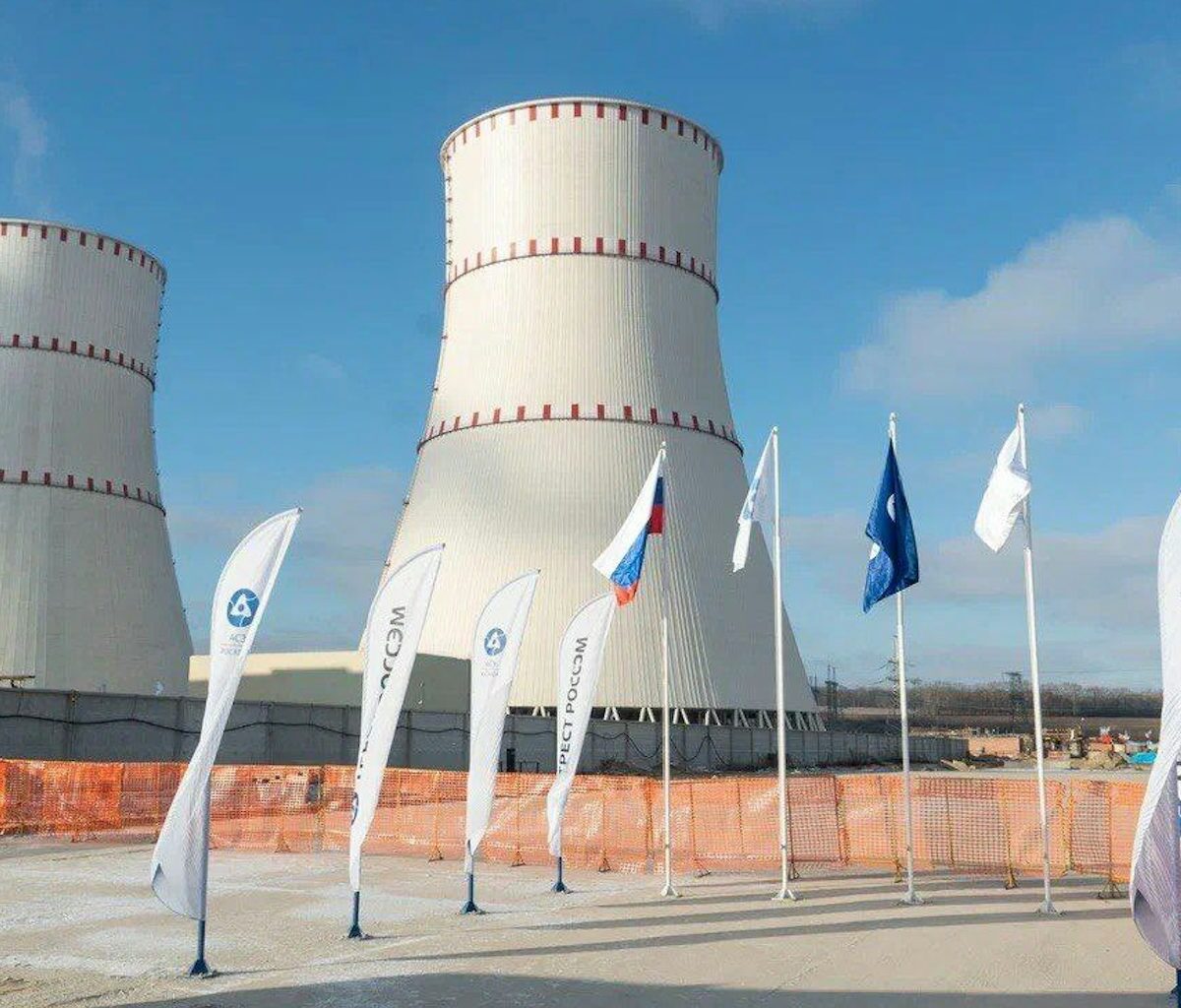
The first new VVER-TOI nuclear power unit at phase two of the Kursk nuclear power station near the border with Ukraine in western Russia has been connected to the grid and reached an output of 240 MW on 31 December, state nuclear corporation Rosatom said.
The capacity of the 1,200-MW unit, Kursk 2-1, will be gradually increased, with safety tests and checks, to 35-40%. This will be followed by a lengthy period of testing and checks until it reaches 100% capacity. Commissioning is expected this year.
Rosatom said the plant is the most powerful nuclear power unit in its fleet.
Kursk 2-1 will be the first of Russia’s Generation III+ VVER-TOI pressurised water reactor (PWR) nuclear plants. The VVER-TOI technology is Russia’s Generation III+ nuclear reactor and the latest version of its large light-water designs.
Kursk 2 is being built to replace four RBMK-1000 units at the Kursk 1 nuclear power station that will be decommissioned.
Kursk 2 will have two VVER-TOI units. Construction of Kursk 2-1 began in April 2018 and of Kursk 2-2 in April 2019.
Rosatom’s director-general Alexey Likhachev said that according to a general plan for the deployment of nuclear power facilities approved in 2024, Russia is planning to build 38 power units and increase nuclear’s share of the generation mix from the current 20% to 25%. The International Atomic Energy Agency put the share at 18.1% in 2024.
According to International Atomic Energy Agency data, Russia has 36 nuclear plants in commercial operation and five under construction. However, the agency’s total includes three units at Bilibino, which were all shut down in December.