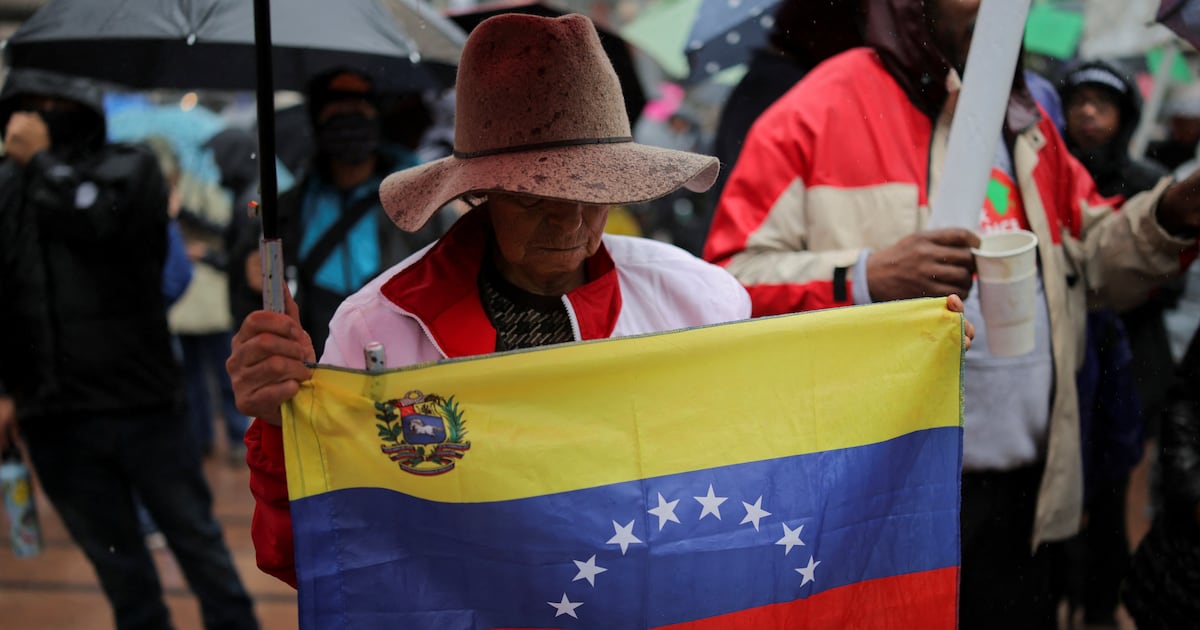
The Venezuelan crisis is less about oil supply than about how power is now exercised in an increasingly unconstrained global system.
Even if the US does not need Venezuelan oil, preventing China from deepening its economic and strategic position in the Western Hemisphere is a motivation.
Great powers rarely act on absolute need. They act on relative advantage. Chinese lending, infrastructure investment, digital systems and long-duration contracts in Venezuela create durable influence.
From Washington’s perspective, that influence represents a net strategic loss. Even so, much contemporary analysis misreads how power is exercised.
Conflict is often treated as the outcome of careful, technocratic cost-benefit analysis. History suggests otherwise. Military actions that succeed are later framed as necessary and stabilised by their initiators.
That pattern is consistent. Force delivers non-material returns. Military success produces status, leverage and perceived dominance. These benefits are rarely stated explicitly, but they matter, repackaged as signalling or credibility.
The underlying function is about establishing hierarchy. This logic also operates domestically. Political movements that emphasise strength, order and group loyalty respond positively to decisive displays of power.
Within US President Donald Trump’s political coalition, support for military action is conditional rather than strictly ideological. It rises when interventions appear quick, controlled and visibly asymmetric.
Venezuela therefore functions not only as foreign policy but also as a political instrument. That helps explain why the strategic logic points inward. With midterm elections approaching, decisive confrontation offers a mechanism for projecting control amid domestic vulnerability.
Strongman politics performs best when it can reference a recent success. If the Venezuelan crisis proceeds smoothly, it reinforces the image of executive competence. If it stalls, an open-ended security situation provides justification for expanded executive authority.
Furthermore, the interventions in Grenada and Panama in the 1980s disrupted regional norms but generated limited long-term political cost at home.
The difficulty is that electoral outcomes are driven primarily by domestic fundamentals. Inflation, healthcare costs, labour markets and institutional credibility matter far more to voters than overseas deployments.
Recent US special elections already show material shifts against incumbents, even in traditionally safe districts. Venezuela does not alter those variables.
Nor is the economic case compelling. Venezuelan oil production is concentrated in the Orinoco Belt, where heavy crude requires specialised refining capacity and major capital investment. Years of underinvestment have degraded infrastructure.
US producers already benefit from cheaper shale output. Any meaningful return from Venezuela would be long-dated and uncertain.
The China dimension, while real, can also be overstated. Venezuela supplies only a small share of China’s oil imports. The concern is less about barrels than about embedded influence involving logistics, financing structures and long-term options.
For markets, the broader implication is structural uncertainty. The rules-based order that once constrained unilateral action is weakening. Ukraine, Gaza and Venezuela indicate a shift towards discretionary power projection.
As Finland’s president, Alexander Stubb, recently observed, the pace of systemic change over the past four years exceeds that of the previous three decades. Investors must price geopolitical volatility as a baseline condition.
For business and markets the lesson is practical. Power is being exercised with fewer constraints and shorter time horizons. That may deliver short-term leverage. It also raises volatility, weakens predictability and increases the cost of capital.
When foreign policy resembles territorial enforcement rather than rule management, stability becomes episodic rather than systemic. No market participant should assume insulation from geopolitics without guardrails.
• Timcke is a senior research associate at ICT Africa, a research associate at the University of Johannesburg’s Centre for Social Change and an affiliate of the Centre for Information, Technology & Public Life at the University of North Carolina at Chapel Hill.