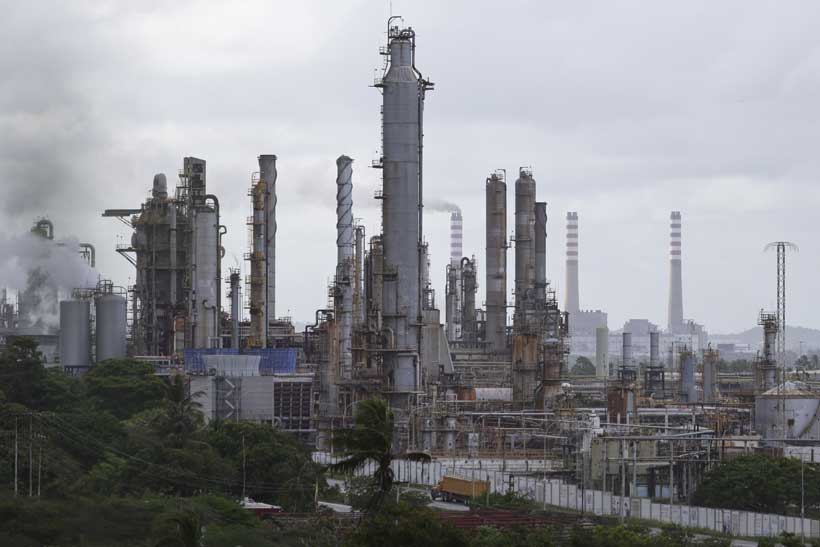
The fall of President Nicolas Maduro has brought attention to Venezuela’s severe debt crisis, which is one of the largest unresolved sovereign defaults in the world. Venezuela defaulted on international bond payments in late 2017 after experiencing years of economic difficulties and facing U. S. sanctions that cut it off from international capital markets. Since the default, accumulating interest and legal claims have increased unpaid principal amounts, raising the total external debt significantly above the initial bond values.
Analysts estimate that Venezuela owes about $60 billion in defaulted bonds, while total external debt, including obligations from the state oil company PDVSA and other loans, ranges between $150 and $170 billion. The International Monetary Fund (IMF) estimates Venezuela’s nominal GDP for 2025 at approximately $82.8 billion, leading to a debt-to-GDP ratio of 180%-200%. A significant bond from PDVSA, due in 2020, was backed by a majority stake in Citgo, a U. S.-based oil refiner now at the center of legal efforts for creditor recovery.
Ownership of Venezuela’s debt is difficult to track due to years of sanctions that include a ban on trading Venezuelan debt. Most commercial creditors are international bondholders, including distressed-debt investors. Some creditors have received compensation through international arbitration for expropriated assets, enabling them to pursue Venezuelan assets to meet their claims. A growing group of claimants is also seeking recovery from Citgo’s parent company through U. S. courts, where claims have reached about $19 billion, surpassing Citgo’s asset value. Venezuela’s bilateral creditors include China and Russia, which extended loans to both Maduro and the previous president, Hugo Chavez.
The possibility of restructuring Venezuela’s debt appears complicated due to the number of claims, ongoing legal issues, and political uncertainty. A formal restructuring could be supported by an IMF program, but Venezuela has not engaged with the IMF in nearly 20 years and remains excluded from its financial assistance. U. S. sanctions further limit Venezuela’s ability to restructure or issue new debt without authorization from the U. S. Treasury.
In terms of recovery values, bonds have experienced a significant return at the index level in 2025, and many currently trade between 27-32 cents on the dollar. Analysts estimate that a principal haircut of at least 50% may be necessary for debt sustainability. Recovery estimates are variable; some predict recoveries of around 25 cents on the dollar, with potential increases based on improved political conditions or specific deal structures.
Venezuela’s economic situation remains dire, having faced drastic declines since 2013 due to falling oil production, surging inflation, and rising poverty rates. Although there has been some stabilization, low global oil prices and additional U. S. blockades have hampered recovery efforts. President Trump mentioned that American oil companies are ready to invest in Venezuela’s oil sector, but specific details about such investments are still unclear.
With information from Reuters