2026-01-06T12:11:21+00:00
font
Enable Reading Mode
A-
A
A+
Shafaq News– Damascus
The Syrian Ministry of Social Affairs and
Labor revealed on Tuesday that it has registered 314 children of detained and
forcibly disappeared persons who were placed in care institutions during the
period of former President Bashar al-Assad, confirming that 150 have been
reunited with their families.
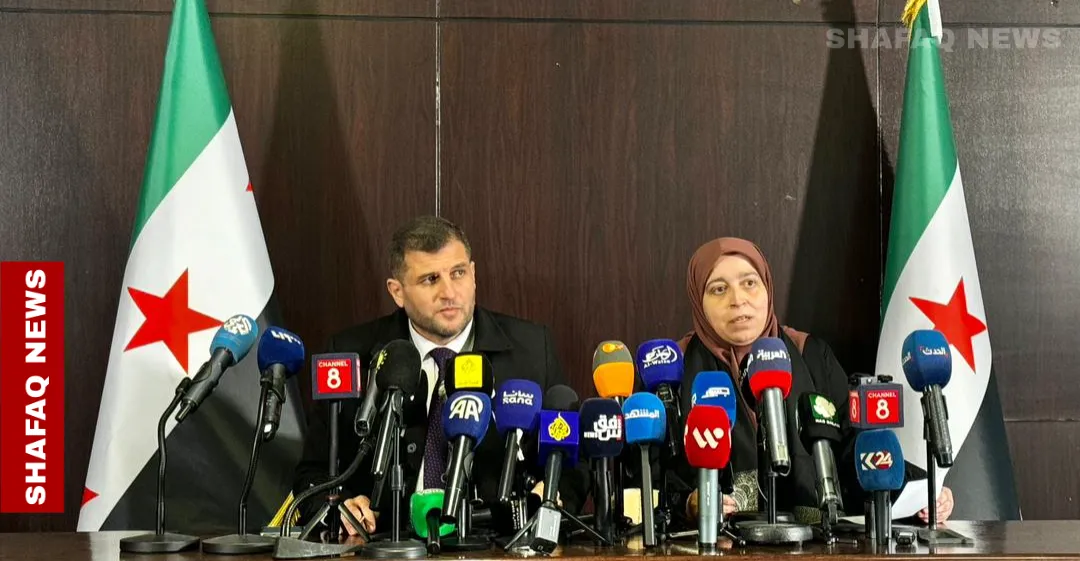
Raghda Zaidan, head of the ministry’s
Committee to Investigate the Fate of the Daughters and Sons and of Detained and
Forcibly Disappeared Persons in Syria, said at a press conference that
procedures are ongoing to confirm family reunification for another 50 cases.
The committee’s work, according to her,
includes collecting documents and information related to the children,
registering family data, following up on resolved cases, compiling records of
care institutions between 2011 and 2024, and operating two hotlines to receive
information from families.
On the legal side, Zaidan noted that the
committee provides legal consultations to affected children and their relatives
and coordinates with international bodies concerned with missing persons.
Samer Qarbi, the Interior Ministry’s
representative on the committee, said families are supported through legal
guidance and the appointment of lawyers, adding that the committee does not
have a direct role within the judicial system. He described the cases under
review as “complex and requiring detailed examination,” which prompted the
formation of specialized teams to organize and analyze records, as well as
field teams to monitor children’s situations.
Separately, Fateh Al-Abbasi, national
director of SOS Children’s Villages in Syria, said the organization identified
140 cases of children placed with SOS Syria, with 106 cases traced so far, and
further verification is ongoing.
Moatasem Al-Saloumi, director of the
General Authority for the Lahn Al-Hayat Homes Complex, confirmed the review
revealed significant gaps in accurate data, noting that some children were
registered under different names or classified as having unknown parentage,
complicating efforts to establish their identities.