
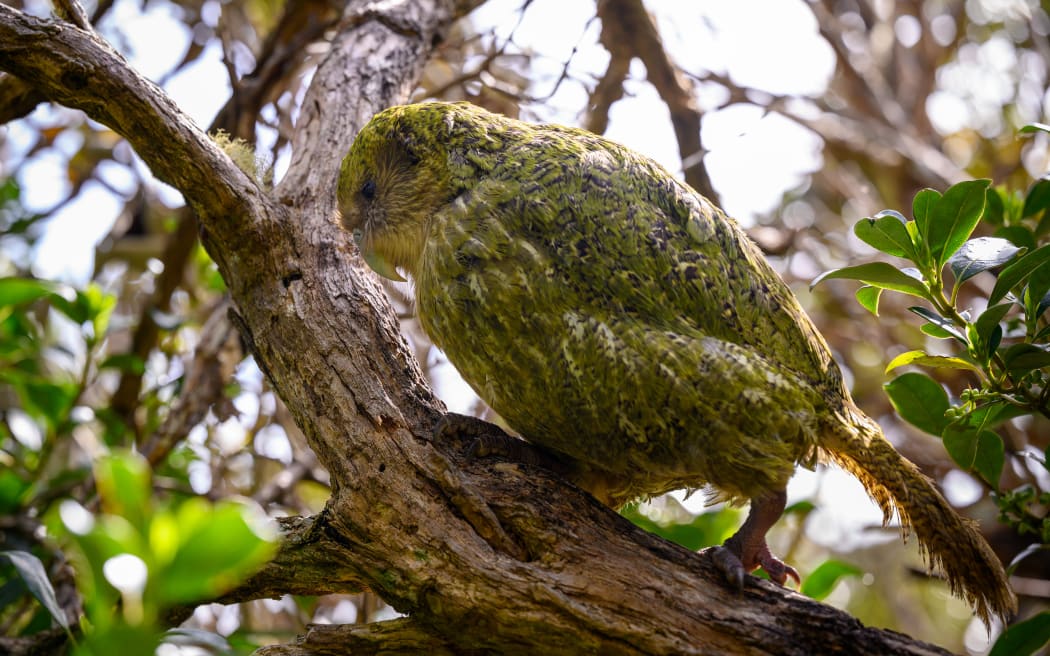
Photo: Jake Osborne / Department of Conservation
The first kākāpō breeding season in four years could be the biggest in decades, the Department of Conservation (DOC) says.
The season had officially begun after remote monitoring technology – used to track the critically threatened bird – detected mating activity from 29 December.
DOC Operations Manager for Kākāpō Recovery Deidre Vercoe said the milestone felt particularly significant for the species this year.
“It’s always exciting when the breeding season officially begins, but this year it feels especially long-awaited after such a big gap since the last season in 2022,” she said.
“Now it is underway, we expect more mating over the next month, and we are preparing for what might be the biggest breeding season since the programme began 30 years ago.”
Through its longstanding Kākāpō Recovery programme, DOC had worked with Ngāi Tahu to rebuild the population from 51 manu (31 males, 20 females) through 12 breeding seasons.
The population peaked at 252 in 2022.
The flightless, nocturnal parrots breed once every two to four years, when the rimu trees mast.
The kākāpō are among the most intensively managed species in the world.
Prior to the breeding season, the total population sits at 236, including 83 breeding-age females.
This year would be the 13th breeding season in the 30 years since the programme began.
It could also see the most chicks since records began, although success could no longer be measured in mere numbers, Vercoe said.
“Kākāpō are still critically endangered, so we’ll keep working hard to increase numbers, but looking ahead, chick numbers are not our only measure of success.
“We want to create healthy, self-sustaining populations of kākāpō that are thriving, not just surviving. This means with each successful breeding season, we’re aiming to reduce the level of intensive, hands-on management to return to a more natural state.
“We’re working towards the goal of returning them to their former range around New Zealand so that one day, hearing a kākāpō boom might be a normal part of naturing.”
A range of lower-intervention strategies would be introduced this season, across the three protected offshore breeding islands.
These include prioritising checks for genetically valuable eggs and chicks, leaving more eggs to hatch in nests rather than incubators, reduce nest interference for mothers raising multiple chicks, and reducing supplementary feeding.
The Kākāpō Recovery Group’s Te Rūnanga o Ngāi Tahu representative Tāne Davis said growth brought both advantages and challenges.
“As part of the more hands-off approach to enhance the mauri of the species, a Ngāi Tahu aspiration is also for a percentage of the chicks hatched this year to remain nameless, acknowledging the beginning of returning the manu to their own natural ways,” he said.
“The predicted scale of this season also reminds us of the need for more safe homes, like a predator-free Rakiura, for this taonga species.”
The first chicks were expected to start hatching from mid-February.
Sign up for Ngā Pitopito Kōrero, a daily newsletter curated by our editors and delivered straight to your inbox every weekday.