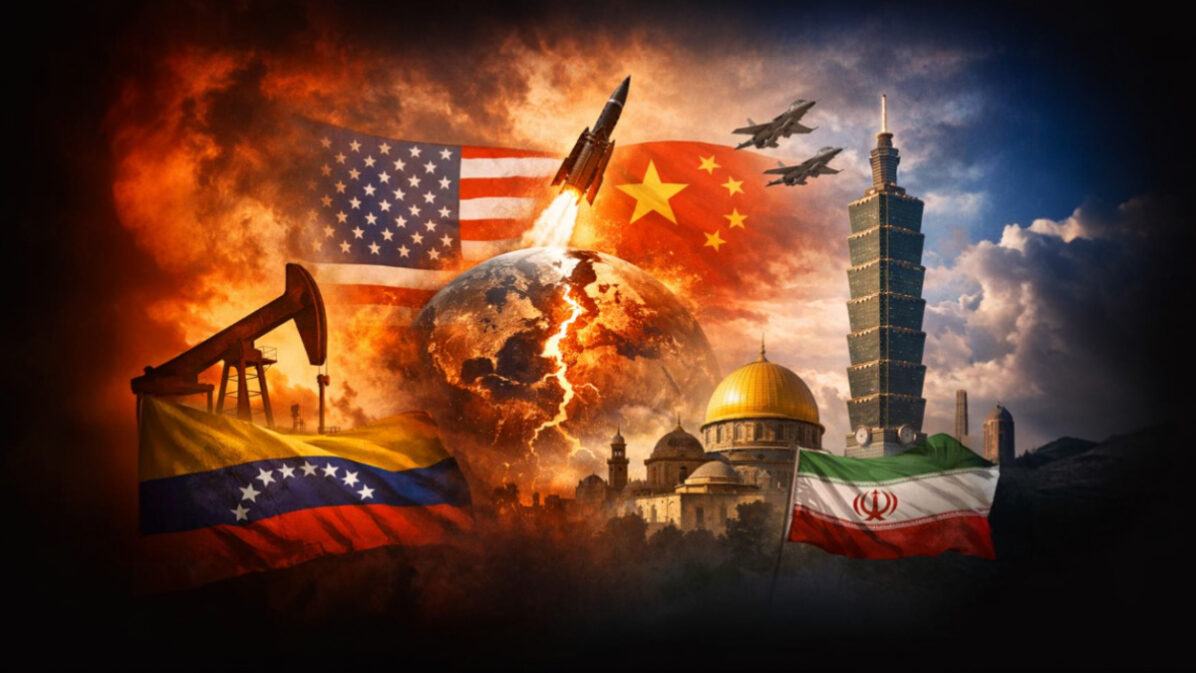
Giorgia Valente reports that the US military strike in Venezuela, sold publicly as a contained Latin American operation, is being read by analysts as part of a wider, interconnected contest with China that runs from oil markets to Taiwan’s chip fabs. The attack’s speed, limited warning, and lack of congressional authorization gave it outsized global impact, even as experts argued it did not signal “boots on the ground” warfare.
Rajat Ganguly, editor-in-chief of the Journal of Asian Security and International Affairs, told The Media Line the strike “cannot be understood in isolation.” He argued that pressure in one arena is designed to shape behavior in another, linking US weapons sales to Taiwan, Beijing’s reactions, and Washington’s willingness to use force where it believes core interests are at stake. “These events are probably interconnected,” he said.
For Ganguly, Venezuela’s importance is not only its vast oil reserves but the currency question. He said Chinese purchases of Venezuelan crude and Caracas’s willingness to settle in yuan threaten the “petrodollar” system. “The most interesting thing is that this oil that Venezuela sold to China, they actually settled the payments in Chinese yuan,” he said, calling the strike partly a move to deter de-dollarization. “If you suddenly move to an alternative currency … that would mean the collapse of the US dollar, which basically would mean the collapse of US power,” he said.
He placed Iran alongside Venezuela as a pillar of China’s energy security and argued that regime change in Tehran would tighten the squeeze on Beijing. “If this regime collapses, Hezbollah, Hamas, Islamic Jihad, the Houthis—these problems will quickly get settled,” he said.
In Taiwan, journalist Kelvin Shen said the strike was studied for operational lessons and political signals. “Taiwan is definitely looking at the strike itself as how the US was able to move so quickly,” he told The Media Line, warning Beijing may see opportunity in Washington acting without authorization.
For the full geopolitical picture, read Giorgia Valente’s complete report.