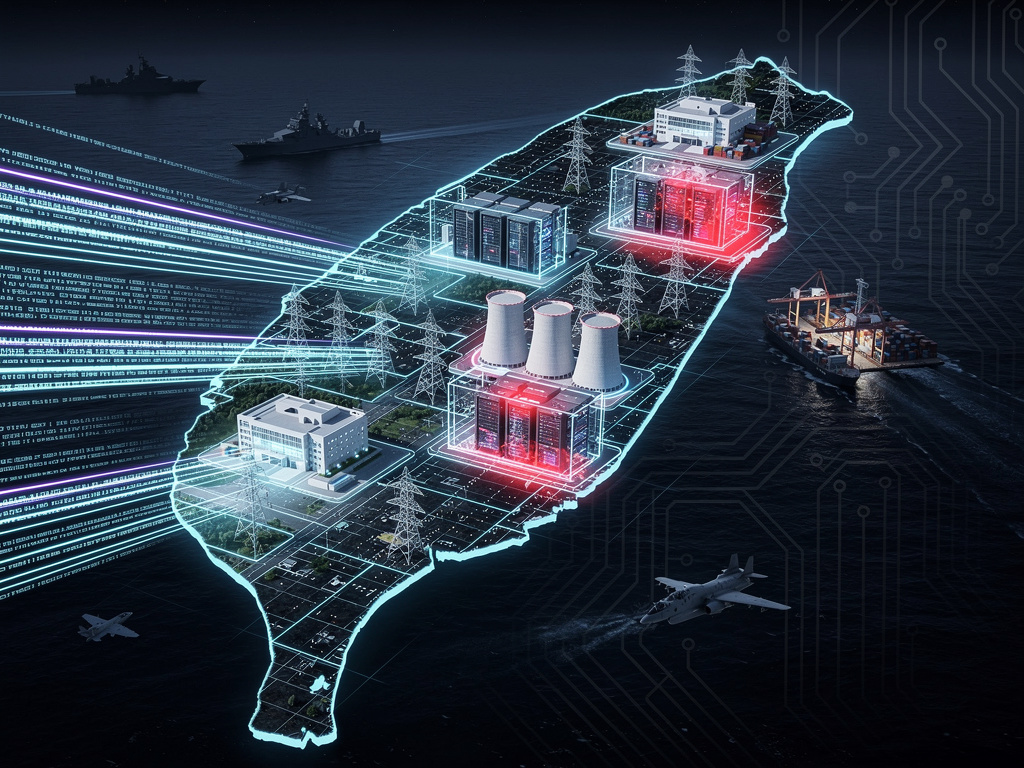
In the shadowed realms of global geopolitics, Taiwan finds itself under an unrelenting barrage of digital assaults from China, with recent reports revealing a staggering average of 2.6 million cyberattacks per day targeted at the island’s critical infrastructure in 2025. This surge represents a 6% increase from the previous year and a dramatic 113% jump since 2023, according to Taiwan’s National Security Bureau. These attacks, often synchronized with military exercises, form part of what Taiwanese officials describe as “hybrid threats” designed to paralyze key sectors including hospitals, banks, energy systems, and emergency services.
The escalation underscores Beijing’s multifaceted strategy to pressure Taipei, blending cyber operations with military posturing and disinformation campaigns. As China ramps up its claims over the democratically governed island, these digital incursions serve as a force multiplier, testing defenses without crossing into overt conflict. Industry experts note that such tactics allow plausible deniability while eroding Taiwan’s resilience, potentially softening the ground for more aggressive actions.
Drawing from a report highlighted in TechRepublic, the cyberattacks doubled from 2023 levels, hitting an average of 2.4 million daily in 2024 before climbing further. This pattern aligns with broader tensions, including large-scale Chinese military drills simulating blockades around Taiwan, as detailed in updates from the Institute for the Study of War.
Hybrid Warfare in the Cyber Domain
Taiwan’s complaints about China’s “hybrid warfare” have grown louder in recent years, encompassing not just cyberattacks but also daily military incursions and propaganda efforts. The National Security Bureau’s latest findings, published in early 2026, point to a sophisticated orchestration where cyber operations coincide with live-fire exercises, amplifying psychological and operational impacts. For instance, during December 2025 drills, attacks spiked on infrastructure vital to Taiwan’s economy and public services.
Sectors like energy and healthcare experienced the sharpest rises, with hospitals facing disruptions that could compromise patient care in a crisis. Banks and telecommunications networks, equally targeted, highlight vulnerabilities in Taiwan’s digital backbone, which supports its status as a semiconductor powerhouse. These incursions often involve distributed denial-of-service (DDoS) attacks, malware injections, and phishing schemes aimed at extracting sensitive data or sowing chaos.
Insights from Reuters emphasize how these efforts are attributed to Chinese cyber forces, with some operations explicitly timed to military activities. This integration suggests a deliberate strategy to overwhelm Taiwan’s defenses across multiple fronts, blurring the lines between peacetime harassment and wartime preparation.
Technological Tactics and Defensive Responses
Delving deeper into the methods, Chinese actors employ advanced persistent threats (APTs), leveraging state-sponsored groups like APT41 or RedDelta to infiltrate networks. These groups, known for espionage and sabotage, have been linked to breaches in Taiwanese government systems, stealing intelligence that could inform future invasions. The scale—millions of daily probes—indicates automated botnets and AI-driven reconnaissance, scanning for weaknesses in real-time.
Taiwan’s response has been multifaceted, investing heavily in cybersecurity fortifications. The government has bolstered its Cyber Security Management Act, mandating stricter protocols for critical infrastructure operators. Partnerships with allies, including the U.S., have led to joint exercises and technology sharing, such as advanced intrusion detection systems. However, the sheer volume of attacks strains resources, with officials admitting that not all incursions can be thwarted.
Posts on X from cybersecurity analysts in early 2026 highlight growing concerns, with users noting the potential for these attacks to disrupt global supply chains, given Taiwan’s role in chip manufacturing. One thread discussed how a successful cyber takedown of power grids could halt production at facilities like TSMC, rippling through international markets.
Geopolitical Implications and Global Echoes
The broader implications extend beyond Taiwan, signaling China’s willingness to weaponize cyberspace in territorial disputes. This approach mirrors tactics seen in other regions, such as alleged Russian cyber operations in Ukraine, but scaled to an unprecedented level. With 2.63 million average daily attacks in 2025, as reported by The Straits Times, the data underscores a persistent campaign that has evolved from sporadic hacks to a constant siege.
Internationally, this has prompted reactions from Western powers. The U.S. has increased cyber defense aid to Taiwan, viewing it as a bulwark against Chinese expansionism. Reports from The Japan Times note Japan’s concerns, given its proximity and alliance with Taiwan, leading to enhanced regional cybersecurity dialogues. Meanwhile, European nations are monitoring the situation, wary of similar tactics being deployed in other hotspots.
On X, sentiment among tech insiders reflects alarm, with posts warning of cascading effects on global technology sectors. Discussions often reference historical precedents, like the 2022 cyberattacks during Nancy Pelosi’s visit to Taiwan, which saw temporary disruptions to government websites and digital billboards displaying anti-Taiwan messages.
Economic Vulnerabilities Exposed
Economically, Taiwan’s tech-driven economy makes it a prime target. As the world’s leading producer of advanced semiconductors, any disruption could halt production lines for companies like Apple and Nvidia. The National Security Bureau’s report details sharp increases in attacks on energy and emergency rescue sectors, which could indirectly cripple manufacturing hubs. In 2025, these sectors saw year-on-year spikes, illustrating China’s focus on points of maximum leverage.
Defenders are countering with innovations like zero-trust architectures and AI-powered threat hunting. Yet, the asymmetry favors attackers, who can probe endlessly at low cost. Taiwanese firms are increasingly adopting cloud-based redundancies and international data centers to mitigate risks, but the threat persists.
Further analysis from U.S. News reveals that while most attacks are repelled, successful infiltrations have led to data exfiltration, potentially compromising military secrets or economic intelligence. This intelligence gathering feeds into China’s broader strategy, enhancing its hybrid warfare capabilities.
Future Trajectories and Strategic Shifts
Looking ahead, experts predict an intensification of these cyber campaigns, especially as Taiwan approaches key elections or anniversaries that Beijing views as provocative. The synchronization with military drills, as noted in ISW updates, suggests preparation for scenarios where cyber operations precede or support kinetic actions. This could include disabling air traffic control or power grids during a blockade simulation.
Taiwan is responding by building a “cyber iron dome,” analogous to Israel’s missile defense, integrating machine learning for predictive analytics. International collaborations are key, with forums like the Quad discussing cyber resilience in the Indo-Pacific. However, challenges remain, including talent shortages in cybersecurity and the need for global norms to curb state-sponsored hacking.
X posts from January 2026 emphasize the human element, with users sharing stories of burnout among Taiwanese cyber defenders facing this digital deluge. These anecdotes underscore the psychological toll, complementing the technical battles.
Evolving Threats and Countermeasures
As threats evolve, so do the tactics. Chinese operations now incorporate deepfakes and social engineering, blending cyber with information warfare to undermine public trust. In 2025, disinformation spikes accompanied attacks, spreading false narratives about Taiwan’s leadership. This multifaceted approach aims to isolate the island diplomatically while weakening internal cohesion.
Countermeasures include public awareness campaigns and enhanced monitoring of social media. Taiwan’s Digital Affairs Ministry has launched initiatives to verify information in real-time, countering propaganda. Alliances with tech giants like Google and Microsoft provide additional layers of defense against phishing and malware.
Drawing from Taipei Times, officials vow to defend sovereignty, pledging investments that could reach billions in cybersecurity over the next decade. This commitment reflects a recognition that cyber defense is as crucial as traditional military readiness.
Long-Term Strategic Outlook
In the long term, the cyber conflict between China and Taiwan may reshape global digital security standards. With attacks averaging millions daily, it serves as a case study for nations facing similar aggressions. The data from 2025 highlights a trend toward weaponizing everyday infrastructure, from hospitals to banks, in geopolitical rivalries.
Industry insiders advocate for stronger international sanctions against state-sponsored cyber actors, potentially through bodies like the UN. Meanwhile, Taiwan’s resilience inspires others, demonstrating how proactive defenses can mitigate even overwhelming odds.
Finally, as tensions simmer, the world watches closely. The digital siege on Taiwan not only tests the island’s mettle but also the resolve of the international community to confront cyber aggression in an increasingly connected world. With each thwarted attack, Taiwan buys time, but the relentless pace suggests that this shadow war is far from over.