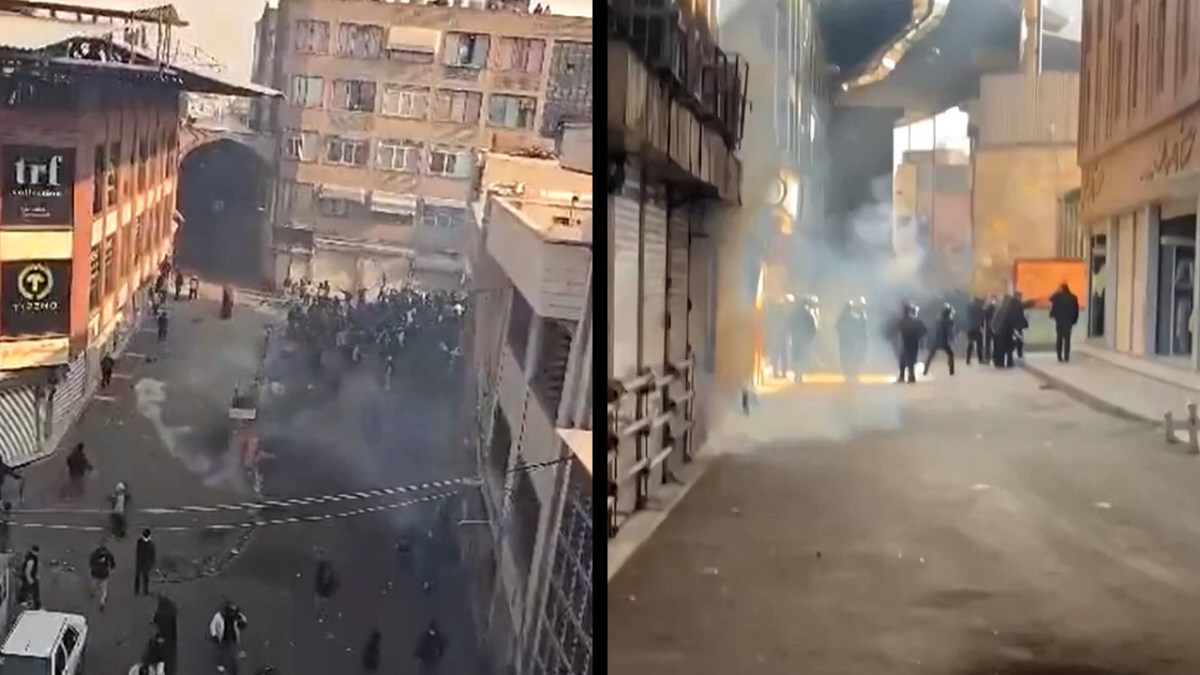
The death toll from Iran’s protests has continued to climb as the unrest shows signs of spreading further and a policeman was reported killed in the clashes on Tuesday.
Iranian activists say at least 35 people, most of them protesters, have been killed as the demonstrations entered their second week and Iranian authorities vowed that there would be “no leniency” towards the demonstrators.
In Tehran, police fired tear gas at protestors in the city’s bazaar, where the rallies began in protest of the plummeting Iranian currency and inflation.
As the protests continued to expand beyond the capital, videos spread on social media purported to show protestors marching past a police station in Abdanan, a mostly Kurdish city on Tuesday evening — and officers waving at them from the roof.
The Iranian government at first extended a hand to the protesters, firing the central bank chief, but it has since struck a harsher tone and security forces have used live ammunition in response. Iranian state media reported on Tuesday that a policeman had been killed by a “rioters’ bullet” in the western Malekshahi region.
President Pezekshian said that his government alone could not contain the crisis. He had been sounding a pessimistic note for weeks, saying that he had run out of ideas and that all Iranians needed to chip in by conserving energy and other rationing.
“The government basically does not have such power,” he said on Tuesday in response to protesters’ demands to boost their purchasing power. “Even if it wants to do this, it will be forced to put heavy pressure on the lower deciles of society by printing money. The country’s income is certain and our resources aren’t unlimited.”
President Trump had warned Iran on Monday that the US would hit it “hard” if it killed more protesters, shifting the boundary for increasingly likely American and Israeli strikes.
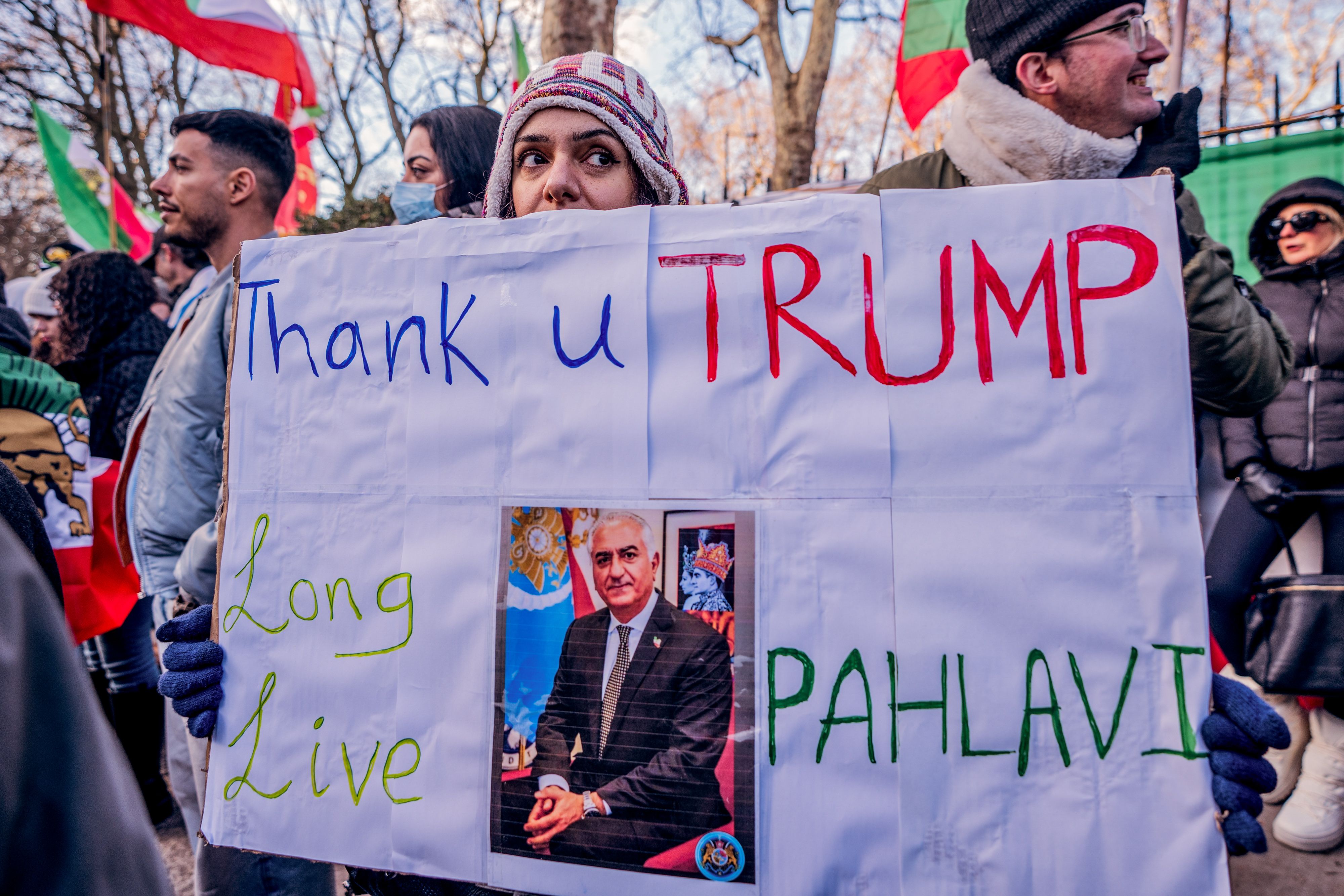
An Iranian exile calls for the return of Reza Pahlavi, the exiled crown prince of Iran, outside the Iranian embassy in London on Saturday
SHUTTERSTOCK EDITORIAL
Those threats have taken on a fresh urgency after the US president ordered his special forces to seize the Venezuelan leader, Nicolás Maduro, at the weekend. Like Maduro, Iran’s supreme leader, Ayatollah Ali Khamanei, has thumbed his nose at at the White House, even after American bombers destroyed his country’s main nuclear facility last year.
• Ayatollah Khamenei plans to flee to Moscow if Iran unrest intensifies
“We’re watching [Iran] very closely. If they start killing people like they have in the past, I think they’re going to get hit very hard by the United States,” Trump said.
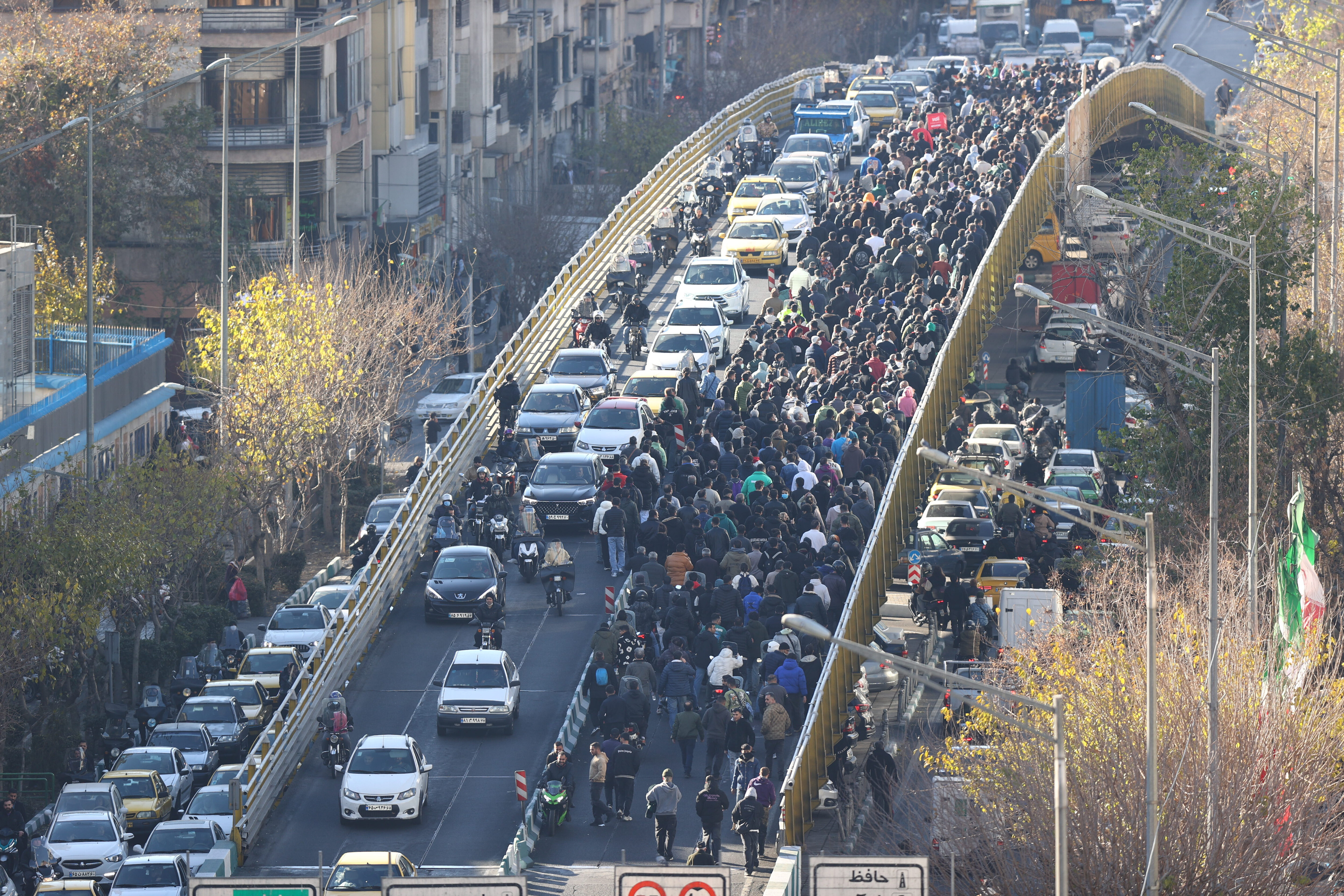
Protests in Tehran last month
FARS NEWS AGENCY/AFP/GETTY IMAGES
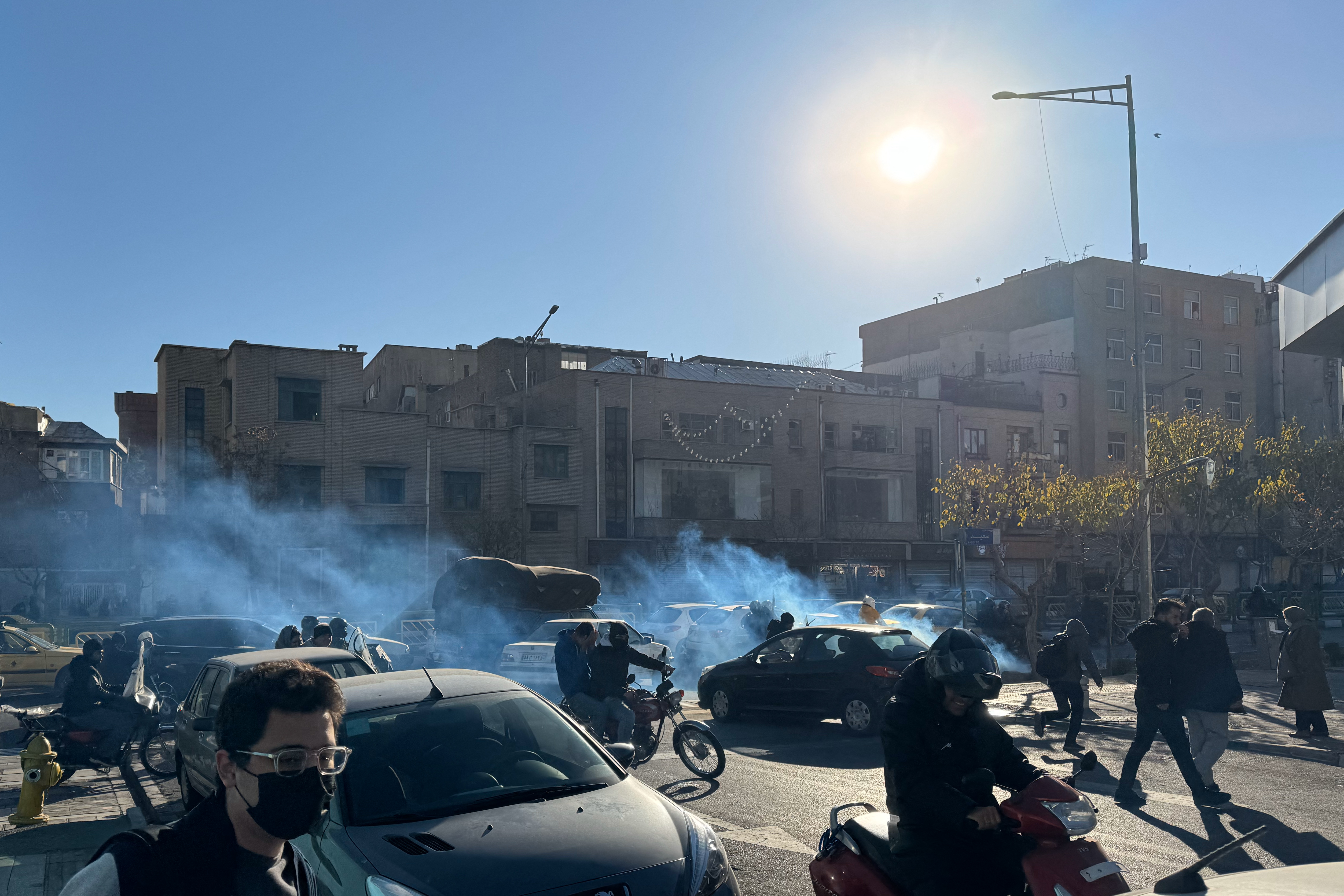
FARS NEWS AGENCY/AFP/GETTY IMAGES
Trump has been threatening Iran since he met Binyamin Netanyahu, the Israeli prime minister, last month. Netanyahu had pushed for new strikes on Iran after an attack last summer destroyed its nuclear facilities and killed many of the regime’s top military commanders, but left its ballistic missile programme intact.
Israeli media reported that the government has asked Russian president Vladimir Putin to relay a message to Tehran that Israel was not about to launch strikes. While there was no confirmation of the account, Khamenei said on Tuesday that Israel had sent “messages saying [it] doesn’t want to fight us.”
In a post on X, he wrote: “What makes the enemy first request a ceasefire during [12-Day] war with the Iranian nation, then send messages saying he doesn’t want to fight us? Of course, the malicious enemy is a deceiving liar & we don’t trust them. But what causes this is the power of the Iranian nation.”
The Iranian leader had always argued that the US was not serious about negotiations with Iran over its nuclear programme. He may inadvertently have been making the case to Trump that there will be no progress on the nuclear file, or any other related to Iran, as long as he remains in power.
Iran’s regional footprint has been shrunk by Israel’s wars with Hezbollah in Lebanon and Hamas in Gaza, both Iranian-backed and armed. At home, the regime’s survival now depends on putting down the nationwide protests that started over economic grievances, but have increasingly taken on overt political tone.
Khamenei said they would need to be “put in their place,” and his top judge promised there would be no “leniency.”
• Inside Iran protests that threaten regime: ‘This is the final battle’
Netanyahu, who had encouraged Iranians to rise up last year, has been circumspect in his messaging towards the protesters. He told Israeli politicians on Monday that the protests in Iran had “expanded greatly” and “it is very possible that we are at a decisive moment — a moment when the Iranian people will take their destiny into their own hands”.
His Mossad intelligence agency has publicly supported them. The Mossad has thoroughly infiltrated Iran and is certain to be offering its support in other, discreet ways to some Iranian dissidents.
What is not clear is whether Israel, or the US, has any idea of what will happen if Khamenei is overthrown, or assassinated by Israel in the course of another war.
After capturing Maduro, Trump was quick to dismiss María Corina Machado, the Nobel laureate opposition leader, as a replacement, saying she did not have sufficient authority. The same can be said for Iran’s divided and constantly feuding opposition.
The most likely outcome, some have argued, could be an even more militaristic new regime. Iran, after all, has experienced several regime changes in the past 70 years, which have led the country to where it is today.