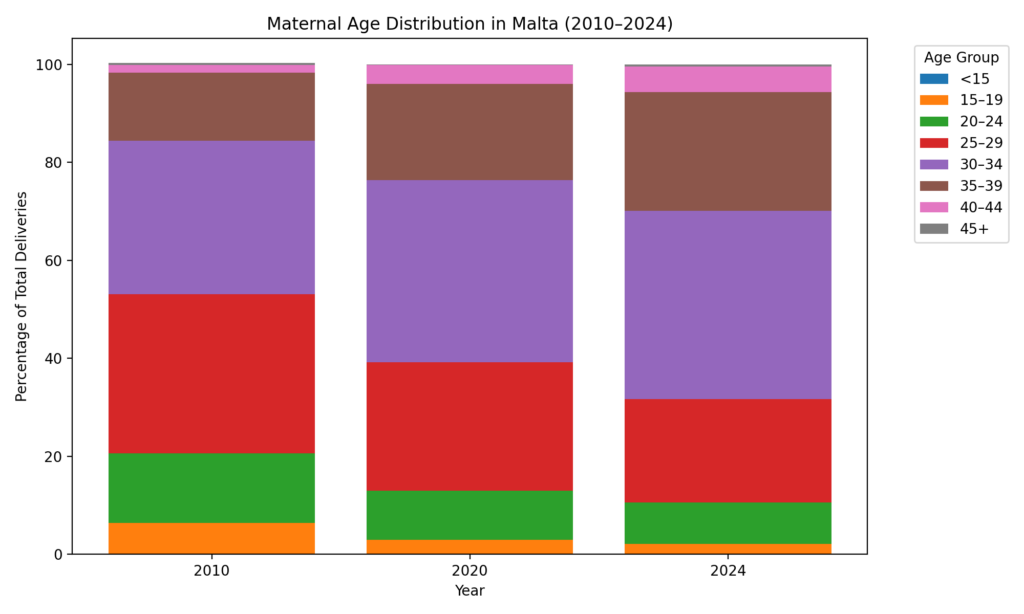
The age at which Maltese women are choosing to have children has shifted significantly over the past 15 years, according to data from the National Obstetric Information System (NOIS). A comparison of figures from 2010, 2020 and 2024, clearly shows the maternal age shifting away from births among younger women toward women in their 30s and beyond, illustrating a broader social change in childbearing patterns.
Then and Now: Maternal Age in Malta
In 2010, deliveries were most common among women aged 25–29, while teenage births still accounted for a noticeable share of deliveries. In that year there were 255 deliveries to teenage mothers, and the average maternal age was 29 years. The youngest mother was 14 and the oldest was 45. The most frequently recorded maternal age was 28 years.
Fast forward a decade and the picture had evolved significantly. In both 2020 and 2024, the 30–34 age group accounted for the highest share of deliveries, 37.1% in 2020 and 38.4% in 2024, reflecting the new norm of women having children later in life. Births to women in their early 20s and teen years declined during the same period.
The main takeaways from the data are:
Teenage births shrank sharply. In 2010, deliveries to mothers under 20 made up a significantly larger share of births at 255, while by 2024, births to women aged 15–19 had fallen to just 2.1% of all deliveries.
Women aged 35–39 and older have become a much larger part of the maternal age profile. In 2024, women aged 35–39 represented 24.2% of all deliveries and those aged 40–44 made up 5.2%, compared with far lower proportions a decade earlier who back then where at just over 500 births.
The average maternal age has climbed accordingly. In 2010 the average was 29 years; by 2020 it exceeded 30 years, and by 2024 it had reached 31.6 years.
The most frequent maternal age at delivery shifted from 28 years in 2010 to 32 years in recent years, reinforcing the trend toward later childbearing.
The downward shift in births among younger women is stark when viewed over time:
In 2010, more than 6% of deliveries were to women aged 15–19, while nearly 14% were aged 20–24.
By 2024, those proportions had both declined significantly, with births among women aged 20–24 under 9% — less than half of the share registered in 2010.
This decline in births among younger age groups mirrors broader demographic shifts in Malta, where natural population increase has slowed and the age structure of the population has tilted older.
These trends suggest that Maltese women increasingly delay childbirth into their early 30s and even later, a pattern seen in many high-income countries as women spend more years in education and career development and make reproductive choices that align with changing social and economic conditions.
The consistent rise in maternal age has implications across maternal health services, social support systems and broader demographic policy discussions. Older maternal age can be associated with different clinical considerations, requiring targeted healthcare planning and resources.
What was once typical in childbearing — youth and early motherhood — has shifted decisively in Malta. With maternal age rising steadily over more than a decade, and older age groups (especially 30s and 40s) now far outpacing births in the teens and early twenties, the data reflect a new normal in Maltese motherhood.
In today’s demographic landscape, 40 really is starting to look like the new 18 — at least when it comes to family planning and the age at which many women embark on motherhood.
Why are Maltese women waiting longer to have kids?
READ NEXT: Watch: Jo Etienne Abela Confirms Prep And Pep To Arrive In Malta In Two Weeks